 CN

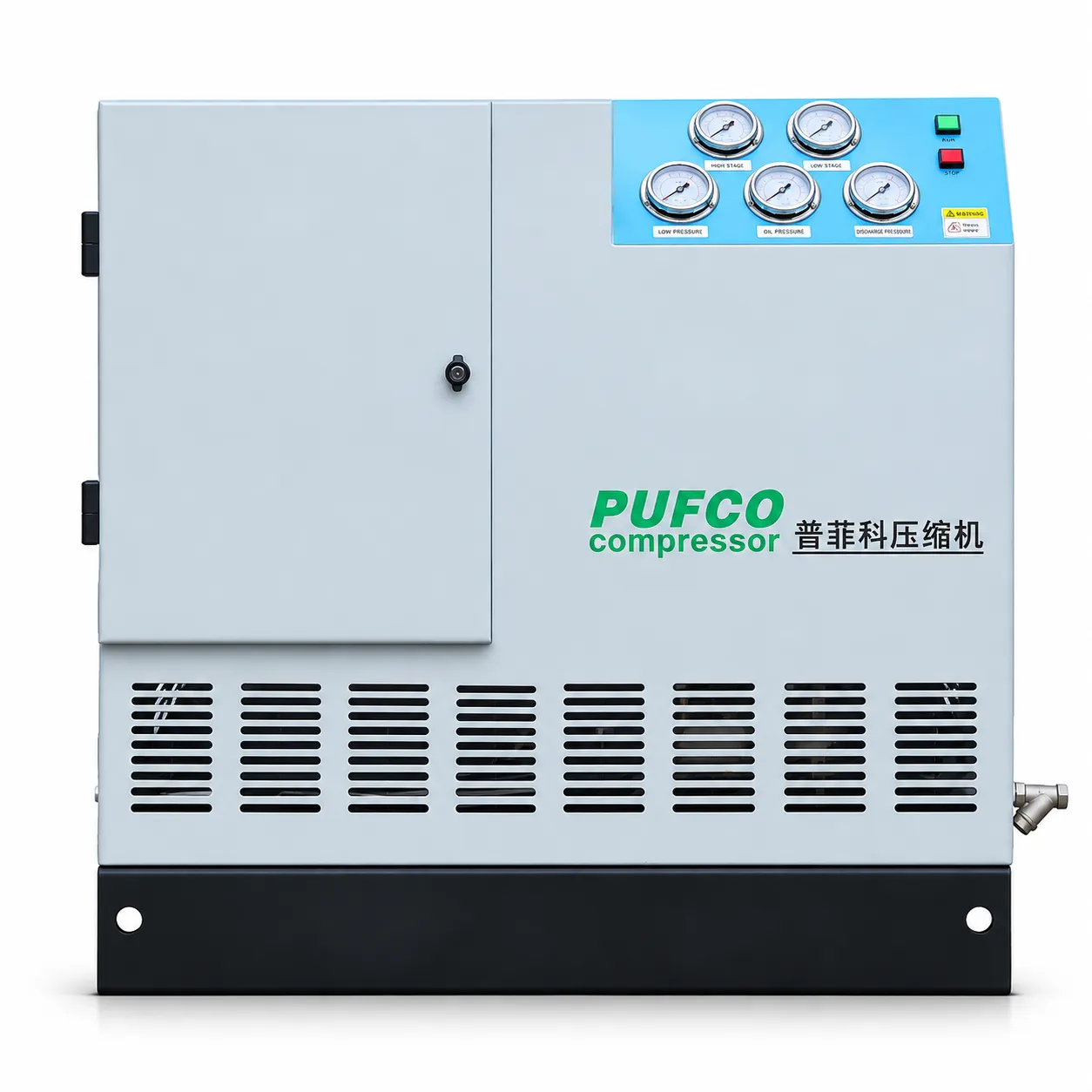
Silent Oil-free oxygen compressor
1.Suitable for small-scale PSA oxygen systems, inlet 3–4 barg, discharge up to 150 barg.
2.Provides clean oxygen filling for hospitals and island clinics, 4–12 Nm³/h, 24-hour continuous operation.
3.Compact, lightweight, oil-free design with stainless steel cylinders for stable oxygen purity.
4.CE certified and compliant with Japan’s strict quality standards, reliable and easy to operate.
- Overview
- Product Advantages
- Technical Parameters
- Application Scenarios
- FAQ
- Low-speed mechanical operation is central to the series design.
- Four-stage compression organizes the oxygen pressure rise into successive steps.
- Oil-free gas handling limits lubricant introduced during oxygen boosting.
- Confirm required flow and inlet and delivery pressure conditions.
- Review ventilation and available space for the selected air-cooled model.
- Agree noise requirements for the specified machine and installation.
Low-Speed Compression for Noise-Conscious Installations
The PUFCO silent oil-free oxygen compressor combines a low-speed drive with staged oxygen boosting. Its design addresses projects where operating noise influences equipment selection. The compression chamber keeps lubricating oil out of the oxygen path, while pressure and temperature protection helps supervise the compression process.
Air-Cooled Models with a Compact Equipment Layout
The listed standard FOW models use air cooling, avoiding a cooling-water connection for those configurations. Compact construction and base handling positions support equipment placement. Selection must account for the oxygen source, receiving conditions and room layout, with sound requirements assessed for the actual machine and operating conditions.
Core Design
Configuration and Selection
Share oxygen-source data, delivery duty, room conditions and your project noise requirements when enquiring.
Why choose our air compressor solutions
Low-Speed Oxygen Compression
The low-speed drive arrangement emphasizes controlled mechanical operation during oxygen boosting. This design provides a practical option for projects that consider equipment noise when planning the installation.
Four-Stage Oxygen Boosting
Four-stage compression divides the oxygen pressure rise across successive stages. This arrangement provides a structured boosting process for the specified filling duty while allowing individual stage conditions to be monitored.
Oil-Free Oxygen Gas Path
The oil-free compression chamber keeps lubricating oil out of the oxygen gas path. This supports gas-system specifications that require control of oil contamination introduced during pressure boosting.
Staged Operating Protection
Relief valves and temperature sensing work with inlet and discharge pressure protection. Alarm and shutdown functions help operators respond to detected abnormal conditions during the oxygen compression process.
Air-Cooled Compact Package
The listed FOW models use air cooling, avoiding a cooling-water connection for those configurations. A compact layout and base handling positions also help arrange equipment delivery and placement.
Flexible Project Specification
Motor selection and compression arrangements can be matched to the required oxygen duty. This helps coordinate the package with the gas source, downstream equipment and installation conditions.
| Model | Working medium | Intake pressure (barg) | Exhaust pressure (barg) | Nominal volumetric flow rate Nm³/H | Power (kw) | Intake/Exhaust Port | Cooling method | Weight (kg) | Size (mm) | Compression level |
| FOW-4/4-150 | Oxygen | 3-4 | 150 | 4 | 3 | DN15/DN6 | Air-cooled | 320 | 1000×750×1050 | 4 |
| FOW-5/4-150 | Oxygen | 3-4 | 150 | 5 | 3 | DN15/DN6 | Air-cooled | 320 | 1000×750×1050 | 4 |
| FOW-6/4-150 | Oxygen | 3-4 | 150 | 6 | 3 | DN15/DN6 | Air-cooled | 320 | 1000×750×1050 | 4 |
| FOW-8/4-150 | Oxygen | 3-4 | 150 | 8 | 4 | DN15/DN6 | Air-cooled | 330 | 1000×750×1050 | 4 |
| FOW-10/4-150 | Oxygen | 3-4 | 150 | 10 | 5.5 | DN15/DN6 | Air-cooled | 340 | 1000×750×1050 | 4 |
| FOW-12/4-150 | Oxygen | 3-4 | 150 | 12 | 5.5 | DN15/DN6 | Air-cooled | 340 | 1000×750×1050 | 4 |
An oil-free oxygen compressor can support small PSA oxygen systems that need pressure boosting before cylinder filling. The low-speed design is relevant to equipment rooms where operating sound is part of the installation specification, alongside ventilation and access for maintenance. Select the unit around the oxygen source conditions and filling cycle, and confirm the required sound limit against test conditions for the proposed configuration.
Frequently Asked Questions
Q1: How should I compare noise data for oxygen compressors?
▼A1: Compare measured sound levels only when the acoustic quantity, operating load and test conditions are stated. For sound-pressure figures, the measurement distance and installation environment also matter. The word 'silent' is not a decibel rating, so select against the sound limit required at your site using model-specific test data.
Q2: What oxygen source does the FOW range use?
▼A2: The FOW range is intended to work with a suitable PSA (pressure swing adsorption) oxygen supply. Match the source's oxygen composition, available flow and minimum delivery pressure to the selected compressor. Confirm any buffer tank and control requirements before connecting the equipment.
Q3: Why is compression divided into four stages?
▼A3: Four-stage compression divides a large pressure increase across several compression steps. Each stage handles part of the pressure rise, while temperature monitoring and pressure protection support operation of the package. Confirm the stage arrangement, source pressure and final pressure for the selected model.
Q4: What oxygen specification is needed before choosing the compressor?
▼A4: Provide oxygen composition, allowable impurities, required delivery quality and intended use, together with inlet pressure, flow and final pressure. Compression raises pressure and does not replace gas purification. The oxygen source, treatment equipment and complete supply system must meet the specified delivery quality.
Q5: What should I include in the maintenance budget for an oxygen compressor?
▼A5: Include the prescribed inspection and service work, replacement wear parts such as piston rings, and the planned downtime for those tasks. Base the estimate on the selected model's maintenance schedule and operating duty, including inlet and discharge conditions. A general piston-ring life claim is not enough to predict annual maintenance cost.
Have more questions about this product? Click the chat icon in the bottom-right corner to contact our team.