 CN

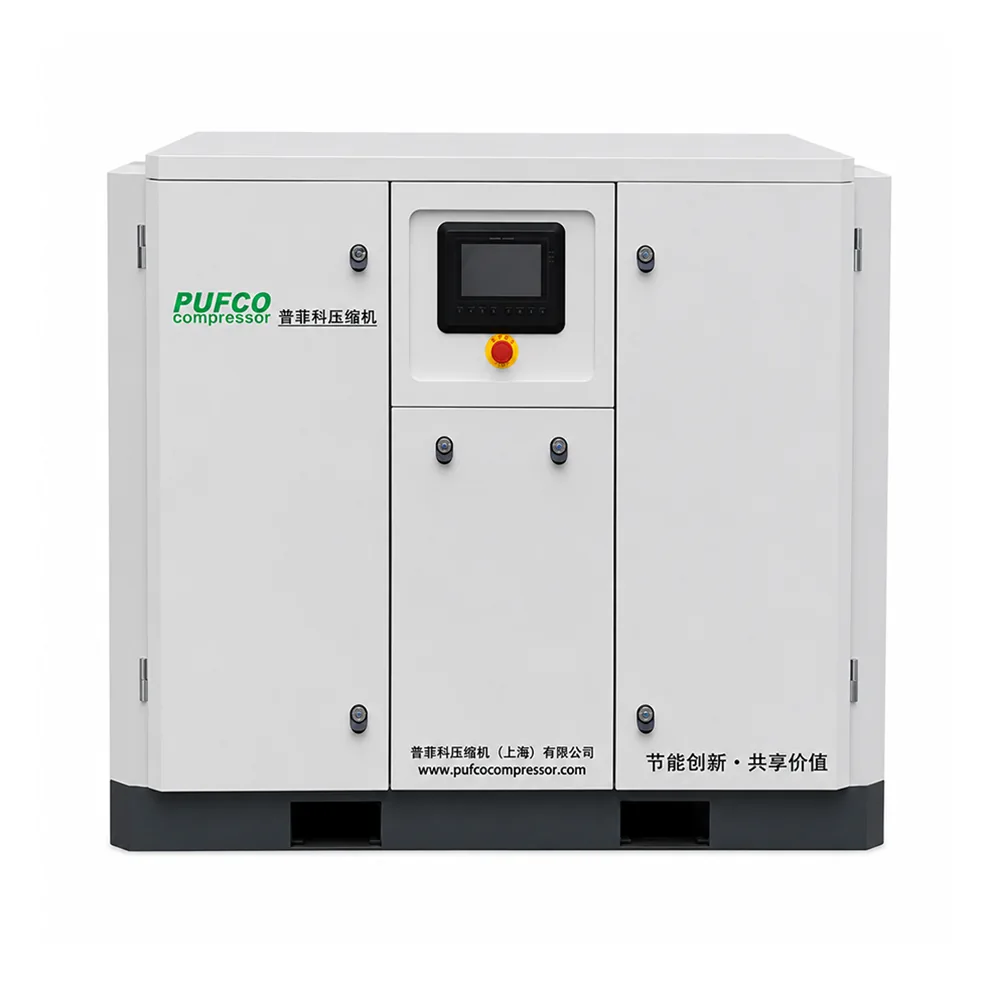
Scroll Oil-Free Air Compressors
Power:3.7 KW-37 KW
Working Pressure:0.7-1.0 Mpa
Exhaust Vol.:0.35-5.3 m3/min
- Overview
- Product Advantages
- Technical Parameters
- Application Scenarios
- FAQ
- Fixed and orbiting scrolls create shrinking compression chambers.
- Continuous scroll compression supplies air through the cycle.
- Compact cabinet combines scroll units and independent cooling.
- Confirm compressor-head count and the supplied control logic.
- Plan ventilation and access around the cabinet installation.
- Assess treatment, storage and pressure control together.
Oil-Free Scroll Compression in a Compact Cabinet
PUFCO oil-free scroll air compressors use a fixed scroll and an orbiting scroll to form shrinking compression chambers. Air moves towards the central discharge without injected lubricating oil in the compression chamber. The mechanism provides a distinct alternative to screw technologies within a compact compressor cabinet.
Module Staging Matched to the Selected Configuration
On multi-module configurations, the controller starts the compressor heads required by air consumption, allowing capacity to be added in stages. Independent cooling and the scroll mechanism support the package arrangement. Model selection should confirm module count and control logic, then coordinate ventilation, pressure management, storage and downstream treatment.
Core Design
Configuration and Selection
Share airflow, pressure, demand changes, air-quality targets and installation space for model selection.
Why choose our air compressor solutions
Oil-Free Scroll Compression
An orbiting scroll and a fixed scroll create shrinking compression chambers. Air moves through these chambers towards the central discharge as the oil-free mechanism performs the compression cycle.
Staged Module Control
On multi-module configurations, the controller starts the number of compressor heads needed for demand. Capacity can therefore be added in stages as consumption changes across the production schedule.
Continuous Air Delivery
The scroll compression mechanism provides a continuous air supply as its compression chambers move through their cycle. This supports processes that need a steady air source alongside appropriate storage and pressure control.
Compact Cabinet Layout
The scroll units are arranged in a compact cabinet. This format is useful for production areas where installation space matters, with access and ventilation incorporated into the final site layout.
Low-Vibration Operating Design
The scroll mechanism supports low-vibration operation within the compact package. This characteristic is useful when planning equipment placement, with actual vibration and noise assessed for the selected configuration and installation.
Independent Cooling System
An independent cooling system manages heat from compressor operation. Keeping cooling within the package design helps coordinate the scroll modules and cabinet, while the installation provides the required ventilation.
| Model | Power (KW) | Pressure (Mpa) | Exhaust Volume (m3/min) | Size(mm) L*W*H | Weight (kg) |
| FWW-3.0A | 3.7 | 0.7 | 0.45 | 680*1000*950 | 220 |
| 0.8 | 0.4 | ||||
| 1 | 0.35 | ||||
| FWW-7.5A | 7.5 | 0.7 | 0.85 | 680*1000*950 | 360 |
| 0.8 | 0.8 | ||||
| 1 | 0.7 | ||||
| FWW-11A | 11 | 0.7 | 1.3 | 720*1100*1650 | 430 |
| 0.8 | 1.25 | ||||
| 1 | 1.1 | ||||
| FWW-15A | 15 | 0.7 | 1.7 | 720*1100*1650 | 550 |
| 0.8 | 1.65 | ||||
| 1 | 1.4 | ||||
| FWW-18A | 18.5 | 0.7 | 2.3 | 720*1100*2020 | 680 |
| 0.8 | 2.2 | ||||
| 1 | 1.8 | ||||
| FWW-22A | 22 | 0.7 | 2.65 | 1450*1100*1650 | 900 |
| 0.8 | 2.56 | ||||
| 1 | 2.1 | ||||
| FWW-30A | 30 | 0.7 | 3.6 | 1450*1100*1650 | 1100 |
| 0.8 | 3.5 | ||||
| 1 | 2.8 | ||||
| FWW-37A | 37 | 0.7 | 5.3 | 1450*1100*2020 | 1300 |
| 0.8 | 5 | ||||
| 1 | 3.85 |
An oil-free scroll compressor can supply electronics production and precision spraying processes that need an oil-free compression source. Its compact arrangement can also suit workshop air stations, while models with multiple compressor modules can stage output as operating stations change. Select the unit for the simultaneous air demand and add drying and filtration appropriate to the equipment’s moisture and particle limits; confirm the number of modules in the supplied configuration.
Frequently Asked Questions
Q1: When should I choose an oil-free scroll compressor rather than a screw compressor?
▼A1: Consider an oil-free scroll package when its capacity at the required pressure meets your demand and its compact or modular arrangement suits the installation. For changing demand, compare the output steps of the proposed multi-module scroll package with the control range of the screw alternative. Base the choice on air quality, energy use, service requirements and sound data for the same duty, rather than assuming either compression type is always better.
Q2: How does a multi-module scroll compressor respond to changing air demand?
▼A2: In a multi-module configuration, the controller changes the number of operating compressor modules to match air consumption. This provides output in stages as modules start or stop. Confirm the module count and control sequence for the proposed model; not every scroll compressor uses the same modular arrangement.
Q3: Does a scroll compressor deliver the same airflow at every pressure?
▼A3: No. Air delivery must be checked at the required operating pressure for the selected model. Include losses through filters and piping when establishing the compressor's discharge pressure. A flow figure quoted for a different pressure is not enough to confirm that the unit will meet the process demand.
Q4: Is a scroll compressor maintenance-free because it is oil-free?
▼A4: No. Oil-free compression removes oil injection from the compression chamber, but the air intake, cooling system, and other service components still need attention. Use the maintenance instructions for the supplied configuration.
Q5: How should noise-sensitive installations be planned?
▼A5: Request model-specific sound data for the required operating conditions, including the measurement method and distance. Check ventilation, service clearance and the proposed location before positioning the unit.
Have more questions about this product? Click the chat icon in the bottom-right corner to contact our team.