 CN

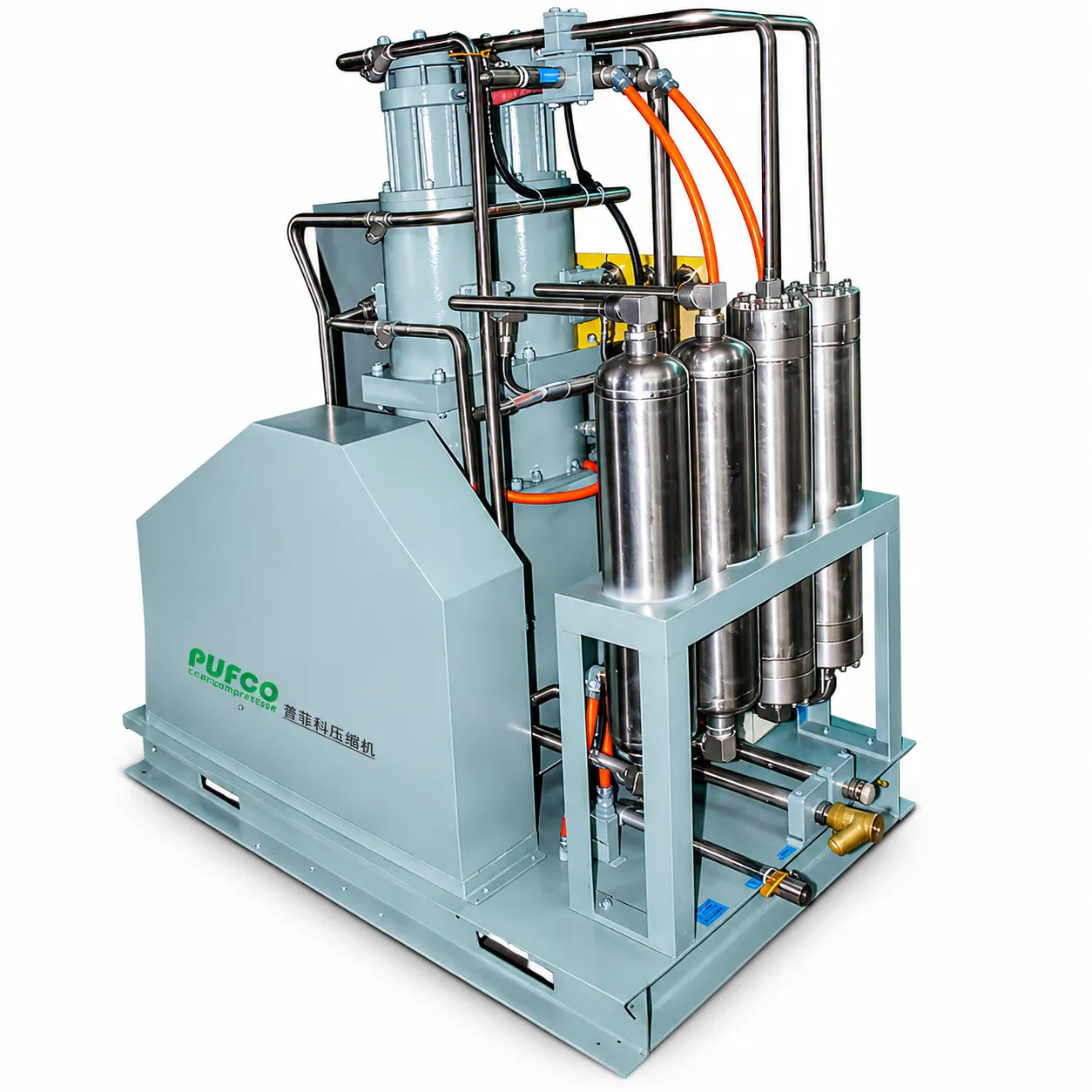
Argon Compressor
1.Efficiently recovers and reuses vaporized argon from cryogenic tanks, reducing gas loss and lowering operating costs.
2.100% oil-free design ensures high-purity, pollution-free argon compression for industrial applications.
3.High efficiency, low energy consumption, and balanced structure provide stable operation and long service life.
4.Compact, easy to install and maintain, supporting 24/7 continuous operation with air-cooled or water-cooled options.
- Overview
- Product Advantages
- Technical Parameters
- Application Scenarios
- FAQ
- Oil-free compression limits added lubricant in the argon gas path.
- Balanced mechanical construction addresses vibration during the compression process.
- Compact package layout supports integration into the planned recovery arrangement.
- Confirm gaseous feed conditions and the quality of recovered argon.
- Choose cooling around compressor duty and the available site utilities.
- Define collection, compression and storage equipment within the agreed scope.
Recompress Gaseous Argon for Transfer and Reuse
The PUFCO argon compressor supplies the pressure-boosting step in an argon recovery arrangement. Suitable vaporized argon passes through the associated collection system before compression and transfer to the receiving side. The oil-free gas path helps limit lubricant contamination introduced when preparing recovered gas for reuse or storage.
A Balanced Package Matched to the Installation
A balanced mechanical arrangement is designed to limit operating vibration, while compact construction helps organize the equipment area. Air-cooled and water-cooled model configurations provide different utility requirements. The compressor proposal considers gaseous inlet conditions, receiving pressure and electrical supply together with the surrounding gas-handling equipment.
Core Design
Configuration and Selection
Send argon inlet conditions, gas quality, required flow, delivery pressure and receiving-system details.
Why choose our air compressor solutions
Argon Recovery And Reuse
The compressor recompresses suitable vaporized argon for transfer and reuse. As part of the recovery system, it helps convert a recoverable gas stream into supply for the receiving installation.
Balanced Mechanical Arrangement
Balanced construction is designed to limit vibration during compressor operation. This mechanical arrangement supports integration of the argon booster with the connections and layout of the gas-handling installation.
Oil-Free Argon Gas Path
The oil-free argon compression path keeps lubricating oil away from the handled gas. This helps control added lubricant contamination when compressing recovered argon for storage or downstream use.
Cooling Options For The Site
The model range includes air-cooled and water-cooled arrangements. Selecting cooling with the required compressor duty helps match the package to the utilities available at the installation site.
Compact Equipment Layout
The compact structure limits the space occupied by the compressor package. This helps organize the compression equipment within a planned argon collection, transfer or storage installation.
Source And Storage Matching
Different model configurations support selection around the gaseous argon source and receiving system. Inlet and delivery conditions, electrical supply and cooling can be specified together for the project.
| Model | Working Medium | Suction Pressure(Mpa) | Suction Pressure(Psig) | Discharge Pressure(Mpa) | Discharge Pressure(Psig) | Power (KW) | Flow Rate (Nm3 / hr) | Voltage | Cooling Method |
| PARZ-100 / 6-165 | Argon | 0.6 | 86 | 16.5 | 2370 | 37 | 100 | 220V / 380V / 415V / 440V 50 / 60HZ | Water-cooled |
| PARV-8 / 1-8 | Argon | 0.1 | 14 | 0.8 | 115 | 1.5 | 8 | 220V / 380V / 415V / 440V 50 / 60HZ | Air-cooled |
| PARW-15/5 | Argon | Slight Positive Pressure | Slight Positive Pressure | 1.5 | 216 | 2.2 | 5 | 220V / 380V / 415V / 440V 50 / 60HZ | Air-cooled |
An argon booster compressor can support recovery of gaseous argon collected from a cryogenic storage installation, raising its pressure for transfer to suitable storage or later industrial use. The incoming gas must meet the selected unit’s temperature, pressure and composition requirements, with any necessary conditioning arranged upstream. Select the receiving vessel and charging schedule together with the compressor; collection, drying and purification are separate functions that must be included where the process requires them.
Frequently Asked Questions
Q1: Can this compressor handle liquid argon directly?
▼A1: No. This equipment compresses gaseous argon, not liquid argon directly. Recovery from a liquid argon installation requires a suitable gas collection arrangement before the compressor inlet. Confirm that the argon reaches the compressor as gas at the permitted temperature and suction pressure.
Q2: How can I assess whether argon recovery is cost-effective?
▼A2: Compare the value of argon that can be recovered and reused with the total recovery-system cost. Include compression power, maintenance, gas treatment, storage and gas losses, using the site's argon price and operating schedule. Gas that cannot meet the process quality requirement should not be counted as reusable savings.
Q3: Are air-cooled and water-cooled versions available?
▼A3: The argon compressor range includes both air-cooled and water-cooled models. Select the cooling arrangement for the machine's duty, site ventilation and available cooling water. Confirm the model's cooling requirements and operating limits before planning the installation.
Q4: Does an oil-free argon compressor purify recovered gas?
▼A4: No. An oil-free argon compressor does not purify recovered gas. Oil-free compression helps avoid adding lubricating oil to the gas path, but it does not remove incoming moisture or other impurities. Assess recovered gas quality and specify any drying, purification and testing separately.
Q5: What is needed to size an argon recovery installation?
▼A5: Provide the recoverable gas quantity, minimum and normal inlet pressures, gas temperature, recovery schedule and required delivery conditions. Inlet pressure affects both the required pressure increase and available compressor capacity, so performance must be checked at those conditions. Include the receiving storage and any gas-treatment requirements when sizing the complete installation.
Have more questions about this product? Click the chat icon in the bottom-right corner to contact our team.