 CN

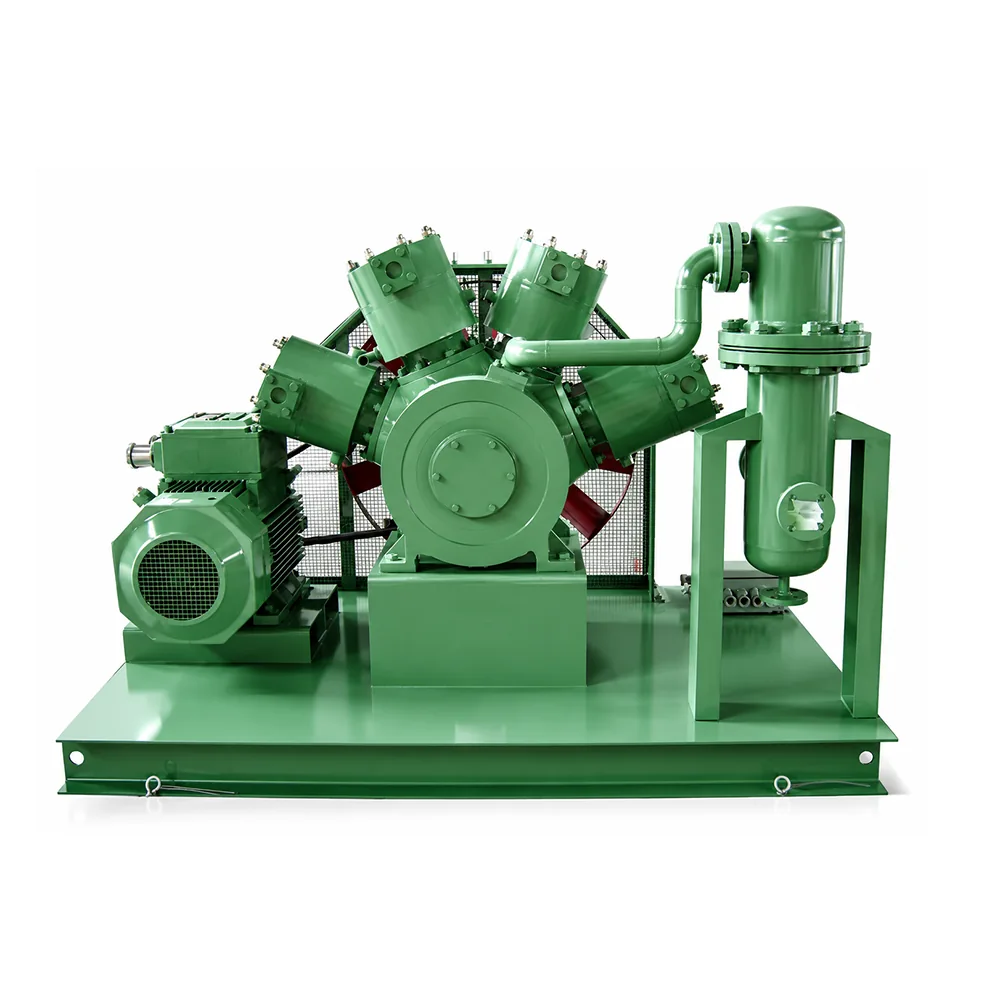
Oil-Free Fluoride Gas Compressor
Cooling type: air or water cooling
Power consumption: <55kw
Speed: 300-560rpm
Flow rate:≤800Nm3/h
Inspiratory pressure: 0-0.5Mpa
Exhaust pressure: <30Mpa
Compression level: 1-4
- Overview
- Product Advantages
- Technical Parameters
- Application Scenarios
- FAQ
- Reciprocating piston compression provides a positive-displacement pressure-boosting mechanism.
- Oil-free gas handling limits lubricant introduced during the compression step.
- Low-speed mechanical design is combined with a compact equipment layout.
- Identify the medium precisely rather than relying on a product label.
- Review material and seal compatibility for the actual operating conditions.
- Specify cooling, controls and process connections with the proposed package.
Define the Process Gas Before Selecting Compression
Selection of a PUFCO oil-free fluoride gas compressor starts with the exact chemical identity, composition and inlet state. The proposed reciprocating piston machine provides a pressure-boosting step for a defined process. An oil-free compression path helps control lubricant contamination introduced by the compressor within the agreed gas-handling duty.
Coordinate the Package with the Verified Gas Duty
Low-speed operation and a compact package form the basis of the mechanical arrangement. Cooling, controls and connections are specified alongside the installation requirements. Materials, seals and operating conditions must be reviewed for the identified medium before the compressor proposal and associated equipment scope can be finalized.
Core Design
Configuration and Selection
Provide the chemical name, CAS number, composition, inlet state, flow and required pressures for review.
Why choose our air compressor solutions
Reciprocating Piston Compression
A reciprocating piston mechanism provides the gas-compression stage. This positive-displacement arrangement offers a defined way to raise process-gas pressure, with materials and seals selected for the exact medium.
Oil-Free Compression Path
The compression chamber keeps lubricating oil out of the handled gas path. This helps control oil contamination introduced during compression in the selected gas-processing application and agreed operating conditions.
Cooling Arrangement Options
Air-cooled and water-cooled arrangements provide options for project planning. The proposed cooling configuration can be matched to the compression duty and the site utilities for the selected machine.
Low-Speed Operating Design
Low-speed operation is part of the compressor’s mechanical design. The drive and compression mechanism are coordinated around that operating approach, with the selected model defining the actual speed and gas duty.
Compact Package Arrangement
The compact compressor and skid layout help organize equipment within the process installation. Package positioning can be coordinated with the available space, gas connections and planned equipment arrangement.
Coordinated Control Configuration
The control configuration can be defined with the compressor and process interfaces. This helps coordinate the selected package functions with the operating needs of the larger installation.
Technical Specifications
| Parameter | Specification |
|---|---|
| Compressor Type | Oil-Free Reciprocating Piston |
| Cooling Method | Air Cooling / Water Cooling |
| Power Consumption | <55 kW |
| Operating Speed | 300 – 560 rpm |
| Flow Capacity | ≤ 800 Nm³/h |
| Suction Pressure | 0 – 0.5 MPa |
| Discharge Pressure | <30 MPa |
| Compression Stages | 1 – 4 Stages |
| Lubrication | Completely Oil-Free |
A fluorinated gas compressor may be considered for the transfer and recovery of a specified refrigerant during maintenance of cooling or process equipment. It can also provide a pressure-boosting stage in a designed collection and reuse system, with any required separation, drying and storage specified separately. Suitability depends on the exact gas or mixture, gas-phase inlet conditions, moisture level and material compatibility at the required pressures and temperatures.
Frequently Asked Questions
Q1: What gas and operating data are needed to check a compressor for my process?
▼A1: Provide the exact chemical name and composition, moisture and impurities, inlet temperature and pressure range, target outlet pressure, and required flow with its reference conditions. Include the duty cycle and the CAS chemical identification number where available. A label such as 'fluorinated gas' is too broad to establish suitability for a specific gas or mixture.
Q2: Does oil-free compression make the gas purer?
▼A2: Oil-free compression avoids introducing lubricating oil from the compression chamber; it does not remove impurities already in the feed gas. If the process requires a defined purity or moisture limit, specify the incoming gas quality and any separate treatment or monitoring needed.
Q3: Can a material-compatibility chart alone confirm that a compressor suits my gas?
▼A3: No. A chart is a starting point, but compatibility also depends on gas concentration, moisture, temperature, pressure and the materials used in every gas-contact component. The assessment must cover seals and valves as well as the main metal surfaces. Oil-free construction is not a substitute for that application-specific review.
Q4: Can the compressor handle wet gas or liquid carryover?
▼A4: The permitted moisture content and gas phase must be checked for the selected compressor. Condensation can affect materials and seals, so specify the moisture level and the temperatures and pressures where condensation may occur. Any liquid-separation or gas-conditioning equipment must be included in the system assessment.
Q5: Can I use the same compressor for a different fluorinated gas?
▼A5: Only after the new gas has been checked against the machine's materials, seals and operating limits. Changing the gas can also change cleanliness and contamination requirements. Approval for one gas or refrigerant mixture should not be treated as approval for another.
Have more questions about this product? Click the chat icon in the bottom-right corner to contact our team.