 CN

Inlet temperature: ≤80℃ (≤45℃)
- Overview
- Product Advantages
- Technical Parameters
- Application Scenarios
- FAQ
- Air-to-air heat exchange and refrigerated cooling
- Liquid separation with automatic condensate discharge
- Water-cooled heat rejection through a separate circuit
- Airflow, inlet pressure and temperature
- Required pressure dew point and model version
- Cooling-water temperature, flow, pressure and maintenance
Refrigerated Moisture Removal with Water Cooling
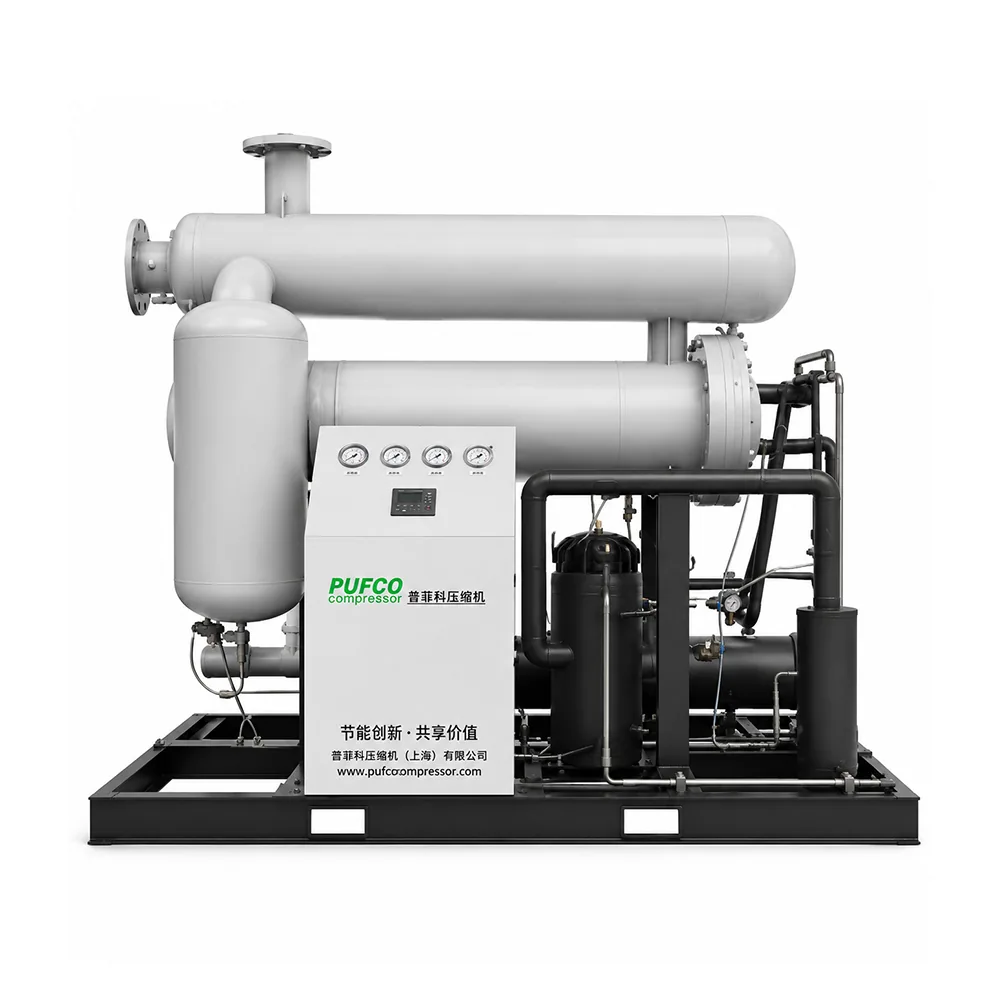
PUFCO water-cooled refrigerated air dryers transfer heat to a cooling-water circuit while removing moisture from compressed air. Incoming air is pre-cooled by the outgoing stream before refrigeration condenses water vapor. Liquid separation and automatic drainage complete the moisture-removal process before treated air returns to the system.
Assess Air-Side and Water-Side Conditions Together
This arrangement suits plants with an appropriate cooling-water supply and heat-rejection system. Standard and higher inlet-temperature versions are selected around the compressor duty. Airflow, pressure and temperature determine the drying load, while water temperature, flow and pressure must satisfy the selected model's cooling requirements throughout the intended operating conditions.
Core Design
Configuration and Selection
Provide compressed-air conditions and available cooling-water details so we can coordinate the dryer with both utility systems.
Why choose our air compressor solutions
Water-Cooled Heat Rejection
A cooling-water circuit carries heat away from the dryer, providing a defined heat-rejection arrangement for plants that already have a suitable industrial water-cooling supply.
Standard And High-Temperature Versions
Separate standard and higher inlet-temperature versions allow the dryer to be matched to different compressor discharge conditions, with water-side requirements considered alongside the compressed-air thermal load.
Refrigerated Water-Vapor Removal
The refrigeration stage cools compressed air so water vapor condenses into droplets, creating a controlled moisture-removal step for a system matched to the specified pressure dew point.
Incoming Air Heat Exchange
Incoming air exchanges heat with the cold outgoing stream before reaching the evaporator, reducing the refrigeration-stage inlet temperature through an integrated air-to-air heat-exchange process.
Centrifugal Condensate Separation
Centrifugal action separates condensed droplets after cooling, helping remove liquid water from the compressed-air stream before the separated condensate is sent to the drain system.
Automatic Liquid Discharge
An automatic drain removes separated water from the dryer, reducing dependence on manual emptying and supporting routine condensate management within the complete compressed-air treatment installation.
Water Cooling Refrigerated Air Dryer
| Model | Processing capability (Nm3/min) | Intake air temperature | Model | Processing capability (Nm3/min) | Intake air temperature |
| FAD-15CW | 16.0 | ≤50℃ | FAD-15GW | 17.0 | ≤80℃ |
| FAD-20CW | 21.5 | ≤50℃ | FAD-20GW | 23.0 | ≤80℃ |
| FAD-25CW | 25.0 | ≤50℃ | FAD-25GW | 25.0 | ≤80℃ |
| FAD-28CW | 28.0 | ≤50℃ | FAD-30GW | 30.0 | ≤80℃ |
| FAD-30CW | 30.0 | ≤50℃ | FAD-35GW | 35.0 | ≤80℃ |
| FAD-40CW | 45.0 | ≤50℃ | FAD-40GW | 45.0 | ≤80℃ |
| FAD-50CW | 55.0 | ≤50℃ | FAD-50GW | 55.0 | ≤80℃ |
| FAD-60CW | 65.0 | ≤50℃ | FAD-60GW | 65.0 | ≤80℃ |
| FAD-80CW | 85.0 | ≤50℃ | FAD-80GW | 85.0 | ≤80℃ |
| FAD-100CW | 110.0 | ≤50℃ | FAD-100GW | 110.0 | ≤80℃ |
| FAD-120CW | 130.0 | ≤50℃ | FAD-120GW | 140.0 | ≤80℃ |
| FAD-150CW | 160.0 | ≤50℃ | FAD-150GW | 160.0 | ≤80℃ |
| FAD-180CW | 180.0 | ≤50℃ | FAD-180GW | 180.0 | ≤80℃ |
| FAD-200CW | 210.0 | ≤50℃ | FAD-200GW | 210.0 | ≤80℃ |
A water-cooled refrigerated air dryer is an option for central compressed-air stations in plants with a suitable cooling-water network. It removes condensed moisture before air reaches production equipment, while transferring refrigeration-system heat to the water circuit. Selection must allow for peak air demand, actual inlet-air temperature and available cooling-water conditions. The required pressure dew point must remain below the lowest downstream pipe temperature; subzero services may need a desiccant dryer instead.
Frequently Asked Questions
Q1: How is a water-cooled dryer different from an air-cooled dryer?
▼A1: A water-cooled dryer transfers refrigeration heat to a cooling-water circuit, while an air-cooled dryer releases it to the surrounding air. Both remove moisture from compressed air by cooling it until water condenses. Choose between them using available cooling water, ambient conditions and the heat load your site can accommodate.
Q2: Which cooling-water conditions should I provide?
▼A2: Provide the water inlet temperature, available flow, supply pressure and water quality. The dryer specification must confirm acceptable conditions for the selected model. A water connection alone does not establish adequate cooling performance.
Q3: Can I use the highest listed flow at any inlet temperature?
▼A3: No. Inlet-temperature configurations and rating conditions differ, and real capacity also depends on pressure and cooling conditions. Supply the maximum expected inlet temperature and operating flow so the appropriate model and rating conditions can be confirmed.
Q4: Will the dryer remove all water from the air?
▼A4: No. A refrigerated dryer removes condensed liquid water but leaves some water vapor in the air. Its pressure dew point is the temperature at which that remaining vapor starts to condense at the operating pressure. Compare the specified dew point with the coldest expected conditions downstream before selecting the dryer.
Q5: What should be included in installation planning?
▼A5: Plan the compressed-air and cooling-water connections, drainage and access for cleaning and maintenance. Include the expected pressure loss and water-side heat load. Confirm filtration separately according to the quality required at the point of use.
Have more questions about this product? Click the chat icon in the bottom-right corner to contact our team.