 CN
CN
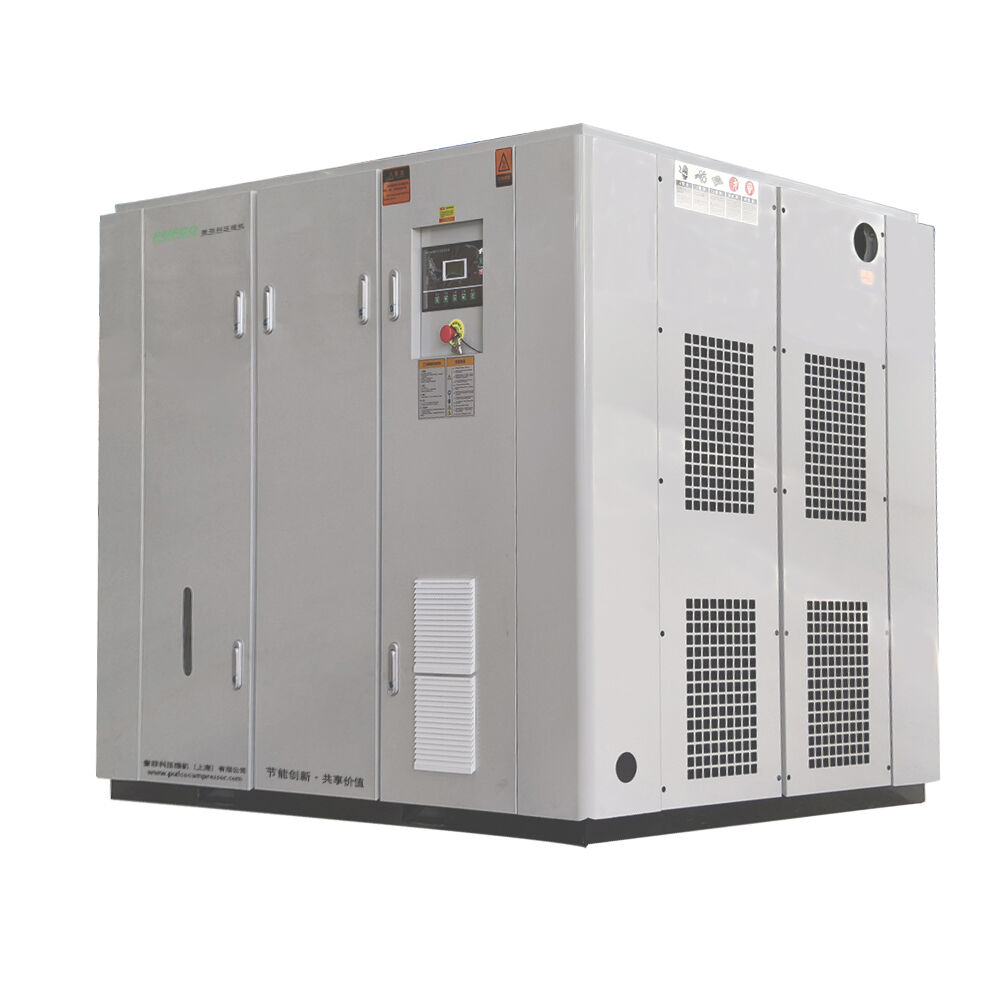
Core Working Principle of the Oil-Injected Screw Air Compressor
Twin-screw rotor dynamics and synchronized oil-film compression
Oil injected screw air compressors rely on carefully designed helical rotors for their operation. When the male rotor turns usually powered by an electric motor its grooves mesh with those on the female rotor as they spin in opposite directions. This coordinated movement generates air pockets that move along the length of the compressor from intake to outlet. As these pockets progress through the system, the space between the rotors shrinks roughly five times over, which is what actually compresses the air. The injected oil plays three important roles at once forming a thin film that stops tiny gaps from leaking, keeps moving parts well lubricated, and takes away the heat generated during compression. Because of this clever design, these machines can run non stop at speeds exceeding 3000 revolutions per minute while still maintaining around 90 percent efficiency in most industrial applications.
Why oil injection dominates industrial screw air compressor applications
Manufacturers in construction and automotive industries stick with oil flooded designs because they just make more economic sense overall. The injected oil actually soaks up around 70% of the heat generated during operation, which means companies don't have to install those massive cooling systems. This allows for smaller compressor units that can still handle airflow rates between 50 to 250 cubic feet per minute at pressures ranging from 100 to 150 pounds per square inch. Another big plus is how the oil film helps cut down noise levels by approximately 8 to 12 decibels, making these machines suitable even in places where noise regulations are strict. Plus there's less maintenance work needed since there are no timing gears involved, and initial purchase prices come in at 30 to 40 percent below what oil free models cost. For most day to day industrial air needs where absolute perfection isn't required, oil injected compressors continue to be the go to choice for countless facilities across different sectors.
Four Critical Functions of Oil in a Screw Air Compressor
Beyond lubrication, oil performs three other vital roles in screw compressors:
Lubrication and sealing: Eliminating blow-by to maximize volumetric efficiency
Oil forms a dynamic seal between rotors, reducing air leakage ("blow-by") by up to 15% and sustaining volumetric efficiency above 90%.Cooling: Absorbing ~70% of compression heat—thermal management essentials
Injected oil captures the majority of thermal energy generated during compression, preventing rotor overheating and enabling stable operation across standard industrial pressure ranges.Noise reduction: Oil-film damping lowers acoustic emissions by 8–12 dB(A)
The oil layer between rotating surfaces acts as an effective acoustic dampener, lowering operational noise to 70–75 dB(A)—well within OSHA-compliant limits for continuous workplace exposure.
This multifunctional integration allows properly maintained oil-injected screw compressors to achieve 50,000+ operating hours.
Key Components and the Oil-Gas Separation Process
Air-end, oil sump, and oil cooler: Integrated thermal and flow control
Inside the air end are those twin rotors that do most of the heavy lifting when it comes to compression. Meanwhile, the oil sump acts as storage for the lubricant in this sealed system. As the oil makes its way from the sump into the air end, it helps keep things sealed properly and stays cool during operation. After passing through the oil cooler, where around two thirds of all that generated heat gets released, the oil returns to the air end at just the right thickness. This careful temperature control means the oil can maintain proper volume efficiency even when the machine runs for long periods without getting too hot.
Multi-stage separation: Coalescing, adsorption, and mechanical filtration for <3 ppm oil carryover
The separation of oil and gas after compression happens through several connected steps. The first step uses centrifugal force inside the separator to knock out around 95% of the bigger oil droplets. What remains gets handled next by coalescing filters that bring together those tiny oil particles into something bigger that can actually be drained away. For the really small stuff, we rely on adsorption media, usually with activated carbon mixed in there somewhere, which grabs hold of those sub-micron aerosols. There's also mechanical filtration working behind the scenes all along the way to catch any particulates coming upstream. When everything works properly, this whole system keeps oil carryover below 3 parts per million most of the time, which means cleaner air going forward and better protection for whatever equipment sits downstream from here.
Fixed-Speed vs. VSD Screw Air Compressors: Oil Management and Efficiency Implications
Standard fixed-speed screw compressors keep their motor running at the same RPM no matter what the demand is, adjusting output through inlet valves when needed. The simplicity works fine for basic applications but comes at a cost during times when only part load is required. Energy gets wasted because the motor keeps spinning even when there's not much work to do. That's where variable speed drive (VSD) models shine. These machines can actually change motor speeds based on how much air needs to be moved right now, which cuts down on energy usage by around 30 to 50 percent in facilities with changing demands throughout the day. How this impacts oil systems matters quite a bit too. Fixed speed units run in pretty steady thermal conditions, so oil stays cool and filters work predictably most of the time. But VSD compressors face all sorts of temperature swings and varying oil flow rates as they ramp up and down. This means manufacturers need better cooling solutions and much more precise filtration systems to keep the oil at just the right viscosity across different speeds. Otherwise, problems pop up with lubrication, seal integrity, and excessive oil getting carried over into compressed air streams during those frequent speed changes.
FAQ
What are the three main roles of oil in a screw air compressor?
Oil in a screw air compressor acts as a lubricant for moving parts, forms a seal to prevent air leakage, and absorbs heat generated during compression.
Why are oil-injected screw compressors preferred in industrial applications?
They are preferred due to their cost-effectiveness, efficient heat absorption by oil, reduced noise levels, lower maintenance, and cheaper initial costs compared to oil-free models.
How does a variable speed drive compressor save energy?
VSD compressors adjust motor speeds according to demand, reducing energy use by 30 to 50% by avoiding unnecessary motor operation during low demand periods.

