 CN
CN
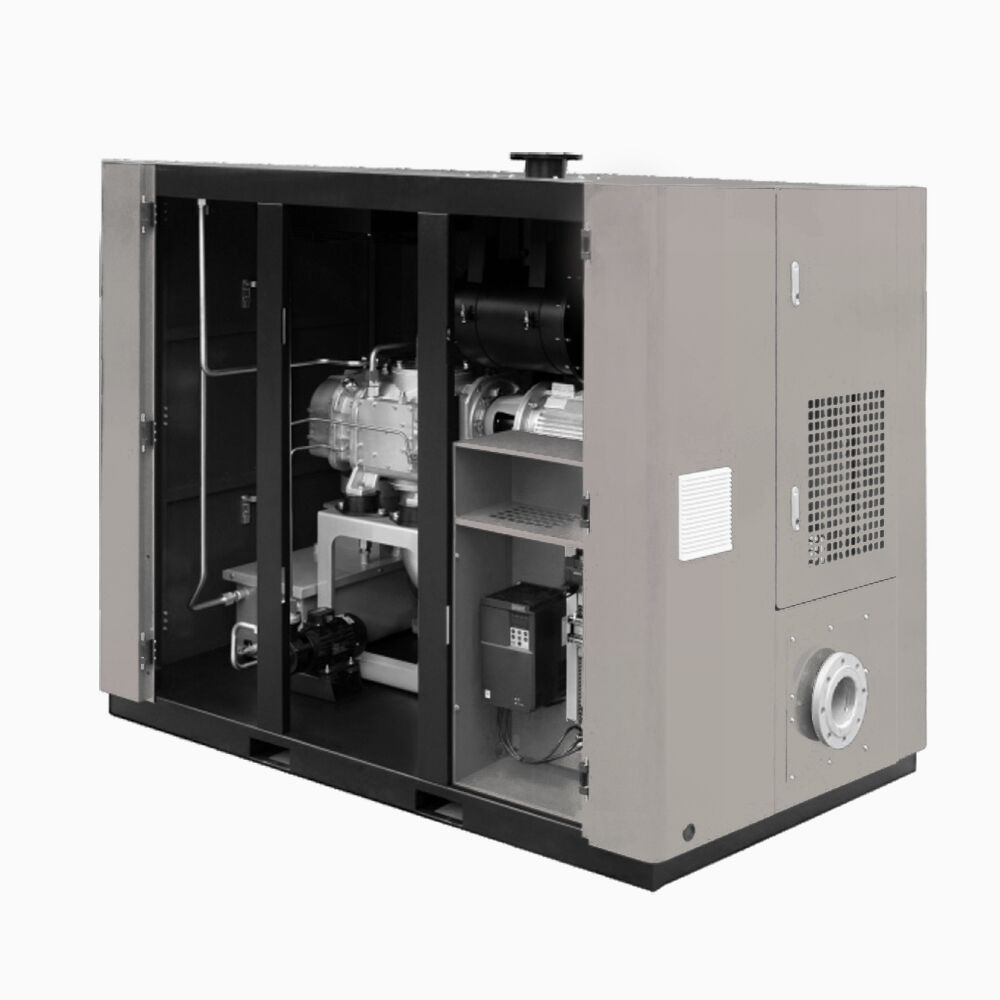
Core Operating Principles: Rotary Compression vs Reciprocating Displacement
How the oil-injected screw air compressor achieves smooth, continuous compression via intermeshing rotors and oil sealing
Oil injected screw air compressors rely on specially designed helical rotors spinning in opposite directions. When these rotors come together, they trap air in spaces that get smaller and smaller between them and the compressor housing, which creates smooth, steady compression without pulses or interruptions. The oil plays several important roles here. First, it seals tiny gaps that would otherwise let compressed air escape internally, cutting losses down significantly. Second, it helps manage the heat generated during compression. And third, it keeps all the moving parts properly lubricated. This combination of features allows the compressor to run continuously at full capacity with very stable pressure output (around plus or minus 1%). Such reliability matters a lot for industrial operations where consistent, high quality air supply simply cannot be interrupted.
How piston compressors generate pressure through cyclic intake-compression-discharge strokes and inherent mechanical limitations
Piston compressors work using what's called reciprocating displacement. Basically, the piston moves back and forth thanks to a crankshaft. When it goes down, it pulls air into the chamber. Then as it moves up, it squeezes that air until it gets pushed out through special discharge valves. The way this works creates an uneven airflow pattern with pressure fluctuations around ±15%. Components like valves, piston rings, and bearings get stressed repeatedly from changing directions of force. According to recent findings from the Compressed Air Best Practices guide released last year, all these mechanical limitations mean most industrial applications can only run about 60 to 70% of the time before needing maintenance breaks. And there's another problem too. The constant heating and cooling cycles speed up component wear significantly, making these machines less reliable over time compared to other compressor types.
Energy Efficiency and Total Cost of Ownership (TCO) Analysis
Load-dependent efficiency: Why screw air compressor systems maintain 85% efficiency from 40%-100% load, while piston units drop sharply below 70%
Screw compressors today maintain around 85% efficiency when operating between 40% and 100% load because their rotor shapes have been fine tuned and they work well with variable speed drives. Things get tricky with piston units though. They start losing efficiency pretty quickly once we drop below 70% load. Why? Well, these machines experience what's called cycling losses every time they restart and stop, plus there's all that wasted effort during those idle strokes where air just gets recompressed unnecessarily. What really matters here is how much empty space exists inside and whether airflow stays consistent throughout operation. Screw compressors basically eliminate dead spots and provide smooth continuous compression while piston units struggle with volume issues when running at less than full capacity. According to some industry reports from last year, this performance difference actually means screw compressors can cut down on energy usage by anywhere from 18% to 35% for each 100 cubic feet per minute in situations where demand fluctuates.
5-year TCO breakdown: Capital cost, energy use (kWh/100 cfm), and maintenance labor - with ROI timeline for high-duty-cycle applications
Although screw compressors carry a 30-50% higher initial investment, their superior efficiency and durability yield significantly lower Total Cost of Ownership (TCO) in continuous-use environments. For a 100 hp system operating 6,000 hours/year:
| Cost Factor | Screw Compressor | Piston Compressor |
|---|---|---|
| Purchase price | $38,000 | $22,000 |
| Energy (kWh/100 cfm) | 22.1 | 29.4 |
| Annual electricity | $46,200 | $61,400 |
| Maintenance/year | $2,100 | $5,300 |
| 5-year TCO | $289,500 | $372,000 |
This represents $82,500 in five-year savings-achieving ROI in just 14-18 months for facilities running above 50% duty cycles. Maintenance dominates piston TCO, driven by frequent valve and ring replacements and labor-intensive overhauls every 8,000 hours.
Reliability, Maintenance Burden, and Duty Cycle Alignment
Moving parts comparison: 3-5 critical components in screw air compressor vs. 20+ wear-prone parts in piston units
The oil injected rotary screw compressor has just around three to five main parts inside it: those twin rotors, some precision bearings, shaft seals, plus the oil filter system. Because there are so few moving pieces, these machines tend to break down less often and problems are easier to spot when they do happen. Reciprocating piston compressors tell a different story though. These guys pack in about twenty or more parts that wear out over time like intake and exhaust valves, piston rings, connecting rods, wrist pins, cylinder liners and all sorts of other components. Each one can fail independently which means more things going wrong at once. That's why most facilities find themselves servicing screw compressors just once a year for routine checks, whereas piston models need attention every three months or so. The difference in part count really adds up too. Plants report something like sixty percent fewer unexpected shutdowns with screw units compared to their piston counterparts, making maintenance schedules much smoother and less of a headache overall.
Duty cycle suitability: Continuous operation (screw) vs. intermittent duty (piston) - and consequences for uptime, bearing life, and thermal stress
Screw compressors can run continuously at full capacity thanks to their balanced rotor design and constant oil cooling system. Piston compressors tell a different story though they're usually limited to about 70% duty cycles because of heat buildup and parts wearing out over time. When these limits get pushed, problems start multiplying fast. The bearings in piston units get extremely hot, sometimes three times hotter than what screw units experience. Meanwhile, screw systems keep oil temperatures stable within just plus or minus 2 degrees Celsius. Running pistons nonstop cuts their useful life down by roughly 40%. Look at service life numbers and the difference becomes even clearer: most screw compressors last well beyond 60,000 operating hours before needing serious maintenance, while piston models typically need complete overhauls long before reaching 20,000 hours when kept running constantly. Matching compressor type to actual workload requirements makes all the difference in keeping operations running smoothly, reducing equipment damage from excessive heat, and getting better value from expensive machinery investments.
Air Quality, System Stability, and Application Fit
The quality of industrial compressed air really matters when it comes to keeping processes intact, ensuring product safety, and extending equipment life. Let's talk about piston compressors first. These machines tend to put way too much lubricant into the air stream, often pushing past 50 parts per million of oil carryover. That creates serious contamination problems across industries like food production, pharma manufacturing, and electronics fabrication. Now compare that to oil-injected screw compressors which typically hit below 3 ppm oil aerosols thanks to those fancy multi-stage coalescing filters and better oil-air separation tech. They actually meet the ISO 8573-1 Class 2:2:1 purity standards without needing all those expensive downstream dryers or additional coalescers. When looking at system stability, there's a night and day difference. Piston units create these annoying pressure fluctuations around ±15 psi that mess up pneumatic tools and throw off sensitive instruments. Screw compressors? They run almost pulse-free at just ±1 psi, making them perfect for precision automation work and maintaining consistent actuator responses. Temperature control is another big factor here. Screw compressors stay cool even during long runs, while piston models often overheat and fail when pushed hard for extended periods. For operations that need consistently clean air day after day - think automotive paint shops, semiconductor handling lines, or medical device assembly areas - screw technology isn't just good, it's basically required. Piston compressors still have their place, but mostly in low demand situations where air purity, steady flow, and reliable uptime aren't top priorities.
FAQ
What are the main differences between screw and piston compressors?
Screw compressors offer smooth and continuous compression with fewer moving parts, making them more reliable for continuous operation. Piston compressors, however, rely on cyclic intake-compression-discharge processes and have many more components, leading to a higher likelihood of wear and maintenance needs.
Why is a screw compressor more energy-efficient than a piston compressor?
Screw compressors are designed to maintain high efficiency over a wide range of loads, while piston compressors experience significant efficiency losses, especially at lower loads, due to cycling losses and restarting issues.
How does total cost of ownership compare between screw and piston compressors?
Despite a higher initial purchase price, screw compressors have a lower total cost of ownership over time due to their energy efficiency and reduced maintenance needs, providing significant long-term savings.
Which applications benefit most from screw compressors?
Screw compressors are ideal for industries requiring continuous operation and high air quality, such as food processing, pharmaceuticals, and precision manufacturing, due to their consistent pressure output and low oil carryover.

