 CN
CN
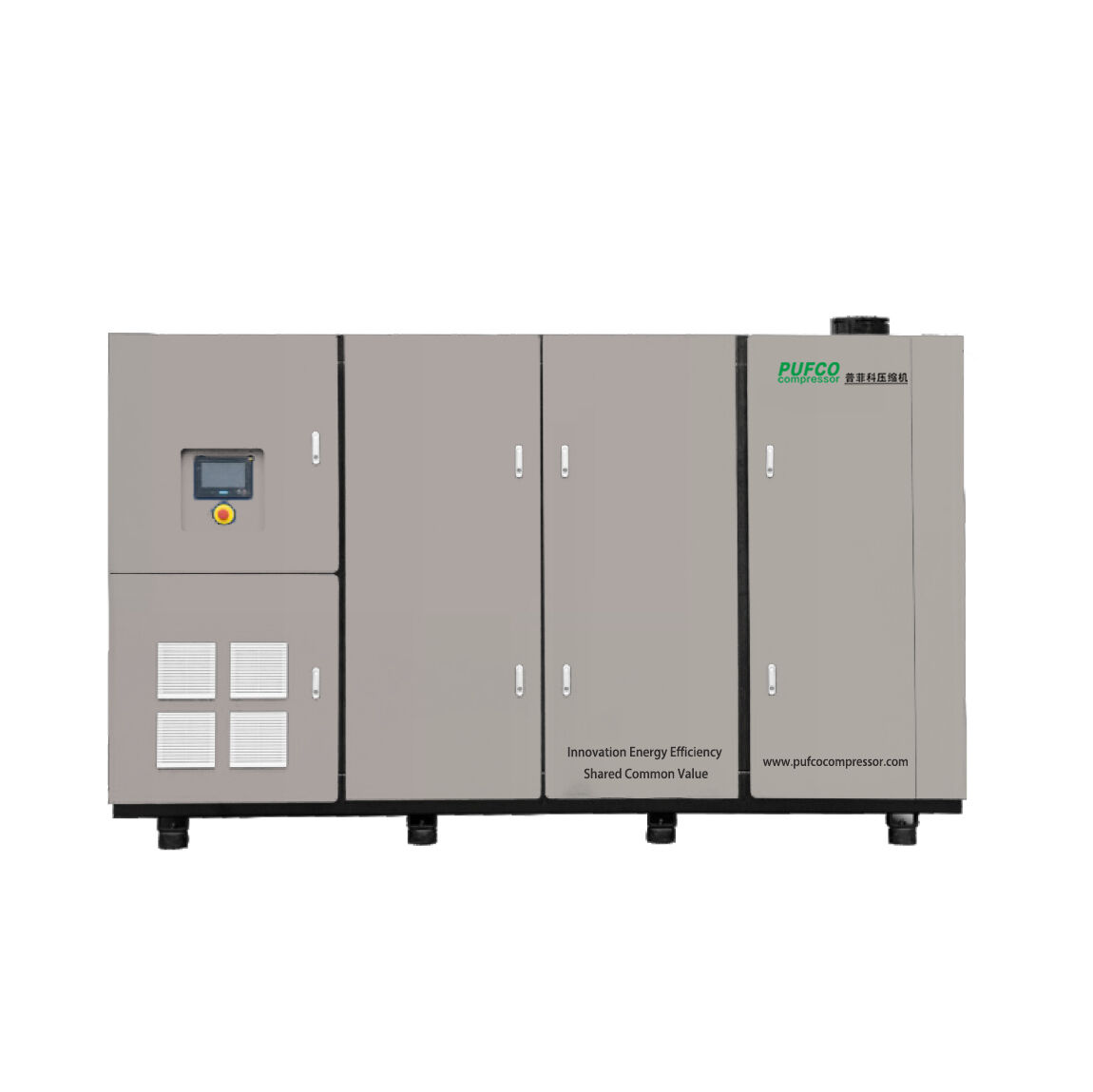
How Screw Air Compressors Work: Rotary Screw Technology Explained
The Twin-Screw Mechanism and Compression Cycle
Screw air compressors work with two specially machined helical rotors, one male (convex shape) and one female (concave shape), that rotate against each other inside a sealed housing. When air comes into the inlet port, it gets caught in spaces between these rotors as they turn. These spaces keep getting smaller as the rotors spin, which makes the air take up less space but builds up pressure at the same time. The result is steady airflow without pulses, making them great for industries that need continuous operation. Unlike other types, there's no need for valves or stop-start movements during operation, which helps maintain reliability over long periods.
Oil-Injected vs. Oil-Free Screw Designs
Screw compressors fall into two fundamental configurations based on lubrication strategy:
- Oil-injected systems introduce oil directly into the compression chamber to lubricate bearings and rotors, seal clearances, and absorb heat. The oil is then separated from the airstream and recirculated—enabling tighter tolerances, higher efficiency, and lower initial cost.
- Oil-free designs, certified to ISO Class 0 (the highest purity standard), eliminate all contact between oil and air using precision gear timing, advanced coatings, and air-cooled stages. These are essential for pharmaceutical, food, beverage, and electronics manufacturing where even trace hydrocarbon contamination is unacceptable.
Key Advantages of Screw Air Compressors for Continuous Operations
Energy Efficiency and Reduced Lifecycle Costs
The rotary screw design provides much steadier air flow without those annoying energy spikes we see in piston compressors that keep turning on and off all the time. Add a Variable Speed Drive system to this setup and suddenly the motor adjusts its speed based on what's actually needed at any given moment. This cuts down on wasted energy when nothing is being powered up, maybe around 35% less according to some tests. There are just fewer components moving around here, so there's less strain on everything mechanically speaking. Parts tend to wear out predictably too, which means longer lasting equipment overall. Maintenance becomes something that happens less often instead of constant tinkering. Looking at the big picture, these factors combined usually bring down lifetime operating expenses somewhere between 20% and 30% when compared against traditional reciprocating models.
Reliability, Low Vibration, and Extended Service Intervals
Engineered for uninterrupted 24/7 operation, screw compressors deliver exceptional reliability:
- Balanced rotor dynamics minimize vibration—protecting both equipment and facility structures
- Service intervals reach up to 8,000 hours (vs. 500–1,000 for piston models), especially with oil-injected VSD units
- Integrated digital monitoring provides real-time diagnostics, enabling predictive maintenance and avoiding unplanned downtime
These attributes ensure consistent air delivery without production interruptions—critical for mission-critical manufacturing and process automation.
Selecting the Right Screw Air Compressor: Critical Sizing and Specification Factors
CFM, PSI, Duty Cycle, and System Demand Matching
Accurate sizing hinges on three interdependent metrics:
- CFM (Cubic Feet per Minute): Total airflow required by all connected tools operating simultaneously—not peak demand of a single device
- PSI (Pounds per Square Inch): Minimum pressure needed at the point of use, accounting for system losses (typically 5–10 PSI above tool requirements)
- Duty Cycle: Reflects runtime profile—100% for continuous processes (e.g., packaging lines), versus 50–70% for batch operations
Undersizing strains components and causes pressure collapse; oversizing wastes energy—up to 30% annually in inefficient operation. Audit every air-consuming device, sum their demands, and add a 25% buffer for future expansion and system aging.
Integration with Air Treatment and Piping Infrastructure
Compressed air quality directly dictates equipment reliability and product integrity. A robust system includes:
- Multi-stage filtration, removing particulates down to 0.01 microns and oil aerosols to <0.003 mg/m³
- Refrigerant or desiccant dryers, maintaining dew points below –40°F (–40°C) to prevent condensation-related corrosion and freezing
- Aluminum piping systems, engineered as closed-loop layouts with swept bends instead of 90° elbows, reducing pressure drop and eliminating rust contamination
Neglecting air treatment contributes significantly to operational risk: manufacturers report over $740,000 in annual unplanned downtime linked to poor air quality and downstream component failure.
Maintenance Best Practices and Common Troubleshooting for Screw Air Compressors
Preventive Maintenance Schedule and Component Lifespans
Adherence to manufacturer-recommended intervals is foundational to sustained performance and longevity:
| Component | Replacement Frequency | Consequence of Delayed Maintenance |
|---|---|---|
| Air Filters | Every 2,000 hours | Restricted intake – reduced CFM, higher discharge temperature |
| Lubricant | Every 4,000 hours (oil-injected) | Oxidized oil – accelerated bearing wear, sludge formation |
| Oil-Air Separator | Every 8,000 hours | Oil carryover – downstream contamination, filter clogging |
Supplement scheduled tasks with condition-based monitoring: smart vibration sensors detect early bearing anomalies; routine oil analysis identifies degradation before viscosity loss occurs; thermal imaging reveals abnormal hot spots during operation—extending component life by up to 30% according to industry lifecycle audits.
Diagnosing Reduced Output, Overheating, or Oil Carryover
When output falls below 90% of rated capacity, begin with the most common cause: a restricted intake filter. For overheating, investigate:
- Clogged cooling fins or radiators limiting airflow
- Low oil level or degraded lubricant increasing friction
- Voltage imbalance or phase loss destabilizing motor performance
Oil carryover typically signals separator failure or lubricant breakdown. Diagnose systematically:
- Measure pressure differential across the air-oil separator—if 10 psi, replace
- Verify condensate drain trap operation—stuck-open or stuck-closed traps disrupt separation
- Test oil viscosity and acid number against OEM specifications
Contaminated or oxidized lubricant accounts for 68% of avoidable efficiency losses in screw compressor failure analyses—making oil health the single most actionable indicator of system condition.
FAQ
What are the main differences between oil-injected and oil-free screw compressors?
The main differences lie in their lubrication strategies. Oil-injected systems use oil to lubricate bearings and rotors, enhancing efficiency and reducing initial costs, while oil-free designs avoid contact between oil and air, essential for industries requiring high purity standards.
Why are screw air compressors more energy-efficient than piston models?
Screw air compressors provide a steady airflow without frequent on-and-off cycles, reducing energy spikes. When equipped with a Variable Speed Drive system, they adjust speed to demand, leading to significant energy savings.
How often should screw compressor components be replaced?
Air filters should be replaced every 2,000 hours, lubricants every 4,000 hours for oil-injected systems, and oil-air separators every 8,000 hours, adhering to manufacturer recommendations for optimal performance and longevity.
What should be done if a screw air compressor is overheating?
Check for clogged cooling fins or radiators, low oil levels, degraded lubricants, and potential voltage imbalances or phase loss affecting motor performance.

