 CN
CN
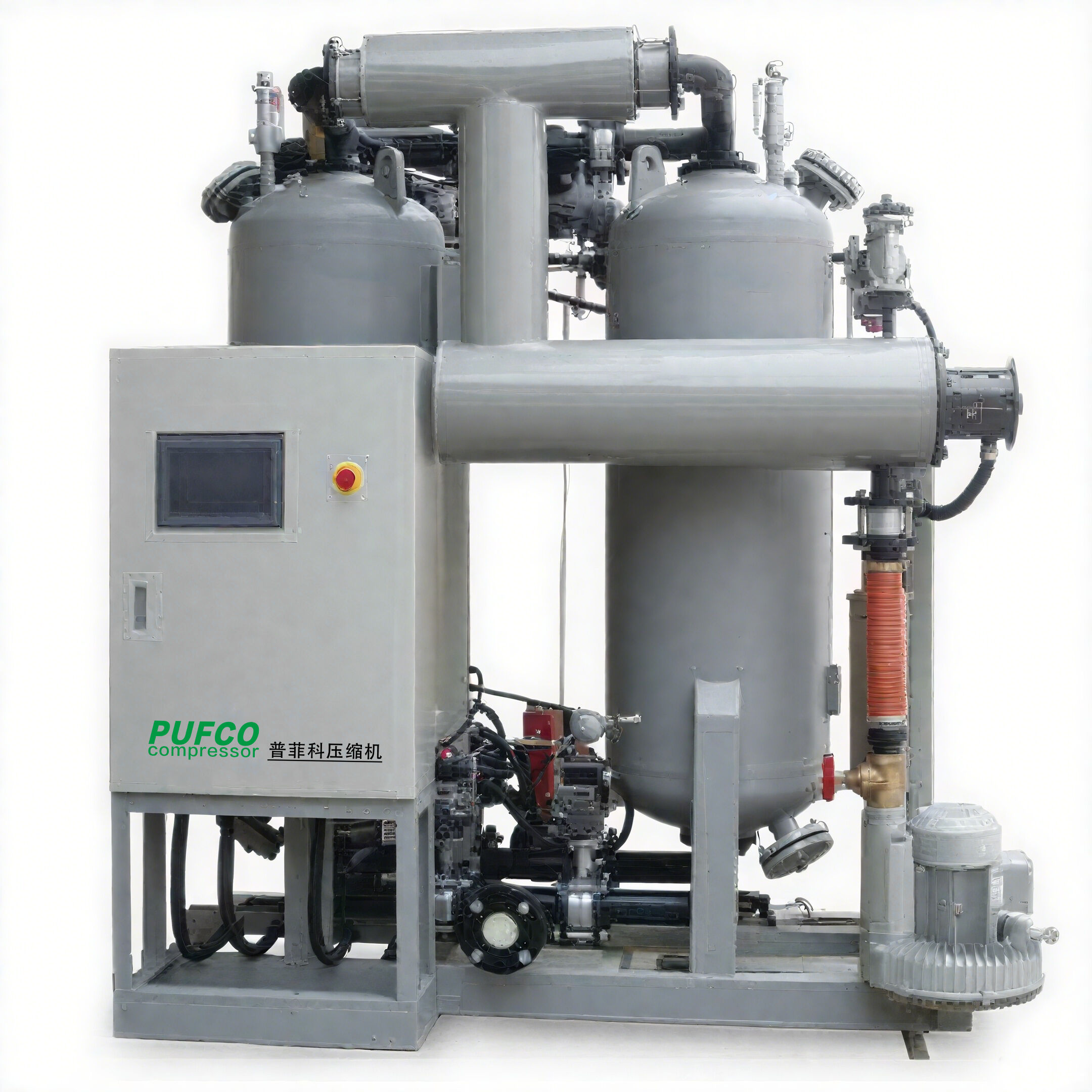
The Moisture Problem in Compressed Air Systems
Compressed air systems face inherent moisture challenges due to atmospheric humidity. During compression, air volume reduces while water vapor concentration increases dramatically. As compressed air cools downstream, it reaches its dew point temperature—causing water to condense into liquid form. This accumulation creates operational hazards including corrosion, freezing, product contamination, and pneumatic failure.
How compression concentrates moisture and creates operational hazards
Ambient air contains water vapor proportional to relative humidity. Compression reduces air volume but concentrates existing moisture—so 100 cfm of humid summer air yields significantly more liquid water than winter air. Condensation occurs throughout distribution lines, receivers, and tools. Accumulated water corrodes steel piping and storage tanks, washes away lubrication in pneumatic tools (increasing wear), and freezes in cold environments—blocking airflow. Without proper air dryer systems, these issues escalate maintenance costs and unplanned downtime.
Industry-specific consequences: Corrosion, freezing, product contamination, and pneumatic failure
Moisture consequences vary across sectors:
- Manufacturing: Water-induced corrosion shortens equipment lifespan; frozen lines halt production in cold facilities
- Food processing: Liquid water contaminates products and promotes bacterial growth—triggering recalls
- Pharmaceuticals: Moisture compromises sterile environments and product integrity
- Pneumatic systems: Water washes away lubricants, causing valves to stick and cylinders to seize—leading to inconsistent actuator performance, premature component failure, and unplanned stoppages
Moisture-related failures account for nearly 25% of pneumatic system breakdowns. Effective air dryer implementation prevents these costly consequences across industries.
How Refrigerated Air Dryers Work: Principles and Design
Refrigerated air dryers operate on a straightforward principle: cooling compressed air to force moisture condensation. This process prevents liquid water from damaging downstream equipment or contaminating end products. Understanding their core mechanics helps operators maintain system efficiency and reliability.
Cooling to Dew Point: Heat Exchange, Refrigeration Cycle, and Condensate Separation
The refrigeration cycle begins when warm, moisture-laden compressed air enters the dryer’s primary heat exchanger, where ambient air precools the incoming stream. Next, the air moves through a secondary heat exchanger where refrigerant absorbs heat—lowering the air temperature further and causing water vapor to condense into liquid droplets.
A critical component is the refrigerant circuit:
- Compressor: Increases refrigerant pressure and temperature
- Condenser: Cools the refrigerant, turning it into liquid
- Expansion valve: Reduces pressure, causing rapid refrigerant cooling
- Evaporator: Cold refrigerant absorbs heat from compressed air
Air typically cools to a 38°F (3°C) pressure dew point—suitable for most industrial applications. Centrifugal separators or baffle plates then remove condensate before automatic drains eject collected water, ensuring only dry, cooled air exits the system.
Cycling vs. Non-Cycling Air Dryer Configurations: Matching Demand, Efficiency, and Reliability
Selecting between cycling and non-cycling refrigerated air dryers hinges on operational demands and energy considerations. Both types follow the same moisture removal principles but differ in refrigerant management:
| Feature | Cycling Dryers | Non-Cycling Dryers |
|---|---|---|
| Energy Use | Lower during low demand | Constant, higher baseline |
| Refrigerant Control | Cycles compressor on/off | Continuous compressor operation |
| Best For | Variable air demand scenarios | Stable, consistent air loads |
| Maintenance Impact | Reduced thermal stress on components | Simpler design, fewer moving parts |
Cycling models adjust cooling capacity to actual airflow—preventing energy waste during low-production periods—but frequent compressor cycling may increase long-term wear. Non-cycling units maintain temperature stability but consume more power. Plants with shift-based operations often benefit from cycling dryers, while continuous processes may prefer non-cycling reliability.
Key Advantages of Refrigerated Air Dryers
Refrigerated air dryers offer a reliable and cost-efficient method for removing moisture from compressed air. They deliver a consistent pressure dew point (typically 3–7 °C) without the high energy consumption of desiccant dryers or the complexity of membrane systems. Maintenance is straightforward—periodic cleaning of condensate drains and heat exchangers is usually sufficient—reducing downtime and service costs. These dryers also protect downstream equipment from corrosion, freezing, and microbial growth, directly minimizing costly repairs and production interruptions. For plants that operate continuously or cycle with demand, modern cycling refrigerated air dryers further cut energy use by adjusting refrigeration capacity—making them an economical choice for medium-critical applications.
Selecting and Validating the Right Air Dryer for Your Application
Aligning dryer specs with ISO 8573-1 purity classes (e.g., Class 4 for pharma cleanrooms)
Selecting the optimal air dryer requires precise alignment with ISO 8573-1 purity classes, which define permissible levels of moisture, oil, and particulates in compressed air. Industries with strict contamination controls—such as pharmaceuticals requiring Class 4 air (≤−20°C dew point)—must prioritize dryers meeting exact moisture removal specifications. Food-grade applications similarly demand Class 2 or higher air quality to prevent bacterial growth. Manufacturers should cross-reference dryer performance data against ISO class thresholds, focusing on certified pressure dew point (PDP) ratings and filtration efficiency. For instance, a Class 4 rating necessitates refrigeration dryer capabilities capable of maintaining consistent PDP below ambient operational temperatures to ensure product integrity and regulatory compliance.
Real-world validation: Performance metrics, monitoring, and integration with compressed air audits
Beyond initial selection, continuous validation through performance monitoring is critical for sustained air dryer efficacy. Facilities should track key metrics—including dew point stability (measured via inline sensors), energy consumption per CFM, and condensate discharge volume—and integrate them into routine compressed air audits conducted quarterly or biannually. These audits reveal deviations from baseline efficiency and identify maintenance needs early: a 15% rise in energy usage, for example, could indicate refrigerant coil fouling or compressor wear. Audit protocols should also verify that dryer output consistently meets the target ISO class using calibrated instrumentation. This proactive approach prevents costly downtime—plants with formalized monitoring programs report 30% fewer moisture-related failures, according to 2023 industry maintenance data.
FAQ
Q: Why is moisture a problem in compressed air systems?
A: Moisture in compressed air can cause corrosion, freeze in cold environments, contaminate products, and lead to pneumatic system failures. This can escalate maintenance costs and cause unplanned downtimes.
Q: How do refrigerated air dryers remove moisture from compressed air?
A: Refrigerated air dryers cool compressed air, lowering its temperature to the dew point. This causes water vapor to condense into droplets, which are then removed from the system.
Q: What is the difference between cycling and non-cycling air dryers?
A: Cycling air dryers adjust their cooling capacity based on demand, saving energy during low use but potentially increasing wear. Non-cycling dryers maintain constant cooling, suitable for stable air demand but with higher energy consumption.
Q: What maintenance is required for a refrigerated air dryer?
A: Routine maintenance includes cleaning condensate drains, heat exchangers, and monitoring refrigerant levels to ensure efficient operation.
Q: How do I select the right air dryer for my industry?
A: Match the air dryer to your industry’s requirements by consulting ISO 8573-1 purity classes and prioritizing dryers that meet specific dew point and filtration needs. Conduct regular audits to validate performance.

