 CN
CN
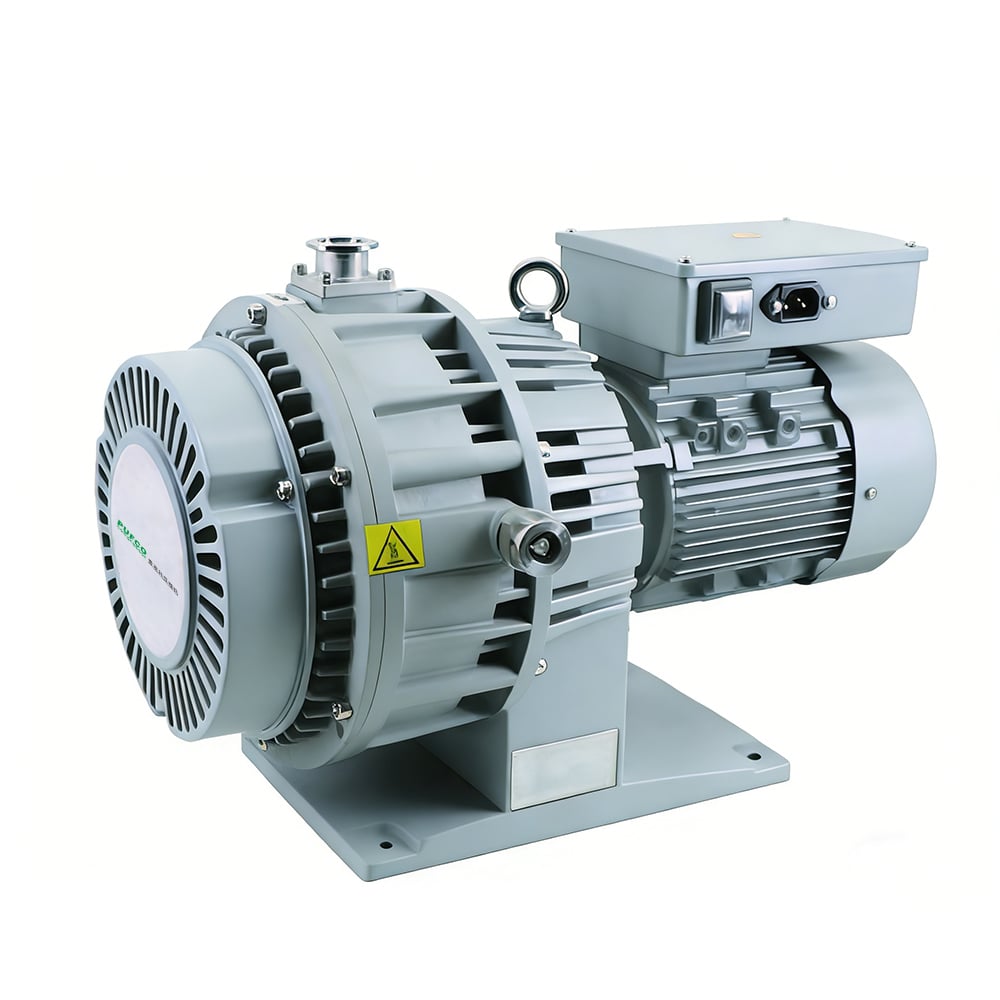
Critical Selection Criteria for Pharmaceutical Vacuum Pumps
Cleanliness, Material Compatibility, and GMP-Compliant Construction
In pharmaceutical manufacturing, vacuum pump design must uphold stringent cleanliness and material integrity to prevent product contamination. All wetted and critical non-wetted components must be constructed from corrosion-resistant materials—primarily 316L stainless steel—to withstand aggressive cleaning agents, sterilization cycles, and process vapors while maintaining surface passivation. Closed-system architectures that fully isolate the pumping mechanism from product streams eliminate residue accumulation and cross-batch contamination risks. GMP-compliant pumps feature smooth, crevice-free surfaces with electropolished finishes (Ra ≤ 0.4 µm) to support effective CIP (Clean-in-Place) and SIP (Sterilize-in-Place) protocols. Seals and gaskets must be FDA-compliant elastomers—free of migrating lubricants—and validated for repeated thermal and chemical exposure. Comprehensive documentation—including material traceability certificates, surface roughness reports, and weld maps—demonstrates adherence to 21 CFR Part 211 and ISO 14644 cleanroom standards, ensuring audit readiness and reinforcing confidence in product purity.
Dry Screw vs. Diaphragm vs. Claw Pumps: Trade-offs for Aseptic Processes
Aseptic processing requires oil-free vacuum generation to eliminate hydrocarbon contamination risk. Dry screw pumps use non-contacting, precision-machined screws to deliver continuous-duty operation with high vapor handling capacity and ultimate vacuum down to 0.01 mbar—making them optimal for lyophilization and vacuum drying. Their robust construction supports 24/7 reliability and low long-term maintenance, though initial capital cost is higher. Diaphragm pumps offer complete fluid isolation and excellent chemical resistance but are limited by pulsating flow and modest ultimate vacuum (<1 mbar), restricting use to low-flow applications like filtration or aspiration. Claw pumps generate vacuum via synchronized, non-touching rotors—delivering oil-free, particle-free operation with moderate ultimate vacuum (~1–10 mbar) and strong corrosion resistance. They excel in central vacuum systems but may require pre-condensation for high-vapor loads. Selection hinges on balancing required vacuum level, vapor load profile, duty cycle, and lifecycle cost—while always prioritizing sterility assurance as a non-negotiable functional requirement.
Oil-Free Vacuum Pump Technology and Regulatory Justification
FDA and ICH Alignment: Mitigating Cross-Contamination Risk
The adoption of oil-free vacuum technology is a regulatory imperative—not an engineering option. Oil-sealed pumps pose a documented risk of hydrocarbon backstreaming into sterile environments, violating core principles in FDA 21 CFR Part 211.65 and ICH Q7, both of which mandate that equipment contacting products or critical utilities must not adulterate drug substances. By eliminating sealing oil entirely, dry-running pumps remove this contamination vector at its source. Their non-contacting mechanisms ensure the vacuum stream remains free of oil mist, particulates, and volatile organics—a decisive advantage in aseptic processing where trace contamination can trigger batch rejection. This aligns directly with ICH Q9 quality risk management: replacing oil-lubricated systems with validated dry pumps constitutes a preventive control that reduces contamination probability to near zero. It simplifies validation scope, eliminates reliance on downstream oil mist filters (which introduce their own failure modes and maintenance burdens), and strengthens the overall control strategy for sterile product manufacture.
Case Evidence: Oil-Free Screw Pumps in Lyophilizer Condensers — 37% OQ Time Reduction
Operational evidence confirms the regulatory rationale translates into measurable compliance efficiency. During a lyophilizer condenser retrofit at a commercial pharmaceutical facility, replacing a legacy oil-sealed rotary vane pump with a dry screw vacuum pump reduced Operational Qualification (OQ) execution time by 37%. The acceleration stemmed from eliminating oil-specific test scripts—including oil heater verification, backstreaming checks, and oil mist emission testing—leaving only essential performance verifications: ultimate pressure (<0.05 mbar), ramp rate stability, and mechanical seal integrity. The pump consistently achieved target vacuum levels critical for ice condenser efficiency. Deviation reports linked to the vacuum system during OQ dropped by 50%, reflecting fewer failure modes and greater operational predictability. This case underscores that oil-free technology delivers tangible validation benefits: faster, leaner qualification packages and more robust, auditable compliance outcomes.
Vacuum System Performance in Critical Unit Operations
Lyophilization: Dynamic Vacuum Profiles, Ultimate Pressure (<0.1 mbar), and Residual Moisture Control
Lyophilization demands vacuum performance far beyond static pressure ratings. The pump must sustain an ultimate pressure below 0.1 mbar while dynamically modulating pumping speed to match evolving vapor loads during sublimation. Precise pressure control maintains chamber conditions within narrow windows relative to the product’s collapse temperature—deviations risk cake structure failure or incomplete drying. Advanced control systems continuously adjust vacuum setpoints based on real-time condenser temperature, chamber pressure, and product thermocouple data. This responsiveness ensures efficient solvent removal and enables residual moisture content to meet strict specifications—typically <1%—a key determinant of long-term stability for parenteral biologics and small-molecule APIs.
Vacuum Drying: Ramp Rate Precision and Sterility Assurance
Vacuum drying places exceptional emphasis on controlled pressure ramp-down. A precisely managed vacuum profile prevents violent outgassing—foaming, splashing, or particle entrainment—that compromises yield, potency, and container closure integrity. For sterile products, the vacuum system functions as an active aseptic barrier: deep vacuum lowers solvent boiling points, enabling gentle, low-temperature drying that preserves API stability. Integrated solvent recovery systems—often achieving 95% capture efficiency—protect the pump from corrosive condensates and minimize environmental emissions. This closed-loop design enhances sterility assurance by reducing operator intervention, limiting exposure events, and cutting maintenance-related downtime by up to 40%. The result is a more reliable, compliant, and economically sustainable drying process.
Validation and Compliance of Vacuum Pump Systems
IQ/OQ Execution: Leak Rate Verification (<1 × 10⁻⁶ mbar·L/s), Sensor Calibration, and Audit-Ready Traceability
Validation begins with rigorous Installation Qualification (IQ) and Operational Qualification (OQ), anchored in two non-negotiable technical requirements: leak integrity and sensor accuracy. Leak rate verification targets <1 × 10⁻⁶ mbar·L/s—a threshold validated to ensure stable, deep vacuum performance in lyophilization and other moisture-sensitive processes. Micro-leaks introduce ambient moisture and oxygen, jeopardizing sterility and product stability; verification is performed via pressure rise testing with calibrated instrumentation and documented isolation procedures. Equally critical is sensor calibration: all vacuum gauges, pressure transmitters, and temperature sensors must be traceably calibrated against NIST- or ISO/IEC 17025-accredited standards. Each calibration record includes serial numbers, dates, tolerances, and pass/fail status—forming the backbone of GMP-compliant traceability. Leading suppliers embed automated data logging to create tamper-proof, time-stamped records of every calibration event and real-time system parameter, transforming validation from a point-in-time exercise into a continuous, auditable process.
FAQ
1. Why are oil-free vacuum pumps essential in pharmaceutical manufacturing?
Oil-free vacuum pumps are critical because they eliminate the risk of hydrocarbon contamination in sterile environments. They comply with FDA and ICH regulatory standards, ensuring product purity and safety.
2. What are the main types of oil-free pumps, and how do they compare?
The main types are dry screw pumps, diaphragm pumps, and claw pumps. Dry screw pumps offer high reliability and ultimate vacuum levels but are costly. Diaphragm pumps are chemical-resistant but limited in flow capacity. Claw pumps provide oil-free operation and moderate vacuum but need pre-condensation for vapor-rich processes.
3. What role does validation play in vacuum system performance?
Validation ensures compliance with GMP standards through leak integrity verification, sensor calibration, and traceable documentation. This guarantees that vacuum systems operate within precise parameters for critical processes like lyophilization and drying.
4. How do oil-free vacuum pumps improve lyophilization?
Oil-free pumps offer precise vacuum control essential for maintaining dynamic vacuum profiles below 0.1 mbar during lyophilization, ensuring product stability and residual moisture content within specifications.
5. What compliance standards do GMP-compliant vacuum pumps need to meet?
GMP-compliant pumps must comply with FDA 21 CFR Part 211 and ISO 14644 standards for cleanliness, material traceability, and sterility assurance. They also require robust validation processes, including IQ/OQ and sensor calibration.
Table of Contents
- Critical Selection Criteria for Pharmaceutical Vacuum Pumps
- Oil-Free Vacuum Pump Technology and Regulatory Justification
- Vacuum System Performance in Critical Unit Operations
- Validation and Compliance of Vacuum Pump Systems
-
FAQ
- 1. Why are oil-free vacuum pumps essential in pharmaceutical manufacturing?
- 2. What are the main types of oil-free pumps, and how do they compare?
- 3. What role does validation play in vacuum system performance?
- 4. How do oil-free vacuum pumps improve lyophilization?
- 5. What compliance standards do GMP-compliant vacuum pumps need to meet?

