 CN
CN
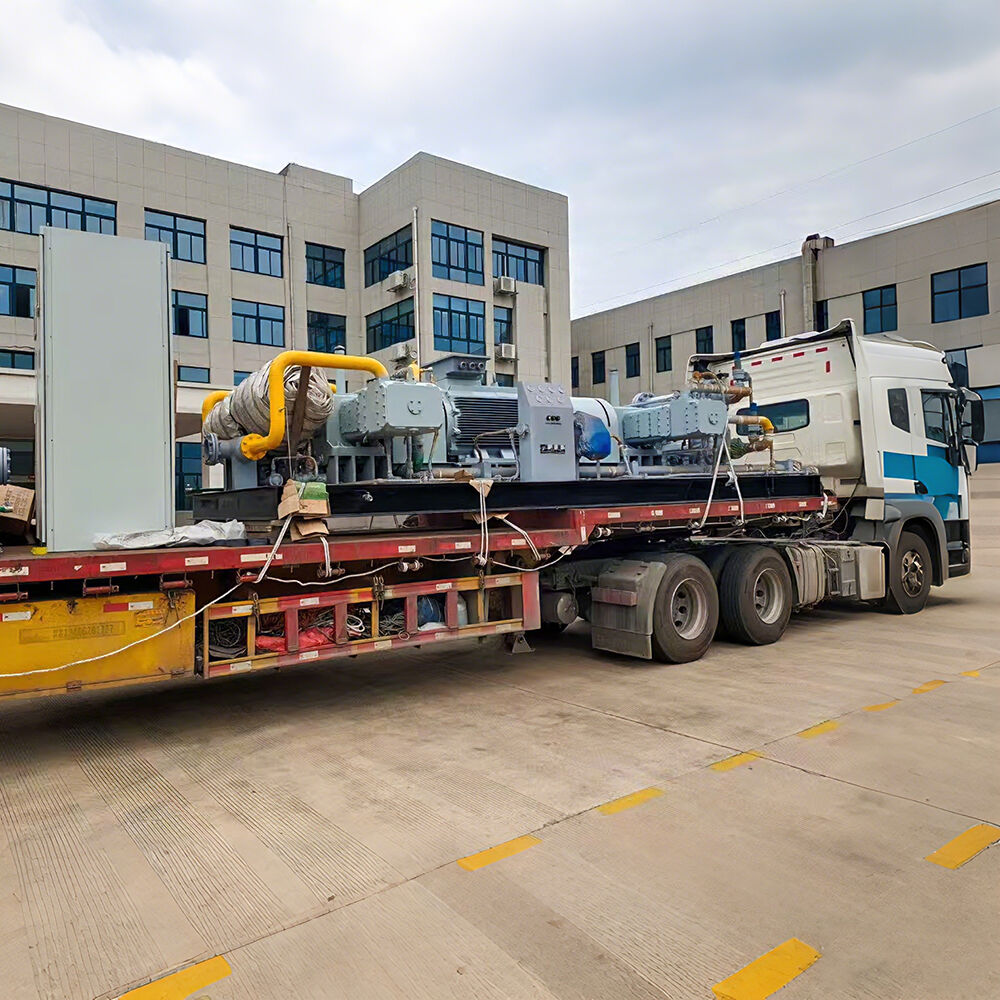
Gas-Specific Hazards Driving Gas Compressor Safety Requirements
Specialized gas compressors handling hazardous substances demand rigorous safety designs due to inherent material risks. These risks fall into three primary threat categories:
Corrosive, Toxic, and Reactive Gases: H₂S, Oxygen, Hydrocarbons, and Refrigerants
Hydrogen sulfide (H₂S) corrodes seals and piping; oxygen mandates non-combustible lubricants; hydrocarbon mixtures risk explosive decomposition at high pressures; and refrigerants like ammonia form acidic compounds at elevated temperatures—degrading components. Key safeguards include:
- Hastelloy C-276 sealing materials for stress corrosion resistance
- Oxygen compressors isolated from ignition sources by ≥250 ft
- Thermal runaway detection systems on hydrocarbon compressors
Failure of these avoidance strategies contributed to a $740 k average incident cost across processing plants (Ponemon Institute, 2023).
Hydrogen-Specific Challenges: Permeability, Embrittlement, and Invisible Flame Risks
Hydrogen’s low molecular weight enables permeation through microvoids above 300 psi—requiring triple-sealing per ISO 21789:2016. Embrittlement risk rises sharply below –30°C, necessitating nickel-based casings. Its invisible flame demands infrared leak detectors spaced at 60-ft intervals.
| Risk Mitigation | Requirement | Test Standard |
|---|---|---|
| Permeation barrier | Porosity ≤ 0.001 µm | ASTM F316-03 |
| Embrittlement threshold | Charpy V-notch impact energy 27 J at –50°C | ISO 148-1:2016 |
Sour Gas and Moisture-Induced Degradation: Sulfide Stress Cracking and NACE Compliance
Wet sour gas requires strict adherence to NACE MR0175/ISO 15156 for sulfide stress cracking (SSC) resistance. Prolonged moisture exposure reduces fatigue life by up to 84% (ASM International, 2021). Critical safeguards include:
- Continuous moisture analyzers with <5% measurement uncertainty
- Protective coatings applied to ≥500 µm dry-film thickness (DFT)
- Automatic dehumidification activated when dew point exceeds –20°C
Mechanical Integrity and Containment for Hazardous Gas Compressor Applications
Maintaining robust mechanical integrity is non-negotiable when compressing hazardous gases such as hydrogen or wet sour gas. Reliable containment begins with sealing technologies that eliminate fugitive emissions.
Diaphragm Sealing, Dry Gas Seals, and Oil-Free Operation
Diaphragm compressors use flexible membranes to fully isolate process gas from crankcase lubrication—eliminating leakage paths. Dry gas seals apply pressurized barrier gas at high-speed shafts, delivering superior emission control versus traditional packing rings. Both technologies support compliance in sour hydrocarbon and Level IV hydrogen service per ISO 21789 and API RP 1173. Eliminating lubricant ingress also preserves gas purity for pharmaceutical and semiconductor applications.
Material Selection, Weld Integrity, and Thermal–Pressure Stress Management
Material compatibility under extreme conditions ensures long-term containment integrity. Critical requirements include:
- Nickel alloys engineered for hydrogen permeation resistance
- High-purity austenitic stainless steels qualified for SSC resistance per NACE MR0175
- Post-weld heat treatments that stabilize microstructure against corrosive or reactive environments
In hydrogen service, chrome-moly steels remain essential despite up to 40% strength loss from embrittlement. Finite element analysis (FEA) informs thermal expansion stress design during pressure cycling. ASME BPVC Section VIII vessels use fracture-tough, low-carbon materials validated via volumetric NDE. Polypropylene (PP) coatings significantly retard under-insulation corrosion, per US Department of Energy facility performance data.
Thermal gradients during startup and shutdown induce fatigue-critical stresses—making tempering temperature selection vital. Materials must be rated for sustained operation above maximum expected service temperatures.
Integrated Safety Systems for Reliable Gas Compressor Operation
Pressure Relief, Depressurization Paths, and Piping Safeguards
Timely pressure intervention prevents catastrophic overstress during operational upsets. Safety relief valves (SRVs) are sized to handle worst-case gas flows—typically 10–30% above compressor capacity, based on metallurgical limits. Thermal-expansion relief protects liquid-filled headers during fire exposure. Piping layouts incorporate deflection loops to absorb pulsation-induced fatigue and avoid straight runs prone to resonance-driven vibration. Dedicated flare stacks ensure depressurization remains functional even if process isolation valves fail—especially critical during power loss. Blowdown systems use remote-activated, failsafe actuators to prevent uncontrolled releases in toxic gas service.
Leak Detection, Hazard Monitoring, and Redundant Control Strategies
Multi-layered monitoring detects incipient failures before containment loss occurs. Fixed sensors for toxicity, flammability, or oxygen depletion—paired with ultrasonic acoustic leak detectors—provide dual-verification assurance. Data feeds into a dedicated Safety Instrumented System (SIS), independent of basic process controls, enabling alarms, ventilation activation, or automatic shutdowns at thresholds well below operational limits. Redundant interlocks cut driver power during critical deviations—such as pressure excursions ≥15% above rated conditions. Rigorous testing—including quarterly partial-stroke valve tests and annual full-trip simulations—is essential: without calibration, instrument accuracy drift can reduce system reliability by up to 22% annually.
FAQs
What are the main hazards associated with gas compressors?
The primary hazards include handling corrosive, toxic, reactive, and combustible gases, risks from hydrogen permeability and embrittlement, and sulfide stress cracking due to sour gas exposure.
Why is material selection critical for hazardous gas compressors?
Material selection ensures long-term compatibility under extreme conditions, resistance to stress corrosion cracking, and embrittlement. Compliance with standards like NACE MR0175/ISO 15156 is also crucial.
How are hydrogen-specific risks addressed in compressors?
Hydrogen-specific risks are mitigated using triple-sealing systems, nickel-based casings for embrittlement resistance, and infrared detectors for its invisible flame.
What is the role of integrated safety systems in gas compressor design?
Integrated safety systems manage pressure relief, leak detection, hazard monitoring, and redundant control strategies to prevent containment loss and catastrophic failures.
How can moisture be managed in sour gas compressors?
Moisture is managed using continuous analyzers, protective coatings ensuring high dry-film thickness, and automated dehumidification systems activated when dew points exceed design limits.
Table of Contents
- Gas-Specific Hazards Driving Gas Compressor Safety Requirements
- Mechanical Integrity and Containment for Hazardous Gas Compressor Applications
- Integrated Safety Systems for Reliable Gas Compressor Operation
-
FAQs
- What are the main hazards associated with gas compressors?
- Why is material selection critical for hazardous gas compressors?
- How are hydrogen-specific risks addressed in compressors?
- What is the role of integrated safety systems in gas compressor design?
- How can moisture be managed in sour gas compressors?

