 CN
CN
Dew Point Requirements and Industrial Application Fit
Why Dew Point Dictates Dryer Selection: 39°F vs. -40°F Real-World Implications
Dew point—the temperature at which moisture condenses from compressed air—directly governs dryer selection. Refrigerated dryers reliably deliver pressure dew points around 39°F (4°C), making them ideal for general-purpose pneumatic tools and shop air. Desiccant dryers achieve -40°F (-40°C) or lower, a necessity for moisture-critical processes. In pharmaceutical packaging, maintaining -40°F prevents hygroscopic degradation and ensures compliance; using a 39°F dryer instead risks batch rejection—costing facilities up to $740k annually (Ponemon Institute, 2023). Similarly, electronics assembly demands sub-freezing dew points to avoid corrosion and electrostatic discharge (ESD) failures on sensitive circuitry. Choosing based on upfront cost alone overlooks these operational and financial consequences.
Industry-Specific Needs: Food, Pharma, Electronics, and Pneumatics Case Evidence
| Industry | Required Dew Point | Critical Risks | Dryer Type Suited |
|---|---|---|---|
| Food Processing | < -40°F | Bacterial growth, icing on conveyors | Desiccant |
| Pharmaceuticals | -40°F to -100°F | Product efficacy loss, regulatory noncompliance | Heated desiccant |
| Electronics | < -40°F | Corrosion, ESD failures | Heatless desiccant |
| Pneumatic Tools | 39°F | Rust in lines, seal damage | Refrigerated |
Semiconductor fabrication requires ultra-low dew points—down to -76°F—to prevent nanoscale condensation on wafers. Meanwhile, food processing facilities relying on refrigerated dryers face ice-clogged lines in frozen storage zones. Each 18°F dew point miscalculation increases energy consumption by 12%, compounding inefficiency across the system (Compressed Air Challenge, 2024).
How Each Air Dryer Works: Refrigeration Cycle vs. Desiccant Adsorption
Refrigerated Air Dryer Operation, Thermodynamic Limits, and Ambient Constraints
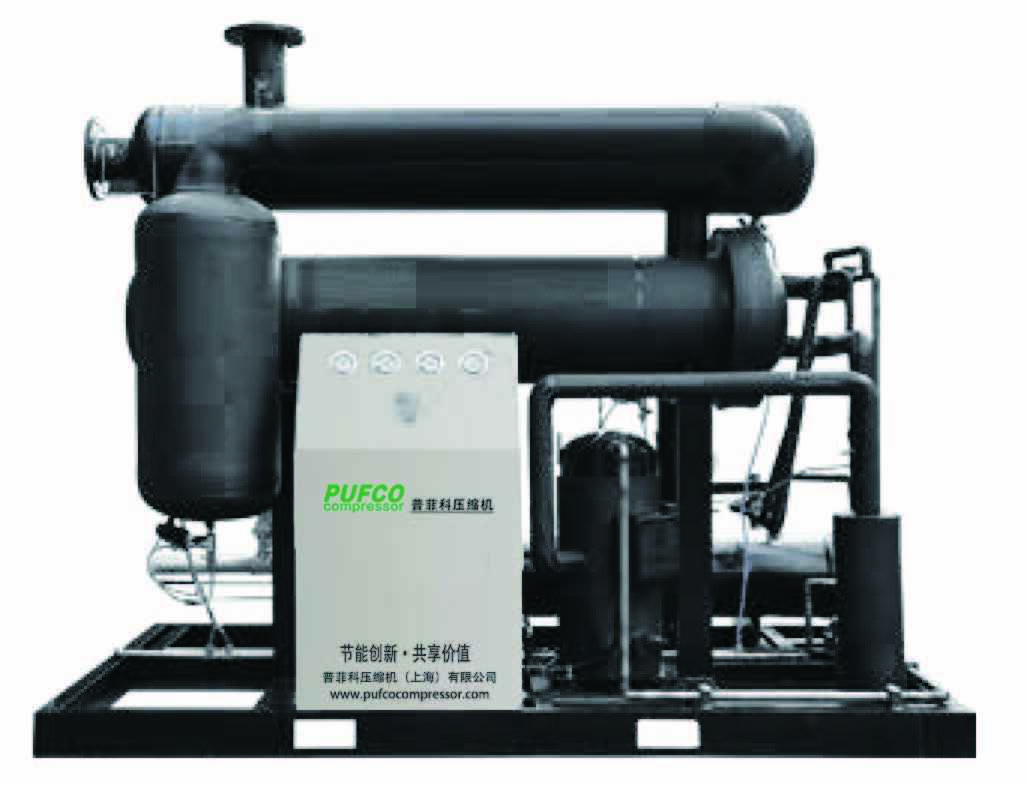
Refrigerated dryers cool compressed air to ~39°F, causing water vapor to condense into liquid that is automatically drained. This process uses a closed-loop refrigeration circuit similar to HVAC systems. Its fundamental thermodynamic limit is the freezing point of water: dew points below ~38°F risk internal ice formation, which can block passages and damage components. Ambient conditions significantly influence performance—high ambient temperatures reduce efficiency and increase compressor load, while very cold intake air may cause premature freezing before condensation occurs. For most general industrial applications—including automotive assembly pneumatics—this level of drying delivers reliable, cost-effective performance.
Desiccant Air Dryer Variants: Heatless, Heated, and Blower-Purge Mechanisms
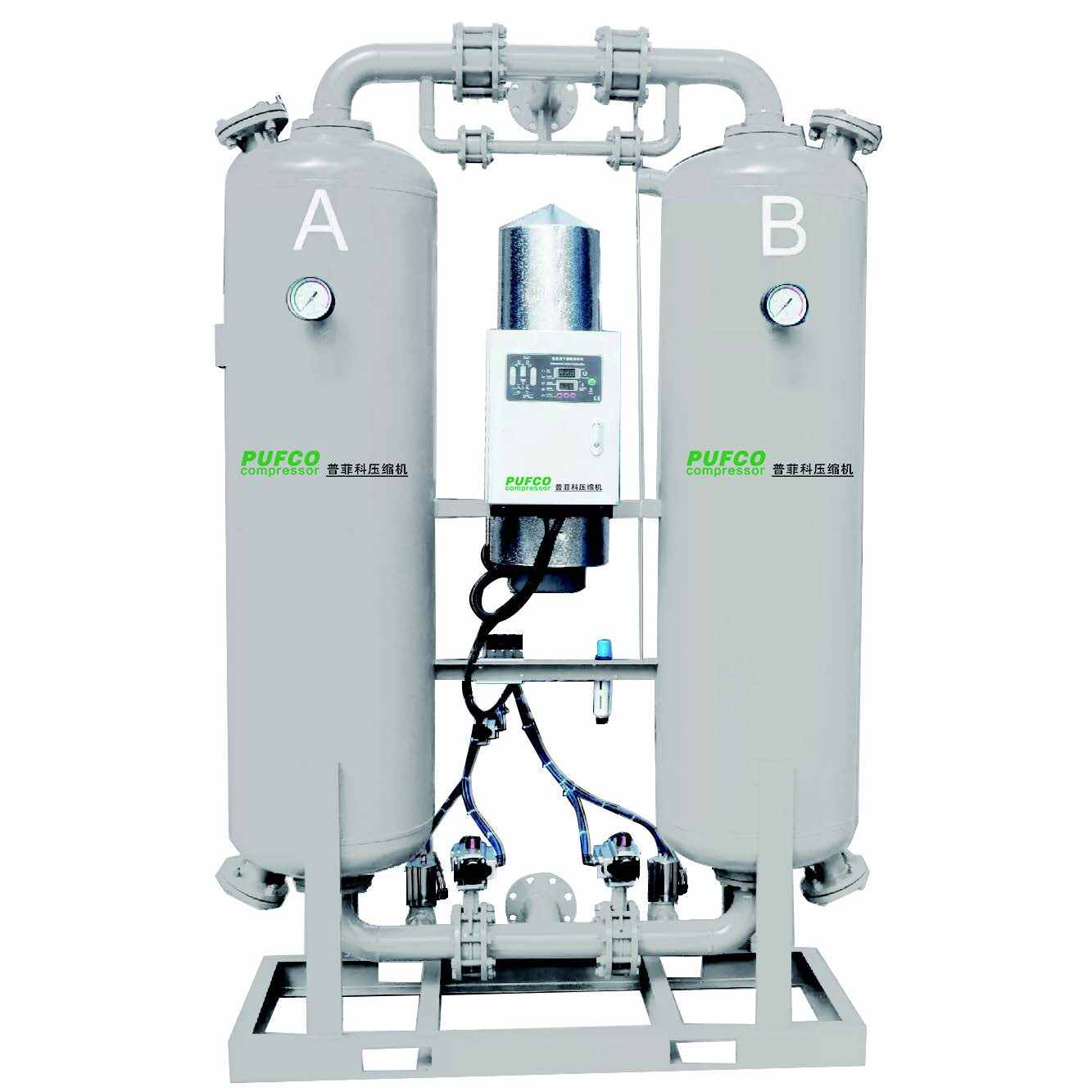
Desiccant dryers use adsorbent media—typically activated alumina or silica gel—to remove moisture down to -40°F or lower. They operate with two towers: one dries incoming air while the other regenerates the saturated media. Heatless variants use 15–20% of the dried output air—expanded and depressurized—as purge gas to strip moisture from the desiccant. Heated dryers apply external heat to the purge stream, cutting purge volume to 5–7% and improving energy efficiency. Blower-purge systems eliminate compressed-air consumption entirely by using ambient air, heated via an electric blower, though they require more electrical infrastructure. These trade-offs—between capital cost, energy use, footprint, and reliability—make desiccant technology essential where dew point consistency and ultra-dry air are non-negotiable.
Total Cost of Ownership: Upfront Investment, Energy Use, and Maintenance
Evaluating air dryers solely on purchase price obscures long-term value. Total cost of ownership (TCO) spans acquisition, installation, energy consumption, and maintenance over a typical 10- to 15-year service life. Energy costs often exceed initial investment within just three years—making operational efficiency the dominant TCO factor.
Energy Efficiency Benchmarks (kW/100 CFM) and Lifecycle Cost Drivers
Refrigerated dryers consume 1.2–1.8 kW per 100 CFM, depending on ambient temperature and loading. Desiccant dryers vary widely: heatless types draw 2.5–3.5 kW/100 CFM due to high purge-air demand; heated and blower-purge models reduce that to 1.8–2.5 kW/100 CFM but add capital and complexity. Critically, fixed purge losses in heatless units persist even at partial load—eroding efficiency when airflow drops. Maintenance also diverges: refrigerated units need routine filter changes and refrigerant monitoring, while desiccant systems require periodic desiccant replacement, valve servicing, and regeneration cycle calibration. Accurate TCO modeling must therefore reflect actual duty cycles, local electricity rates, and labor costs—not just nameplate ratings.
Environmental and Operational Risks: Freezing, Humidity, and Installation Context
Refrigerated dryers become unreliable when ambient temperatures fall below 39°F—condensed moisture freezes inside heat exchangers, obstructing airflow and risking mechanical failure. High ambient humidity accelerates desiccant saturation, shortening drying cycles and increasing purge air or energy demand—raising operating costs. Installation context further affects reliability: inadequate ventilation reduces heat rejection efficiency; excessive vibration loosens internal fittings; and corrosive environments—such as marine or chemical processing facilities—demand stainless steel housings or specialized coatings to prevent premature degradation. A robust environmental assessment—verifying temperature, humidity, vibration, and atmospheric exposure against OEM specifications—is essential to ensure consistent dew point delivery and long-term equipment integrity.
FAQ Section
What is dew point, and why is it important in air drying?
Dew point is the temperature at which moisture condenses from compressed air. It is critical in air drying because it determines the amount of moisture that can be removed, impacting equipment performance and operational safety.
What industries require ultra-low dew points?
Industries like pharmaceuticals, electronics, food processing, and semiconductor manufacturing require ultra-low dew points to prevent moisture-related risks such as product contamination, corrosion, or regulatory noncompliance.
How do refrigerated air dryers differ from desiccant dryers?
Refrigerated air dryers cool air to ~39°F, removing moisture through condensation, while desiccant dryers use adsorbent media to achieve much lower dew points, often down to -40°F or lower.
What factors influence the total cost of ownership (TCO) for air dryers?
TCO includes upfront investment, energy consumption, maintenance, and installation costs over the product's lifespan. Efficiency and operational needs are key cost drivers.
What are common environmental risks for air dryers?
Environmental risks include freezing in cold climates, high humidity increasing energy demand, and equipment degradation in corrosive or poorly ventilated areas.

