 CN
CN
Screw Air Compressor: Fundamental Design & Air Purity Differences
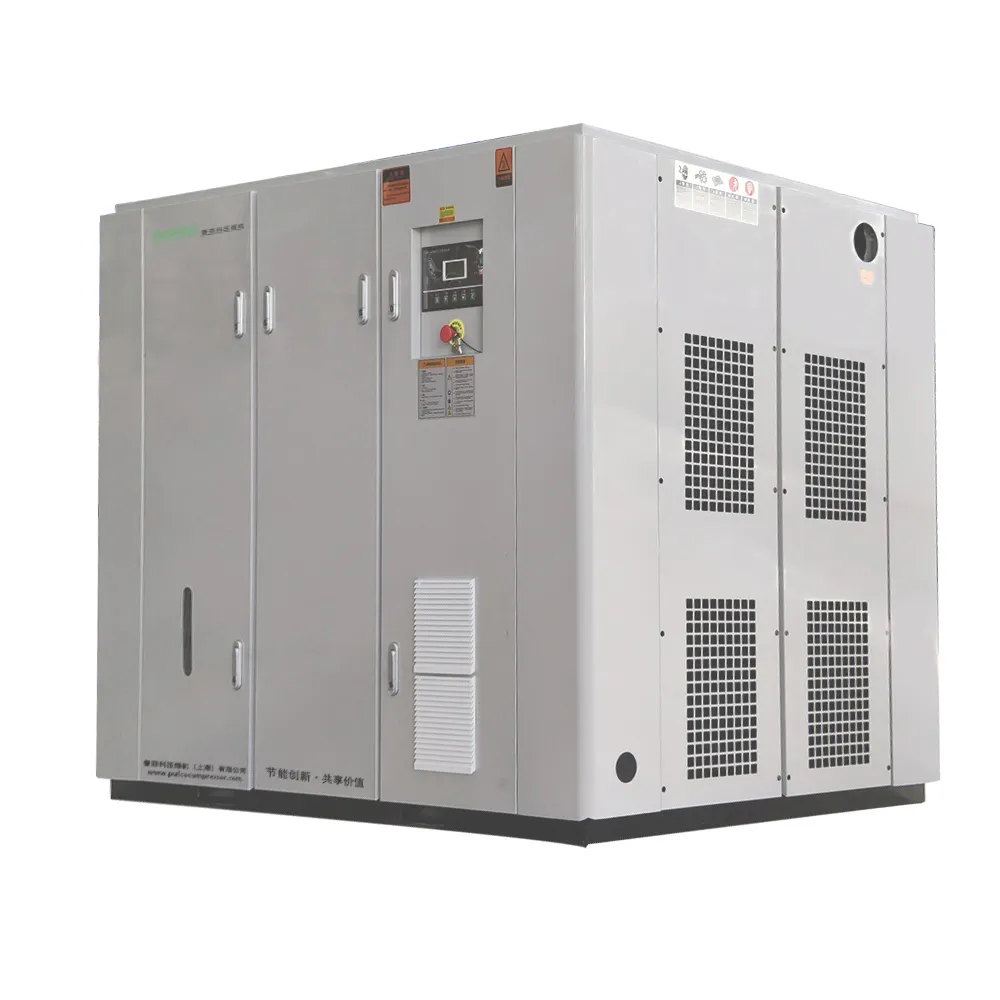
Lubrication Strategy: Oil Injection for Cooling/Sealing vs. Dry Compression with Ceramic Coatings or Magnetic Bearings
In oil injected screw air compressors, the oil serves two main purposes: sealing the rotors and helping manage heat during operation. But there's a catch - this process naturally introduces hydrocarbons into the air being compressed. Oil free alternatives solve this problem completely by using what's called dry compression technology. These systems typically feature either ceramic coated rotors or magnetic bearings so parts don't actually touch each other during operation. There's really no getting around the basic trade off here though. The oil injected versions tend to be simpler to operate and generally cheaper upfront costs, whereas oil free models come at a higher price but ensure absolutely clean air thanks to their sophisticated material construction. When dealing with situations where compressed air comes into contact with delicate materials or critical manufacturing steps, going with oil free becomes absolutely essential for maintaining product integrity.
ISO 8573-1 Air Quality Classes Explained: Why Class 0 Is Mandatory—and Unattainable—with Oil-Injected Screw Air Compressors
The ISO 8573-1 standard sets out how clean compressed air needs to be, looking at three main things: particles floating around, moisture content, and oil presence. When we talk about Class 0 standards, this is basically saying there should be absolutely no detectable oil at all. Not just something close to nothing, but truly zero. The problem comes when manufacturers try to use oil-injected compressors. These just aren't built to hit Class 0 specs no matter what kind of fancy filters they install. Even if someone goes all out with triple stage coalescing plus adsorption filters, there's still going to be some leftover oil particles hanging around. Tests show these systems typically leave behind about 0.01 mg per cubic meter of air, which is actually ten times above what Class 0 demands according to recent data from ISO (2023). For industries where products actually touch this air stream, regulations such as the EU's GMP Annex 1 and FDA's 21 CFR Part 11 have made it clear that only Class 0 compliance will do. That means companies working in pharmaceutical production or making medical devices simply can't afford anything less than completely oil-free compressor technology if they want to stay within legal boundaries.
Oil Carryover Risk: How Even Advanced Filtration Fails to Eliminate Micro-Aerosols in Oil-Injected Systems
When it comes to oil injected compressors, they tend to produce those tiny aerosol particles ranging from 0.01 to 0.8 microns that just slip right past regular filters. Even when everything works perfectly, adsorption filters can bring down oil levels to around 0.003 mg per cubic meter. But here's the catch - these filters don't hold up well during sudden increases in airflow. Their effectiveness plummets below 40% for those really small particles we're talking about. A recent study looked at 47 different manufacturing plants and found consistent spikes in contamination whenever there were changes in system load according to the Compressed Air Challenge report from last year. These ups and downs mess with production quality and can lead to product recalls especially bad news for companies in the food processing or pharmaceutical industries. That's where oil free compressors shine though. Since absolutely no oil gets into the compression area in the first place, there's simply nothing to carry over into the final product stream.
Critical Applications That Demand Oil-Free Screw Air Compressors
Pharmaceutical & Medical Device Manufacturing: Compliance with FDA 21 CFR and EU GMP Annex 1
Getting regulatory compliance right in sterile manufacturing really depends on making sure the air stays clean enough. Both FDA regulations (specifically 21 CFR Part 11) and European guidelines (EU GMP Annex 1) require that compressed air used near drugs, their packaging materials, or medical implants must meet ISO 8573-1 Class 0 standards. For manufacturers dealing with these requirements, oil free screw compressors stand out as the only viable option since they don't need extra filters after compression. This makes all the difference because even tiny amounts of hydrocarbons from other compressor types can actually encourage bacteria growth or mess with how stable certain medications remain once injected into patients or used in biological treatments.
Food & Beverage Processing: Avoiding Contamination and Meeting BRCGS/ISO 22000 Air Quality Requirements
Compressed air touches food products all the time during packaging operations, bottling processes, and when handling ingredients. The BRCGS Food Safety Standard along with ISO 22000 set specific air quality requirements based on how much contact occurs between air and product. For situations where air actually touches food directly, they specify Class 0 quality standards. Now here's the problem: even after filtration, oil injected systems still leave behind residual oil contamination at levels around 0.01 ppm. That's way above what's allowed in sensitive applications such as making baby formula, processing milk products, or brewing beer. Trace amounts of hydrocarbons can ruin flavors or worse yet cause product recalls that hurt businesses badly. This is why many companies are switching to completely oil free technologies these days. By eliminating oil contamination right at the source, manufacturers avoid those costly quality issues altogether.
Semiconductor & Electronics Assembly: Preventing Sub-Micron Defects from Oil Vapor Condensation
The production of silicon wafers and microchips happens in super clean environments because even tiny amounts of contamination at sub-micron levels can wreck entire batches. When oil vapors from regular compressors get into these spaces, they form thin insulating layers on circuit boards. These films mess up the delicate lithography process and create problems in those advanced sub-5nm transistors. That's why many facilities are switching to oil-free compressors with special ceramic coatings on their rotors. These systems stop vapor creation before it starts and meet the strict SEMI F49 requirements for air quality. Real world data shows impressive results too. Companies making semiconductors have seen about 92% reduction in defects caused by particles since making the switch to these cleaner alternatives.
Total Cost of Ownership Comparison
Upfront Investment: Oil-Free Screw Air Compressors Typically Cost 30–60% More Than Equivalent Oil-Injected Models
The price tag on oil-free screw air compressors is typically 30 to 60 percent higher than their oil-injected counterparts because they require much more precise engineering work. Think about things like rotors coated with ceramics, those fancy magnetic bearings, and completely sealed drive systems. Sure, paying extra upfront might seem like a lot at first glance, but studies show this initial cost only makes up around 15% of what these machines will actually cost over ten years. The Compressed Air Challenge did some research on this along with various energy audit firms, and their findings consistently point to similar numbers when looking at long term expenses versus short term savings.
Maintenance Burden: Oil Changes, Filter Replacements, and System Monitoring vs. Sealed Rotors and Extended Service Intervals
For oil injected compressors, regular maintenance becomes necessary pretty often. Things like changing synthetic lubricants that cost around $18 to $25 per gallon, replacing oil filters priced between $120 and $200, plus those expensive coalescing or adsorption filters running about $300 to $500 each need attention roughly every 2,000 to 4,000 operating hours. And don't forget about getting rid of used oil either since disposal comes with its own set of regulations costing around $150 for each 200 gallon drum according to recent EPA guidelines. Oil free alternatives take a different approach altogether with their permanently sealed bearings and completely dry compression chambers. These designs stretch out service intervals dramatically to anywhere from 8,000 up to 10,000 hours of operation. The savings are pretty substantial too when looking at annual expenses which can decrease by anywhere from 40% to 60%. Plus, technicians spend half as much time on each service call now taking only 2 to 4 hours instead of the usual 4 to 8 hours required for traditional models. Filter replacements become far less frequent too dropping down from needing new ones 3 to 4 times a year to just once or twice annually.
Energy Efficiency, Thermal Performance, and Operational Reliability
Oil free screw air compressors boost energy efficiency because they get rid of those extra losses from oil separation processes, cooling systems, and filtration work. According to some studies from the U.S. Department of Energy back in 2022, these machines actually consume about 15 to 25 percent less power than their oil injected counterparts. When it comes to heat management, these compressors really shine too. The ceramic coated rotors along with magnetic bearings don't need any oil based cooling mechanisms, so they keep running at much lower and steadier discharge temperatures. This makes a big difference since many oil injected units tend to overheat and suffer around 50 to 70 percent shorter lifespans. Plus, this temperature stability means we maintain consistent airflow and pressure levels throughout operation. That kind of reliability matters a lot for applications where heat sensitivity is crucial, such as during laser cutting operations or when working with CNC machines.
The reliability improvements are pretty straightforward really. When components are sealed, they stop dealing with oil breakdown issues, sludge buildup, and those pesky filter clogs that cause so many unexpected shutdowns in systems that rely on lubrication. Industry reports indicate that going oil free cuts down on unplanned maintenance stops somewhere between 40% to maybe even 60%, depending on conditions. Plus, the intervals between necessary maintenance checks can stretch out almost three times longer than traditional setups. All told, this makes oil free tech not just better for the environment but also much more dependable when industries need consistent performance from their critical operations day after day.
Frequently Asked Questions
What are the main differences between oil-injected and oil-free screw air compressors?
Oil-injected compressors use oil to seal and cool the rotors, which can lead to the presence of hydrocarbons in the compressed air. Oil-free compressors use dry compression technology, typically with ceramic coated rotors or magnetic bearings, ensuring absolutely clean air.
Why is achieving ISO 8573-1 Class 0 air quality important and challenging with oil-injected compressors?
Class 0 specifies absolutely no detectable oil in the air, crucial for industries where the air contacts sensitive products. Oil-injected compressors struggle to meet these standards despite advanced filtration, as they usually leave behind residual oil particles.
How do oil-free compressors ensure better operational reliability?
Oil-free compressors eliminate oil breakdown issues, sludge buildup, and unexpected shutdowns due to filtration system failures, reducing unplanned maintenance by up to 60% in some conditions.
What cost differences exist between oil-injected and oil-free compressors?
While oil-free compressors have a higher upfront cost (30-60% more), they offer long-term savings by reducing maintenance, lubricant costs, and energy consumption, making them more cost-effective over time.
In which industries are oil-free compressors essential?
Oil-free compressors are crucial in pharmaceuticals, food and beverage processing, and semiconductor manufacturing, where air purity directly impacts product safety and quality and meets strict regulatory standards.
Table of Contents
-
Screw Air Compressor: Fundamental Design & Air Purity Differences
- Lubrication Strategy: Oil Injection for Cooling/Sealing vs. Dry Compression with Ceramic Coatings or Magnetic Bearings
- ISO 8573-1 Air Quality Classes Explained: Why Class 0 Is Mandatory—and Unattainable—with Oil-Injected Screw Air Compressors
- Oil Carryover Risk: How Even Advanced Filtration Fails to Eliminate Micro-Aerosols in Oil-Injected Systems
- Critical Applications That Demand Oil-Free Screw Air Compressors
- Total Cost of Ownership Comparison
- Energy Efficiency, Thermal Performance, and Operational Reliability
-
Frequently Asked Questions
- What are the main differences between oil-injected and oil-free screw air compressors?
- Why is achieving ISO 8573-1 Class 0 air quality important and challenging with oil-injected compressors?
- How do oil-free compressors ensure better operational reliability?
- What cost differences exist between oil-injected and oil-free compressors?
- In which industries are oil-free compressors essential?

