 CN
CN
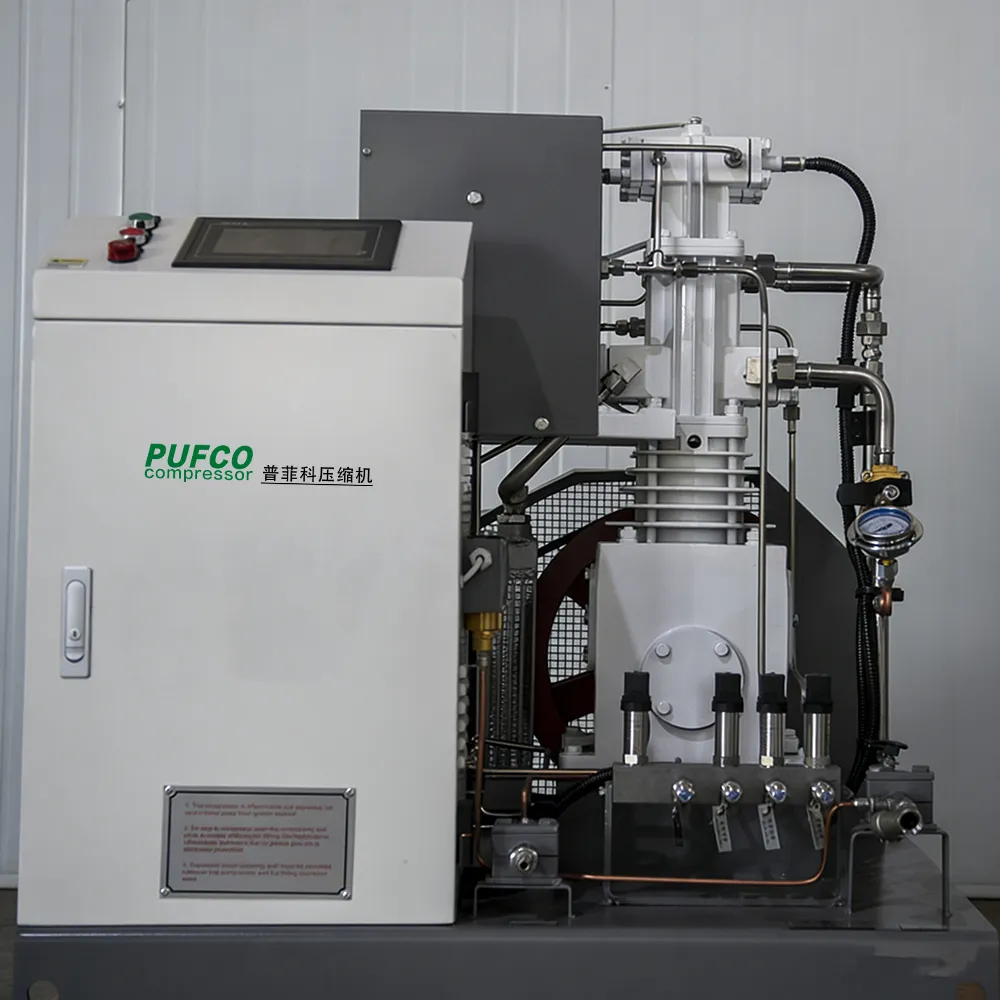
Define Your Process Requirements: Vacuum Level, Flow Rate, and Duty Cycle
Quantify required vacuum level (absolute pressure) and pumping speed (ACFM/SCFM)
Accurate vacuum pump selection begins with two foundational parameters: target absolute pressure and required pumping speed. Absolute pressure—expressed in torr, mbar, or Pa—defines how deep a vacuum your process demands. For instance, packaging typically requires ~1 torr, whereas freeze-drying may need as low as 0.01 torr. Pumping speed, measured in ACFM (actual cubic feet per minute) or SCFM (standard cubic feet per minute), determines gas removal rate. To size correctly, aggregate flow requirements across all points of use, then add a 25% margin for system leaks and future expansion. Crucially, distinguish between peak and average demand: simultaneous operation dictates minimum pump capacity, while intermittent usage informs energy efficiency decisions. Oversizing wastes capital and energy; undersizing risks process failure.
Account for system volume, gas load variability, and operational duty cycle
Real-world performance depends on dynamic factors beyond static specifications. System volume—the total internal space under vacuum—directly influences pull-down time; larger volumes require higher pumping speeds to meet cycle-time targets. Gas load variability is equally critical: processes releasing moisture, solvents, or reaction byproducts impose transient loads that can overwhelm pumps not rated for peak conditions. Duty cycle—the ratio of pump-on time to total cycle time—dictates thermal and mechanical stress. A pump operating 40 seconds per minute runs at a 67% duty cycle; continuous operation demands a pump rated for 100% duty. Selecting a unit mismatched to actual usage accelerates wear, increases failure frequency, and raises total cost of ownership. Always validate pump ratings against your measured operational pattern—not theoretical assumptions.
Match Vacuum Pump Technology to Application Needs and Industry Standards
Compare rotary vane, dry screw, claw, diaphragm, and scroll vacuum pumps by vacuum range and operating principle
Vacuum pump technology must align precisely with pressure requirements, cleanliness needs, and mechanical constraints. Rotary vane pumps deliver reliable medium-vacuum performance (1 mbar to 10−3 mbar) but rely on oil lubrication. Dry screw pumps achieve comparable vacuum levels without oil, making them suitable for clean or chemically sensitive environments. Claw pumps offer low vibration and moderate vacuum (10–100 mbar), ideal for applications requiring stable mechanical environments. Diaphragm pumps provide oil-free, corrosion-resistant operation in low-to-medium vacuum ranges, while scroll pumps deliver ultra-clean, maintenance-light performance down to 10−2 mbar—without lubricants or moving seals.
Align pump selection with sector-critical requirements: oil-free operation for food & pharma, corrosion resistance for chemical processing, particle-free performance for semiconductor cleanrooms
Industry-specific standards drive non-negotiable technical requirements. In pharmaceutical freeze-drying, ISO 8573-1 Class 0 certification is mandatory to guarantee zero hydrocarbon contamination from lubricants. Chemical processing demands fluoropolymer-sealed components and corrosion-resistant housings—extending service life up to 10× versus standard carbon steel in acidic vapor environments. Semiconductor fabrication requires vacuum technologies certified to FED-STD-209E (or ISO 14644-1) for particle emissions below 1 count/ft³ at 0.1 μm—making scroll and dry screw pumps the preferred choices. As the Equipment Reliability Institute (2023) reports, improper material selection increases corrosion-related failure risk by 87%. Matching pump construction to sector-critical compliance isn’t optional—it’s foundational to regulatory approval and long-term reliability.
Evaluate Environmental and Safety Factors: Gas Composition, Contaminants, and Regulatory Compliance
Select materials, seals, and certifications (ATEX, UL, FDA) based on flammable, corrosive, or reactive process gases
Safety-critical vacuum applications demand rigorous alignment between pump design and process gas hazards. Flammable vapors or dusts require intrinsically safe construction—non-sparking alloys, sealed enclosures, and ATEX certification for operation in explosive atmospheres (Zones 1/21 or 2/22). Corrosive gases like HCl or Cl₂ necessitate fluoropolymer seals and passivated stainless-steel wetted parts; standard carbon steel often fails within weeks under such exposure. For purity-sensitive transfers—such as API handling or semiconductor etching—oil-free operation is essential to prevent lubricant migration, while USP Class VI and FDA-compliant elastomers ensure suitability for food-contact or sterile pharmaceutical use. Reactive gases (e.g., silanes, hydrides) call for custom metallurgy like aluminum bronze or high-nickel alloys, which resist rapid surface degradation observed in conventional pumps—where wear rates exceed 75% under identical conditions. UL-certified emergency shutdown systems with isolation valves mitigate uncontrolled venting, a factor cited in 73% of annual industry near-miss reports. As Ireland’s industrial safety protocols emphasize, documented, gas-specific hazard assessments are mandatory—not only for operational safety but also for compliant condensate disposal, transport restrictions, and plant-wide emergency response readiness.
Optimize Total Cost of Ownership: Energy Efficiency, Maintenance, and Lifecycle Support
Total cost of ownership (TCO) reflects true economic impact over a vacuum pump’s full service life—not just purchase price. Electricity accounts for over 45% of lifecycle costs in industrial settings, making high-efficiency motor and drive designs a decisive TCO lever—even with higher initial investment. Predictive maintenance strategies reduce TCO by approximately 30% compared to reactive repair models, according to cross-sector benchmarking data. Equally important is lifecycle support: service agreements with guaranteed parts availability and regional technical coverage minimize unplanned downtime, which can inflate operational budgets by up to 40% through production losses alone. Prioritize pumps engineered for serviceability—modular components, standardized tooling, and intuitive diagnostics—to sustain reliability while controlling long-term expenditure.
FAQ
What are absolute pressure and pumping speed, and why are they important for vacuum pump selection?
Absolute pressure refers to the depth of vacuum your process requires and is measured in units like torr, mbar, or Pa. Pumping speed, measured in ACFM or SCFM, indicates the gas removal rate. These parameters are essential for selecting a vacuum pump that meets your process requirements without oversizing or undersizing.
How can I account for system volume and gas load variability?
System volume, or the total internal space under vacuum, impacts the pull-down time. Consider gas load variability, such as moisture or byproducts released during the process, and ensure your vacuum pump can handle peak demands effectively to avoid system overload.
What are the differences between rotary vane, dry screw, and other vacuum pumps?
Rotary vane pumps provide medium-vacuum performance but use oil lubrication, while dry screw pumps operate without oil, suitable for cleaner environments. Claw pumps are ideal for low vibration and moderate vacuums, diaphragm pumps resist corrosion, and scroll pumps excel in maintenance-free, oil-free operations.
What certifications and materials are crucial for safety-critical vacuum applications?
Certifications like ATEX, UL, and FDA are important for specific applications. Use fluoropolymer seals for corrosive gases, non-sparking alloys for flammable gases, and USP Class VI elastomers for sterile environments. Ensure materials and certifications meet regulatory requirements to enhance safety and reliability.
How can I minimize the total cost of ownership (TCO) for a vacuum pump?
You can reduce TCO by choosing energy-efficient pumps, implementing predictive maintenance strategies, and ensuring strong lifecycle support such as guaranteed parts availability and regional service coverage. Pumps built for easy serviceability also contribute to long-term cost savings by reducing operational disruptions.
Table of Contents
- Define Your Process Requirements: Vacuum Level, Flow Rate, and Duty Cycle
-
Match Vacuum Pump Technology to Application Needs and Industry Standards
- Compare rotary vane, dry screw, claw, diaphragm, and scroll vacuum pumps by vacuum range and operating principle
- Align pump selection with sector-critical requirements: oil-free operation for food & pharma, corrosion resistance for chemical processing, particle-free performance for semiconductor cleanrooms
- Evaluate Environmental and Safety Factors: Gas Composition, Contaminants, and Regulatory Compliance
- Optimize Total Cost of Ownership: Energy Efficiency, Maintenance, and Lifecycle Support
-
FAQ
- What are absolute pressure and pumping speed, and why are they important for vacuum pump selection?
- How can I account for system volume and gas load variability?
- What are the differences between rotary vane, dry screw, and other vacuum pumps?
- What certifications and materials are crucial for safety-critical vacuum applications?
- How can I minimize the total cost of ownership (TCO) for a vacuum pump?

