 CN
CN
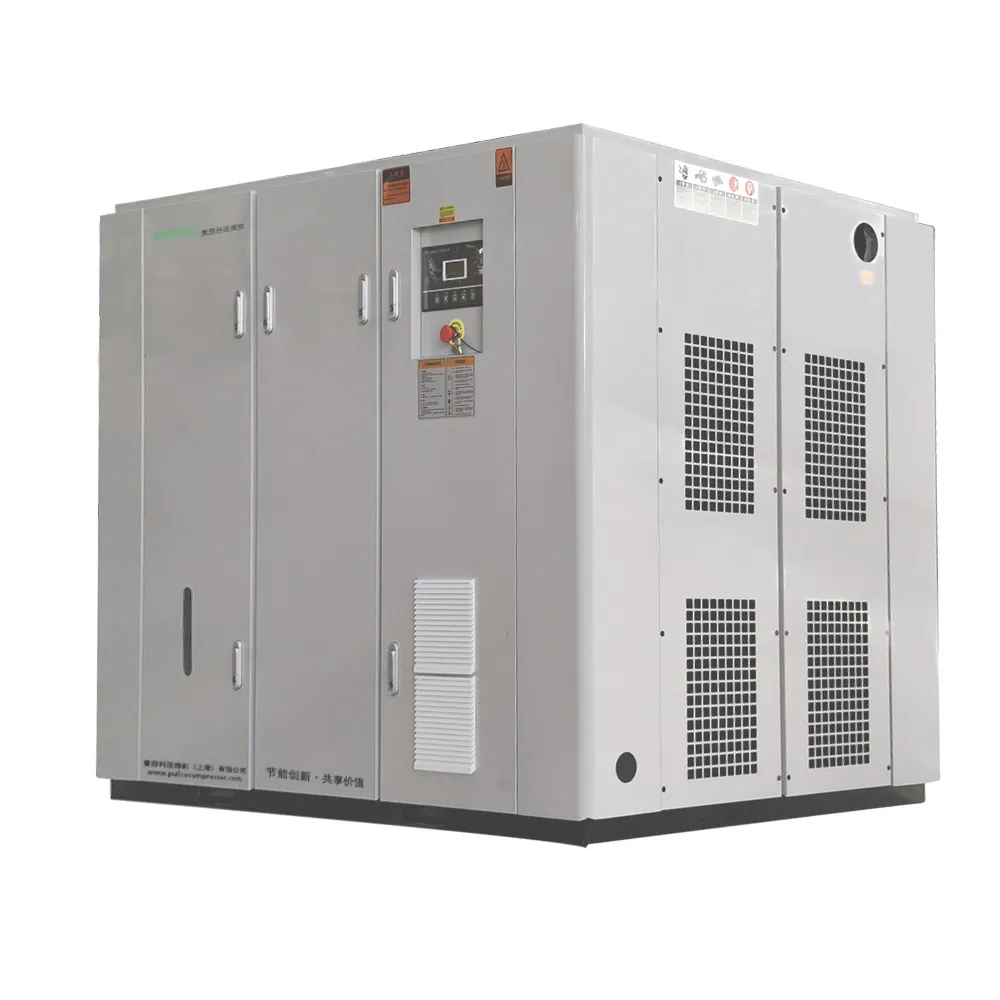
Design Foundations for Continuous Duty: How Oil-Injected Screw Air Compressors Enable 24/7 Operation
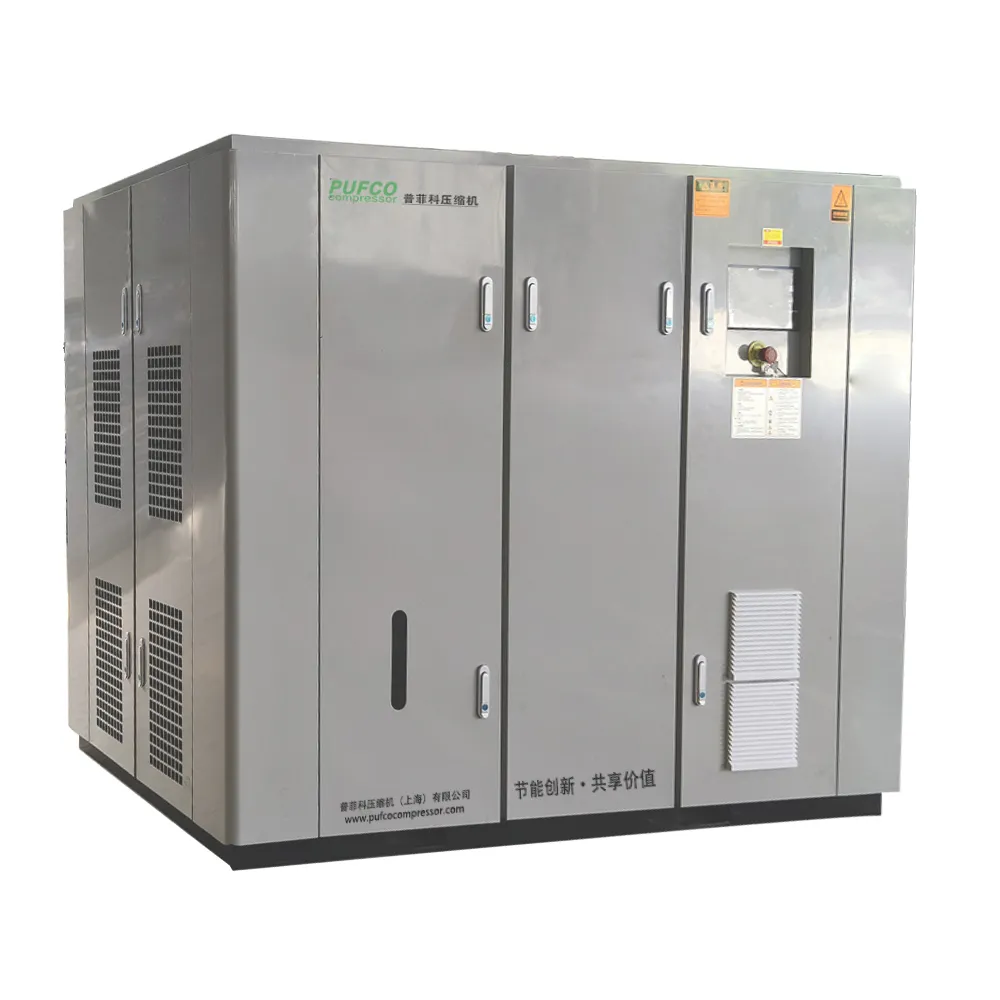
Robust Thermal Management: Dual-Circuit Oil Cooling and Thermostatic Regulation
Oil injected screw air compressors keep things cool when running non stop thanks to their dual circuit cooling system. The main part is an air to oil exchanger that takes care of normal heat buildup. When things get really hot or there's extra demand, a second water cooled loop kicks in automatically. Special thermostatic valves control where the oil goes so temperatures stay right around 70 to 90 degrees Celsius. This keeps the lubricant working properly and stops moisture from forming in the compressed air output. According to various field tests done by independent researchers, these dual circuit systems actually last longer between maintenance checks about 40 percent longer than regular single circuit models. Plus they save on electricity too somewhere between 12 and 18 percent because they adapt how they release heat based on actual conditions rather than just running full blast all the time.
Mechanical Reliability: Precision Rotors, Heavy-Duty Bearings, and Vibration-Dampened Mounting
Running machines non-stop day after day requires rock solid mechanical reliability. The helical rotors we use are built to tight specs around 0.005 mm tolerance range which cuts down on internal leaks and keeps volumetric efficiency well over 95% even during long production cycles. They work alongside those ISO P5 class bearings that can last upwards of 100k hours when subjected to both axial and radial forces. We've got these special composite mounts that dampen vibrations from normal operating speeds between 3k to 7k RPM. This setup actually slashes mechanical stress on key parts by roughly 60% according to our field tests. When paired with strict alignment procedures, the whole system maintains proper air end clearances without any noticeable performance drop off over time, so the equipment stays running smooth through those demanding continuous operations.
Oil System Integrity Under Prolonged Stress: Lubrication, Separation, and Degradation Control
Oil Carryover Mitigation: High-Efficiency Coalescing Separators and Stable Emulsion Resistance
Getting down to less than 1 part per million of residual oil requires specialized multi-stage coalescing separators that use depth loading media designed to last longer between replacements. These systems work by first spinning off larger droplets through centrifugal force before passing through layers of both water repelling and water attracting filters. This combination helps clump together tiny oil particles even when flow rates change or moisture gets introduced into the system. The ability to resist forming oil-water mixtures becomes really important for maintaining clean air standards according to ISO 8573-1 specifications over time, especially in environments where humidity levels rise and fall or temperatures swing back and forth throughout operations.
Thermal Stability of Lubricants: Viscosity Retention and Oxidation Resistance in Extended Cycles
Lubricants made for continuous duty applications keep their viscosity pretty stable, staying within about 10% of original levels even after running for over 8,000 hours straight. The antioxidant additives help stop sludge buildup when temps stay around 90 to 100 degrees Celsius during operation. And those high TBN values are there to soak up all the acid stuff that forms as the oil breaks down over time. Regular oil checks that monitor how fast the acid numbers climb and track changes in viscosity really pay off. Catching these signs early means replacing the oil before things start going bad, which helps extend compressor life and keeps the whole system running smoothly downstream too.
Maintenance Strategy for True 24/7 Uptime: From Scheduled Intervals to Condition-Based Optimization
Transitioning from fixed-interval to condition-based maintenance (CBM) is foundational for maximizing uptime in continuously operating oil-injected screw compressors. By leveraging real-time equipment health data—including oil condition, vibration signatures, and filtration performance—CBM enables targeted interventions that prevent failure without over-maintaining healthy assets.
Critical Maintenance Triggers: Oil Analysis Metrics (Acid Number, ISO Cleanliness Code) and Vibration Signatures
Oil analysis is really at the heart of condition based maintenance work. When acid numbers start climbing, that usually means oil is breaking down from oxidation. And those ISO cleanliness codes? They basically tell us how much dirt and particles are floating around in the system. At the same time, vibration sensors pick up on problems long before they become serious issues like worn bearings or alignment problems. Most facilities set warning points for things like when viscosity drops more than about 10% or when ISO codes go past certain levels (around 18/16/13 typically). These alerts help technicians jump in before real damage happens, which saves everyone from unplanned shutdowns. The whole package of regular testing and data tracking ends up saving roughly a quarter of what companies spend on maintenance compared to just following fixed schedule checks. Plus it makes parts last longer and keeps systems running reliably day after day.
Alignment with Air Quality Standards: Maintaining ISO 8573-1 Class 2 Purity During Continuous Operation
Maintaining ISO 8573-1 Class 2 standards for compressed air quality (around 0.1 mg per cubic meter oil carryover) during continuous operation needs careful attention to both oil conditions and how well separators perform. Condition based monitoring systems keep an eye on pressure differences in coalescing filters while also checking oil saturation levels. Replacements happen only when the separation efficiency drops below about 99.97%, which helps save money on unnecessary parts. Smart sensors give early alerts before the air purity goes out of spec, so operations stay compliant without interruption. What makes this approach work? Regular oil analysis plays a big role too. By catching viscosity loss early, we tackle one major reason why oil gets carried over into the airstream. This protects those delicate downstream processes that can't handle contamination, even during long running periods when equipment stress builds up naturally.
FAQ
What is a dual-circuit cooling system?
A dual-circuit cooling system in oil-injected screw air compressors comprises an air-to-oil exchanger for normal heat regulation and an automatic water-cooled loop for additional cooling during excessive heat or demand.
How do oil-injected screw compressors maintain ISO 8573-1 Class 2 air quality standards?
They employ condition-based monitoring to track pressure differences and oil saturation in filters, replacing parts only when necessary, supported by regular oil analysis to catch viscosity changes early.
What role does oil analysis play in condition-based maintenance?
Oil analysis detects acid number spikes and dirt levels, allowing pre-emptive actions before failures occur, ultimately reducing unexpected downtimes and prolonging equipment life.
How do lubricants withstand extended cycle operations?
Continuous duty lubricants maintain viscosity within 10% of initial levels with antioxidant additives, preventing sludge buildup and managing acid formation from oil breakdown.

