 CN
CN
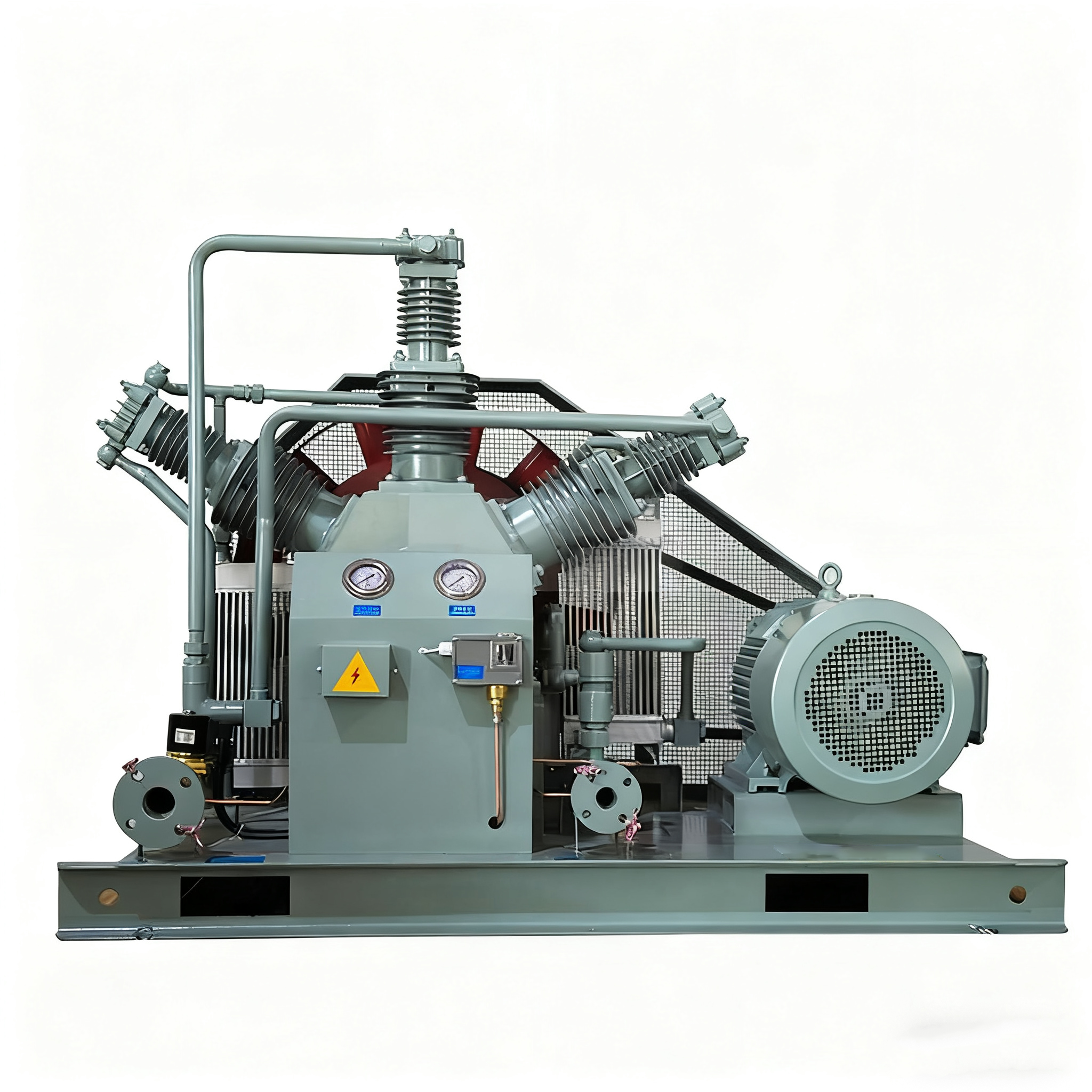
Core Definition: How Specialized Gas Compressors Differ from Standard Air Compressors
Why General-Purpose Air Compressors Are Unsafe and Ineffective for Critical Gases
General-purpose air compressors deliver ambient air at 100–175 psi, typically using oil-lubricated mechanisms that introduce oil vapor and moisture. For critical gases—medical oxygen, breathing air, hydrogen, or toxic process gases—this contamination poses serious risks. In breathing-air systems, trace oil mist can cause lipid pneumonia or ignite in oxygen-rich environments; standards like CGA Grade D mandate near-zero hydrocarbon content. In hydrogen service, oil carryover creates explosive mixtures at high pressure, while conventional seals fail to contain low-molecular-weight gases like hydrogen and helium. Standard materials and elastomers degrade rapidly when exposed to corrosive or reactive media, leading to leaks and system failure. Crucially, general-purpose units lack the leak-tight integrity required for flammable or toxic gases—compromising both personnel safety and process reliability. They cannot achieve the purity (often requiring dew points ≤ –46°C), pressure (frequently 6,000 psi), or chemical compatibility demanded by critical applications.
Design Philosophy: Medium-Specific Engineering Over Generic Compression
Specialized gas compressors are engineered from the ground up for a specific medium—not adapted from air-compression platforms. Every wetted component—materials, seals, valves, and compression stages—is selected based on the gas’s chemical reactivity, molecular weight, thermal behavior, and toxicity. Diaphragm compressors, for example, use hydraulically actuated metallic or PTFE membranes to isolate gas from drive mechanisms entirely, eliminating lubricant carryover—a non-negotiable requirement for oxygen and hydrogen. Stainless steel or nickel alloys (e.g., Inconel 625, Hastelloy C-276) replace carbon steel where embrittlement or corrosion is a risk. Seals are designed not just for pressure retention but for molecular-level containment—critical for helium and hydrogen. Compression ratios and cooling strategies are tuned to avoid phase changes, excessive heat buildup, or condensation-induced corrosion. This targeted approach transforms the compressor from a utility device into a deterministic, safety-critical process component.
Key Application Categories Driving Specialized Gas Compressor Requirements
The functional requirements of a gas compressor are defined not by pressure alone, but by the chemical identity, purity threshold, and hazard profile of the target gas. Where standard air compressors treat atmospheric air as inert and forgiving, specialized units are mandated wherever the gas is reactive, hazardous, or intended for human consumption. Operational success shifts from simple pressurization to guaranteed preservation of gas integrity—making application-specific engineering essential. Two sectors—medical breathing systems and hydrogen/toxic gas services—exemplify this imperative: they demand purpose-built systems, not retrofitted machines.
Medical Oxygen and Breathing-Air Systems: Zero-Oil, Ultra-High Purity Standards
Medical gas systems require absolute oil-free operation. Sub-micron oil aerosols from lubricated compressors can cause lipid pneumonia when delivered via ventilators or hyperbaric chambers—and pose combustion hazards in high-oxygen environments. As documented in ECRI Institute’s 2023 analysis of hospital incident reports, non-compliant compressed air contributes significantly to iatrogenic respiratory complications. Compliance therefore hinges on source-level elimination of contaminants—not downstream filtration. Water-lubricated or dry-running technologies (e.g., diaphragm or scroll compressors) meet this need, avoiding lubricants entirely. Purity is codified in standards such as the European Pharmacopoeia, which specifies strict limits: dew point ≤ –46°C, carbon monoxide < 5 ppm, sulfur dioxide < 1 ppm, and total hydrocarbons < 0.1 mg/m³. Achieving these requires integrated purification trains—coalescing filters, activated carbon beds, and desiccant dryers—positioned immediately after compression to remove particulates, gaseous impurities, and residual moisture. A unit labeled “technically oil-free” with only coalescing filtration falls short; medical certification demands zero hydrocarbon generation at the source.
Hydrogen, Toxic, and Flammable Gas Service: Material Compatibility and Leak-Tight Integrity
For hydrogen, hydrogen sulfide, ammonia, or other reactive gases, the primary engineering challenge shifts from internal purity to external containment—because even minor fugitive emissions can trigger toxic exposure, fire, or explosion. Material compatibility is foundational: hydrogen embrittles carbon steel and cast iron; H₂S causes sulfide stress corrosion cracking in brass and copper; ammonia attacks copper-based alloys. The table below highlights material vulnerabilities and required alternatives:
| Gas Type | Primary Risk to Compressor | Unsuitable Generic Material | Required Specialized Material |
|---|---|---|---|
| Hydrogen (H₂) | High diffusivity, steel embrittlement | Carbon Steel, Cast Iron | 316L Stainless Steel, Austenitic Alloys |
| Hydrogen Sulfide (H₂S) | Sulfide stress corrosion cracking | Standard Brass, Copper Alloys | Hastelloy C-276, Inconel 625 |
| Ammonia (NH₃) | Chemical attack on copper | Copper, Brass, Galvanized Steel | Carbon Steel (specific grades), Stainless Steel |
Leak-tight integrity extends beyond materials to design: threaded joints are replaced with welded or double-block-and-bleed configurations; gaskets use fluoropolymers or metal-jacketed constructions; and static leakage rates must comply with ISO 19880-3 for hydrogen systems. Electrical components—including motors and instrumentation—must be certified explosion-proof (Class I, Div 1) to prevent ignition of escaped vapors. The goal is intrinsic safety: integrity built into the design, not maintained through inspection cycles.
Enabling Technologies That Make Specialized Gas Compressors Safe and Reliable
Diaphragm and Scroll Compressors for Contamination-Free Gas Compression
Diaphragm and scroll compressors eliminate lubricants and dynamic seals from the gas path—ensuring absolute contamination control. In diaphragm units, hydraulic pistons flex metallic or PTFE diaphragms to create hermetically sealed compression chambers; the gas never contacts oil, wear particles, or elastomers. This makes them indispensable for ultra-high-purity applications including medical oxygen, semiconductor process gases, and calibration standards. Scroll compressors use orbiting and fixed spiral elements to compress gas continuously and oil-free—delivering smooth, low-vibration operation ideal for lower-pressure specialty gas service (e.g., laboratory nitrogen or instrument air). While diaphragm designs reach higher discharge pressures, scroll units offer compactness and reliability where purity and quiet operation are priorities. Together, they form the technical foundation for contamination-free compression across life-critical and precision manufacturing applications.
Advanced Oil-Free Screw Designs and Dynamic Sealing for Hydrogen and Corrosive Gases
Modern oil-free screw compressors go beyond basic lubricant exclusion—they integrate advanced surface engineering and sealing architectures tailored to extreme service conditions. Rotors are coated with PTFE, ceramic, or chromium carbide to enable dry, low-friction operation without oil contact. For hydrogen, dynamic sealing combines labyrinth seals, dry gas mechanical seals, and nitrogen buffer systems to prevent molecular leakage—addressing hydrogen’s unique ability to permeate conventional barriers. Corrosive gas service demands full-wetted-material compatibility: stainless steel housings, Hastelloy®-clad internals, and fluoropolymer valve seats and seals resist chemical degradation. Temperature-controlled housings prevent condensation and acid formation in acidic gas streams. These platforms meet ATEX, ISO 19880-3, and PED 2014/68/EU requirements—providing safe, continuous-duty performance for fuel-cell hydrogen, refinery sour gas, and industrial ammonia service.
Safety-Critical Ancillary Systems Integral to Gas Compressor Performance
The operational integrity of a specialized gas compressor depends on far more than its compression module—it relies on a tightly integrated suite of safety-critical ancillaries. Gas detection and monitoring serve as the first line of defense: fixed analyzers (e.g., electrochemical, catalytic bead, or laser-based sensors) feed real-time data into Life Safety Systems (LSS) that automatically trigger shutdowns, alarms, and ventilation upon detecting toxic, flammable, or asphyxiant gases. Control subsystems—including anti-surge algorithms, suction scrubber level regulators, and vibration monitoring—prevent mechanical damage and process instability during transient conditions. Seal integrity monitoring verifies barrier performance in real time, while automated emergency venting isolates and safely discharges hazardous media before overpressure or leak escalation occurs. These systems are not optional enhancements—they are mandatory, interlocked components that ensure the compressor remains within defined safe operating envelopes—even when handling hydrogen, H₂S, or other high-hazard media. Without this layered architecture, even the most robustly engineered compressor becomes a single-point vulnerability.
FAQ
What is the main difference between general-purpose air compressors and specialized gas compressors?
General-purpose air compressors are designed for compressing ambient air, and they typically introduce oil and moisture contamination. Specialized gas compressors are engineered for specific gases to ensure purity, compatibility, and safety, avoiding contamination altogether.
Why are standard air compressors unsafe for hydrogen and toxic gases?
Standard compressors often lack the containment and material compatibility required for reactive or flammable gases like hydrogen and toxic gases. They can leak and degrade under high pressures and chemically aggressive environments, posing serious safety risks.
What technologies ensure contamination-free compression in medical and industrial applications?
Technologies like diaphragm and scroll compressors avoid lubricants and dynamic seals entirely. They isolate the gas path and provide oil-free operation, crucial for applications requiring ultra-high purity standards.
How are materials chosen for specialized gas compression?
Materials are selected based on the gas’s reactivity, toxicity, and compatibility requirements. For example, stainless steels and alloyed materials like Hastelloy or Inconel replace standard metals prone to embrittlement, corrosion, or chemical attack.
What ancillary systems enhance the safety of gas compressors?
Integrated systems like gas detection, seal integrity monitoring, and emergency venting serve as critical safeguards. These systems automatically respond to transient conditions or leaks to ensure operational safety.
Table of Contents
- Core Definition: How Specialized Gas Compressors Differ from Standard Air Compressors
- Key Application Categories Driving Specialized Gas Compressor Requirements
- Enabling Technologies That Make Specialized Gas Compressors Safe and Reliable
- Safety-Critical Ancillary Systems Integral to Gas Compressor Performance
-
FAQ
- What is the main difference between general-purpose air compressors and specialized gas compressors?
- Why are standard air compressors unsafe for hydrogen and toxic gases?
- What technologies ensure contamination-free compression in medical and industrial applications?
- How are materials chosen for specialized gas compression?
- What ancillary systems enhance the safety of gas compressors?

