 CN
CN
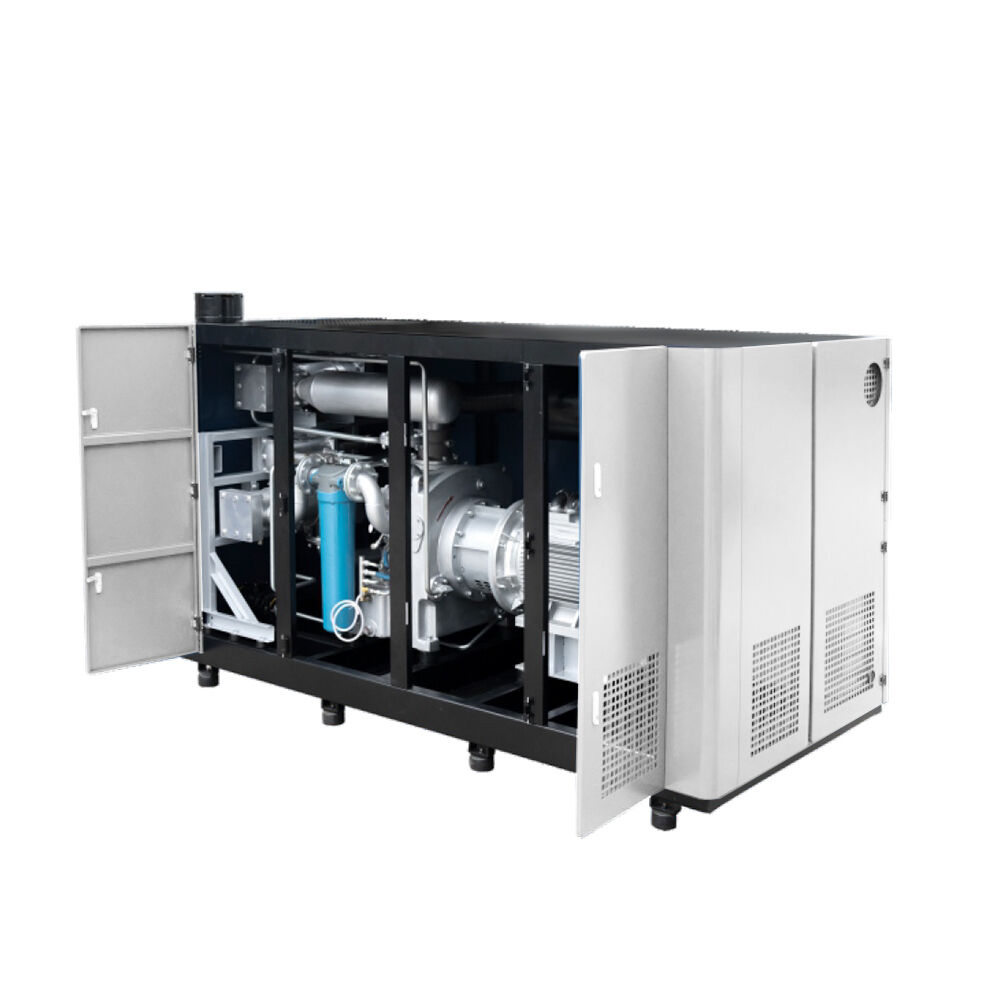
Core Vacuum Pump Technologies for Semiconductor Cleanrooms
Dry Vacuum Pumps: Essential for Oil-Free, Particle-Free Processing
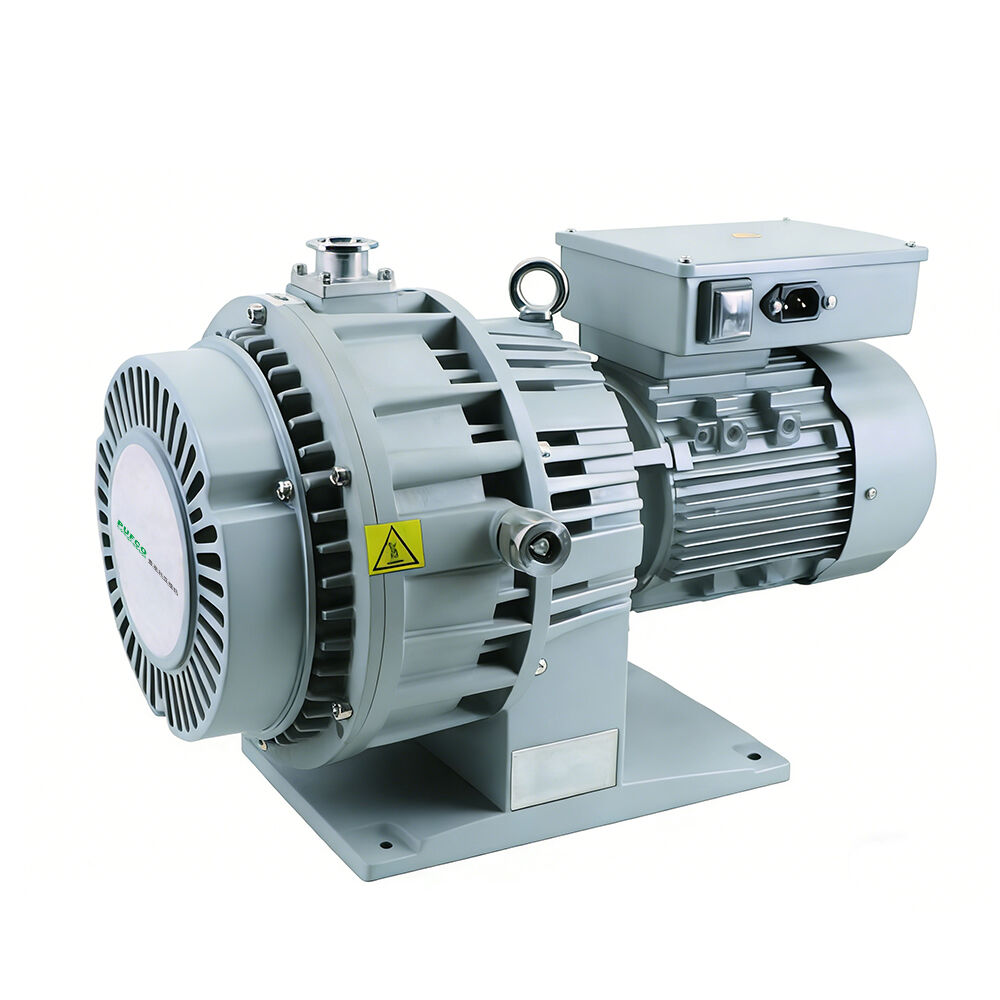
Dry vacuum pumps operate without lubricating oils—eliminating hydrocarbon contamination and particle generation that directly threaten yield in semiconductor fabrication. Their hermetically sealed, oil-free mechanisms prevent backstreaming and ingress of nanoscale contaminants during critical processes like chemical vapor deposition (CVD) and EUV lithography. This makes them indispensable for sub-10nm node manufacturing, where Class 0 cleanliness standards demand particulate levels below 0.1 mg/m³ and zero hydrocarbon contribution. They deliver stable performance across the 10−3 to 10−9 mbar range without degradation or maintenance-induced downtime.
Turbo-Molecular and Cryogenic Pumps: Delivering Ultra-High Vacuum for Critical Process Stages
Ultra-High Vacuum (UHV) environments—below 10−7 mbar—are mandatory for atomic layer deposition (ALD), ion implantation, and high-resolution metrology. Turbo-molecular pumps achieve this with rotating blade assemblies that provide compression ratios exceeding 1010 for light gases and enable rapid evacuation with pressure stability within ±1% during transient load shifts. Cryogenic pumps complement them by adsorbing gas molecules onto supercooled surfaces (< −150°C), offering exceptional capacity for sudden gas bursts—such as those occurring during rapid thermal processing (RTP). Their passive trapping mechanism avoids moving parts in the vacuum chamber, enhancing reliability and reducing particle risk.
Roughing Pumps (Screw, Roots, Liquid Ring): Bridging Atmospheric to High Vacuum Efficiently
Roughing pumps establish the initial vacuum level—from atmosphere down to ~10−3 mbar—enabling high-vacuum systems to engage efficiently. Screw pumps provide dry, oil-free roughing ideal for particle-sensitive applications, while roots blowers serve as high-speed boosters in hybrid configurations, increasing effective pumping speed by 5–10×. Liquid ring pumps handle corrosive and condensable process byproducts—common in plasma etching—through water-sealed compression and built-in condensation. Modern designs integrate variable-speed drives, cutting power consumption by up to 30% versus legacy models and supporting energy-efficient, 24/7 fab operations.
Vacuum Pump Requirements Across Key Semiconductor Fabrication Processes
CVD, PVD, and Etch: Matching Pumping Speed and Gas Compatibility to Process Chemistry
Chemical vapor deposition (CVD), physical vapor deposition (PVD), and plasma etching demand vacuum pumps engineered for both speed and chemical resilience. Chlorine- and fluorine-based etchants require corrosion-resistant dry pumps—often with ceramic-coated rotors and nickel-alloy housings—to avoid degradation and maintain mean time between failures (MTBF) beyond 20,000 hours. Meanwhile, thin-film deposition processes rely on turbomolecular pumps to sustain ultra-high vacuum and prevent reactant accumulation; even minor pressure fluctuations can cause film thickness variations exceeding ±2%, risking device uniformity. Optimized pumping speed reduces particle contamination by up to 40% in advanced nodes, directly improving yield.
Ion Implantation and RTP: Managing Transient Gas Loads and Thermal-Induced Outgassing
Ion implantation and rapid thermal processing (RTP) generate extreme, short-duration vacuum challenges. Photon-induced outgassing during implantation causes pressure spikes over three orders of magnitude above baseline—requiring pumps with millisecond response times. Roots blowers paired with screw-type backing pumps provide the necessary dynamic speed modulation to stabilize chamber pressure instantly. In RTP, chamber walls and wafers heated to 1,200°C release massive volumes of adsorbed gases and volatiles. Liquid ring pumps excel here: their water-sealed design condenses outgassed species in situ, sustaining flows above 600 m³/h while preventing dopant diffusion anomalies that distort transistor threshold voltages at sub-5nm nodes.
Contamination Control: How Vacuum Pump Design Directly Impacts Wafer Yield
At sub-10nm process nodes, wafer sensitivity to contamination is unprecedented—a single hydrocarbon molecule or particle 5 nm can trigger fatal defects. Dry vacuum pump technology directly addresses this by eliminating oil lubrication entirely, removing the primary source of hydrocarbon backstreaming and particulate shedding. Integrated filtration, ceramic-coated components, and hermetic sealing ensure particulate emissions remain below 0.1 mg/m³—meeting Class 0 cleanroom requirements. As industry data shows, particulate contamination accounts for over 70% of yield loss in advanced nodes (Semiconductor Engineering, 2023). For EUV lithography and other ultra-sensitive steps, selecting pumps with proven contamination control isn’t optional—it’s foundational to preserving yield in multi-billion-transistor chips.
Selecting and Integrating Vacuum Pumps for Reliable, Scalable Fab Operations
Selecting vacuum pumps demands a holistic view of scalability, process alignment, and total cost of ownership—not just upfront price. Modular architectures support seamless expansion from single-chamber tools to centralized, plant-wide vacuum systems, enabling capital-efficient scaling alongside production growth. Material compatibility—e.g., Hastelloy housings for chlorine-rich etch or water-cooled ceramics for RTP—must match process chemistry to ensure longevity and contamination control. Lifecycle cost analysis is essential: a single pump operating 24/7 consumes ~$18,000/year in electricity alone, and unplanned downtime carries far higher yield penalties. Integration success hinges on standardized digital interfaces (SEMI EDA/E54 compliant) and embedded diagnostics, which cut commissioning time by 30% and enable predictive maintenance—reducing MTTR and reinforcing fab-wide operational resilience.
FAQ
What are dry vacuum pumps used for in semiconductor cleanrooms?
Dry vacuum pumps are essential for oil-free, particle-free processing because they eliminate hydrocarbon contamination and particle generation, directly impacting yield in semiconductor fabrication. They are crucial for maintaining Class 0 cleanliness in sub-10nm node manufacturing.
Why are turbo-molecular and cryogenic pumps important for semiconductor processes?
Turbo-molecular and cryogenic pumps deliver ultra-high vacuum necessary for critical process stages such as atomic layer deposition (ALD) and ion implantation. They provide stability and capacity for sudden gas bursts, reducing particle risk in the vacuum chamber.
How do roughing pumps support semiconductor fabrication?
Roughing pumps help establish the initial vacuum level, enabling high-vacuum systems to engage efficiently. They are designed to handle corrosive and condensable process byproducts in applications like plasma etching.
What role does contamination control play in wafer yield?
Contamination control is crucial at sub-10nm process nodes, where wafer sensitivity to contamination can lead to fatal defects. Vacuum pump design helps eliminate oil lubrication and reduce particulate emissions, significantly impacting wafer yield.

