 CN
CN
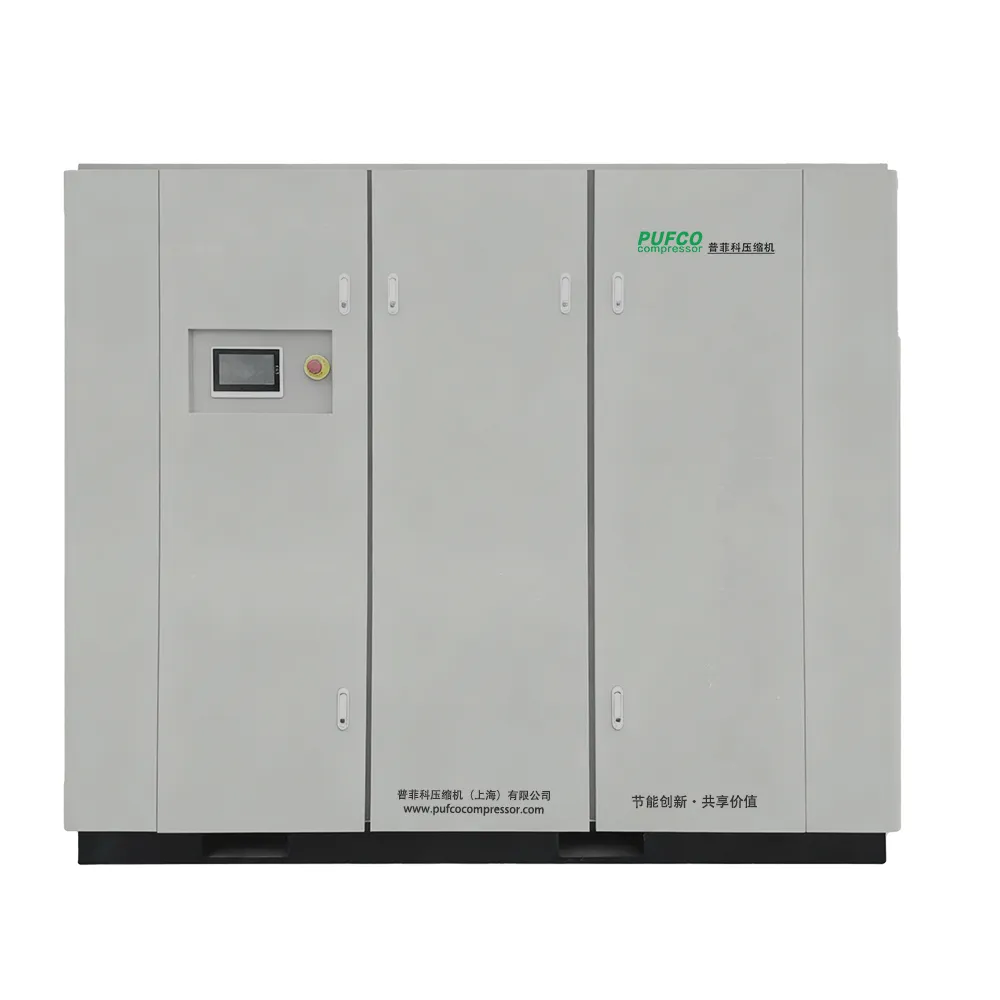
How Oil-Injected Screw Air Compressors Work
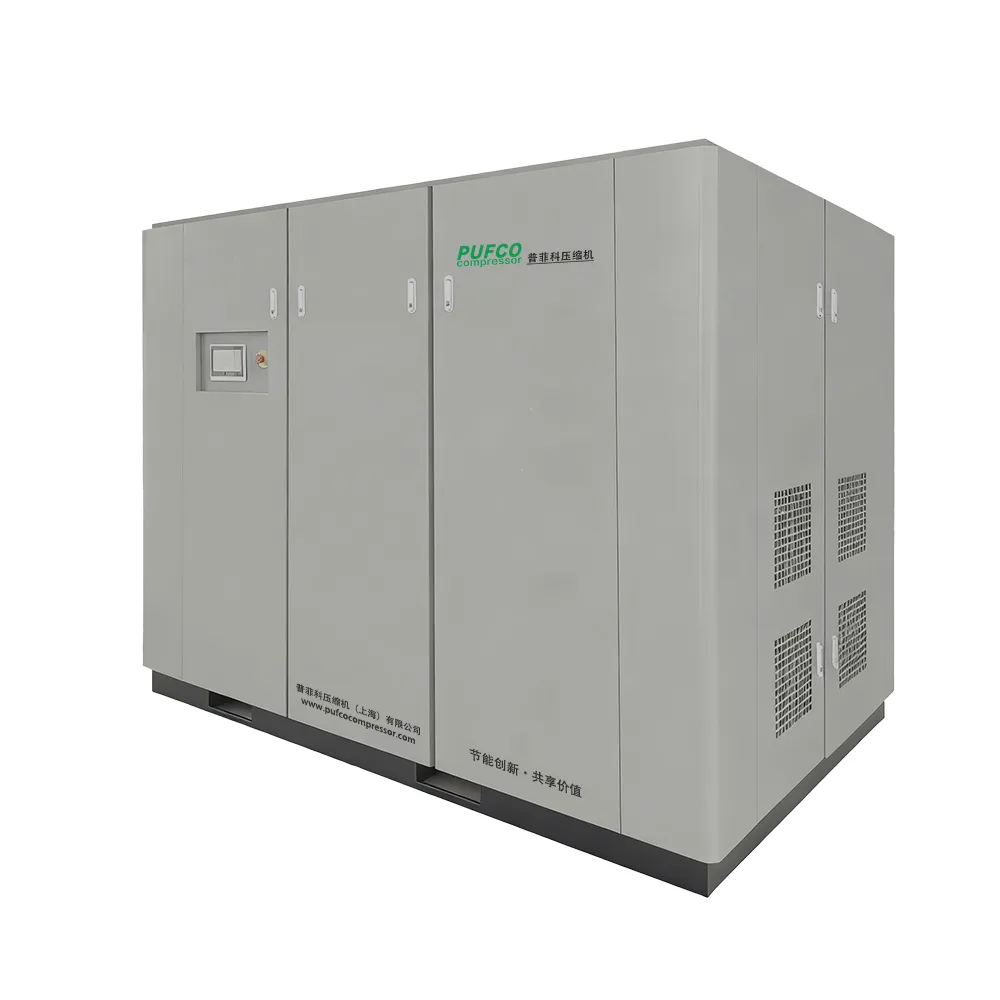
Core Mechanism: Twin-Screw Rotation and Oil Injection
The heart of oil injected screw air compressors lies in their precisely machined male and female helical rotors. When these components spin together in opposite directions, outside air flows in through intake ports and gets caught in the spaces between the rotating lobes. As the rotors turn, those spaces shrink down gradually, squeezing the air in what's called an isothermal process. At the same time, special compressor oil gets pumped right into the compression area, acting as both lubricant and sealant for the tiny gaps between rotor surfaces which are usually around 0.003 to 0.005 inches apart. After mixing with the compressed air, this oil needs to be separated out again. The system filters it, cools it down, then sends most of it back into circulation. These machines can handle incredible speeds too, running up to 3600 revolutions per minute. What makes them stand out is their ability to produce steady streams of compressed air at high volumes measured in cubic feet per minute, all while maintaining excellent efficiency throughout the entire process.
Role of Lubricating Oil in Cooling, Sealing, and Noise Reduction
The injected oil performs three indispensable functions:
- Cooling: Absorbs approximately 70% of compression heat, lowering discharge air temperature from ~180°C to roughly 85°C preventing thermal stress on components and downstream systems.
- Sealing: Fills minute gaps between rotors and housing, reducing internal air leakage (slip) by 15–20% compared to dry-screw designs.
- Noise Reduction: Acts as a viscous damper, lowering mechanical noise emissions by 10–15 dBA.
This integrated lubrication strategy contributes to up to 30% power savings in continuous-duty applications and supports extended service intervals of up to 8,000 hours when paired with proper filtration and maintenance.
Key Advantages of Oil-Injected Screw Air Compressors
Energy Efficiency and Continuous Duty Cycle Performance
Injecting oil into the system cuts down on friction quite a bit while keeping things cool enough for stable operation. That's why oil injected screw compressors can run non stop at full capacity, which makes them great for places needing constant production like factories, metalworking shops, and auto manufacturing facilities. The Variable Speed Drive versions take this even further by adjusting motor speeds based on actual air needs at any given moment. This means they use around 30 to 35 percent less power when not running at maximum compared to regular fixed speed models. Plus, the oil keeps circulating through the system, so it stays cool even when outside temps hit over 45 degrees Celsius. Makes sense why these machines hold up so well in tough industrial settings where heat and dust are constant problems.
Reliability, Low Maintenance, and Extended Service Life
An oil film prevents direct contact between moving metal parts, cutting down wear by over half and extending maintenance periods to around 8,000 to 10,000 hours. That's about twice what we see with oil free options. When paired with solid engineering and straightforward maintenance routines such as regular oil and filter replacements, properly maintained equipment can last for MTBF beyond 60,000 hours. Industries including packaging and textiles really feel the impact here since unexpected stoppages run at roughly $740k an hour according to research from Ponemon in 2023. The resulting reliability means these machines stay on the job longer, providing real operational stability and long term value. Many installations continue running strong for fifteen years or more before needing replacement.
Common Industrial Applications and Sector-Specific Requirements
Manufacturing, Automotive, and Food & Beverage Use Cases
Oil injected screw compressors form the backbone of most industrial automation systems these days. They power all sorts of equipment across factories - think pneumatic tools, those robotic arms doing precision work, conveyor belts moving products along, and pretty much everything else on the factory floor. When we look at automotive plants specifically, these machines maintain steady pressure levels which is absolutely essential for things like proper paint application, accurate tire inflation, and reliable testing of engines before they go out. The food and beverage sector relies heavily on them too for running bottling lines, label applicators, and packaging machinery. But there's a catch here about air quality. Even though the compressors themselves inject oil during operation, the air that actually touches food products needs to be spotless. Industry regulations demand this, particularly standards like ISO 8573-1 Class 0 when dealing with carbonated drinks where even microscopic contamination could ruin batches worth thousands.
Air Quality Considerations and Filtration Integration
For industries where cleanliness matters most like food production, drug manufacturing, and electronic component assembly, compressed air needs to meet ISO 8573-1 Class 1 standards at minimum. Getting there involves several filtration steps. First come coalescing filters that take out large oil droplets from the air stream. Then activated carbon units handle those stubborn hydrocarbon smells and vapors. Finally, fine particulate filters catch anything smaller than a micron in size. When all these work together properly, they bring down oil levels to under 0.01 milligrams per cubic meter of air, which means getting rid of almost all hydrocarbons according to what we see in industry reports from 2023. Many top equipment makers have started integrating continuous air quality checks directly into their compressor controls now too. These systems will automatically send warnings or even shut things down completely when contamination levels start creeping above acceptable limits.
Selecting the Right Oil-Injected Screw Air Compressor
Matching CFM, PSI, and Duty Cycle to Operational Demand
Getting the sizing right matters a lot for how well things work and how long they last. Start by figuring out what the maximum CFM demand will be from everything connected to the system. If it's too small, pressure drops happen and tools won't perform properly. Go too big and we end up wasting power and dealing with unnecessary cycling problems. Next step is setting the operating pressure. Aim for around 10-15% higher than what the tool needing the most pressure actually requires. This helps compensate for those inevitable pressure losses through pipes, filters, and drying equipment along the way. Then there's the question of duty cycle. For operations running non-stop day after day, only a genuine 100% continuous duty compressor will do the job. But places like auto repair garages where usage comes and goes throughout the week might get away with something rated at 60-70%. Getting these numbers wrong isn't just expensive either. We've seen cases where mistakes cost companies nearly 30% extra on their energy bills plus components wear out much faster than expected.
Evaluating Oil Separation Efficiency and Aftercooler Options
When oil gets carried over into compressed air systems, it really impacts both air quality and how long equipment lasts down the line. Most modern oil injected screw compressors can separate out over 99.9 percent of the oil, leaving behind less than 3 parts per million of residue. This matters a lot when dealing with delicate pneumatic controls and meeting those strict ISO 8573-1 Class 1 standards. Combine good separation with the right size aftercooler for best results. Air cooled versions work fine in normal conditions, but water cooled ones handle tough situations better where temperatures run high, humidity is bad, or space is tight. Aftercoolers typically bring down discharge temps between fifty to eighty degrees Fahrenheit, which cuts moisture content around seventy percent and keeps condensation at bay. Industries that need to follow regulations such as food processing or pharmaceutical manufacturing should definitely install coalescing filters after compression points to maintain that Class 1 air quality standard consistently throughout operations.
FAQs
What is the primary advantage of oil-injected screw air compressors?
Oil-injected screw air compressors are known for their ability to handle high volumes of air with excellent efficiency and reliability. The injection of oil reduces friction, ensures cooling, and prevents wear, making these systems suitable for continuous-duty applications.
How does lubricating oil contribute to the performance of these compressors?
Lubricating oil absorbs compression heat to cool the system, seals gaps between rotors to reduce air leakage, and acts as a damper to decrease mechanical noise. This results in significant power savings and extended service intervals.
What are the industrial applications of oil-injected screw compressors?
These compressors are vital in manufacturing, automotive, and food & beverage sectors, powering equipment like pneumatic tools, robotic arms, and conveyor belts. They are crucial for maintaining optimal pressure levels which are essential for various industrial processes.
How do you ensure air quality in systems using oil-injected screw compressors?
To achieve high air quality, several filtration steps are necessary, including coalescing filters to remove large oil droplets, activated carbon units for hydrocarbons, and fine particulate filters for smaller particles. Continuous air quality checks are also beneficial.

