Oil-injected screw air compressors supply compressed air for industrial tools, automated machinery and production lines. Their suitability depends on the required airflow, working pressure, running hours and delivered-air quality. A compressor serving a busy metalworking plant may need a different package from one supporting a small automotive workshop.
This guide connects common industrial applications with the information needed to choose a compressor and its treatment equipment. Start with what the production equipment actually requires, then match the compression package, controls, storage and air treatment to that duty.
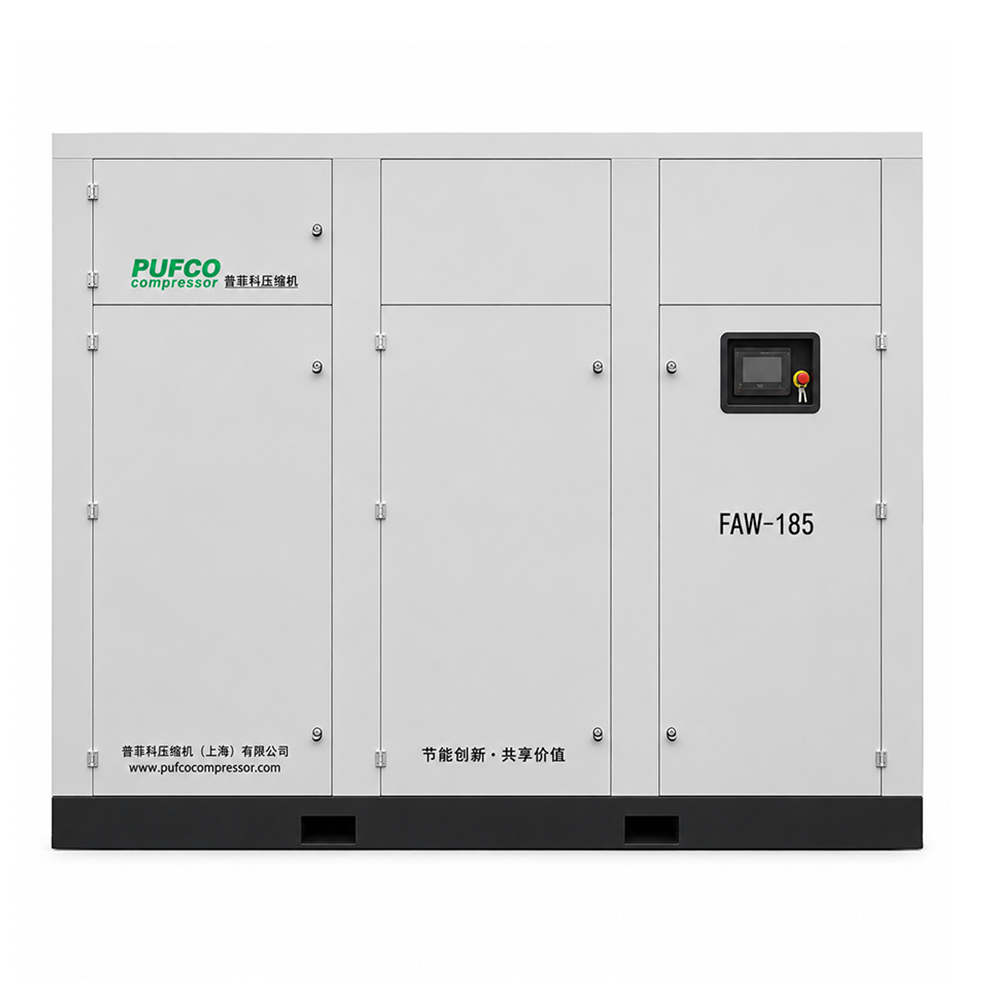
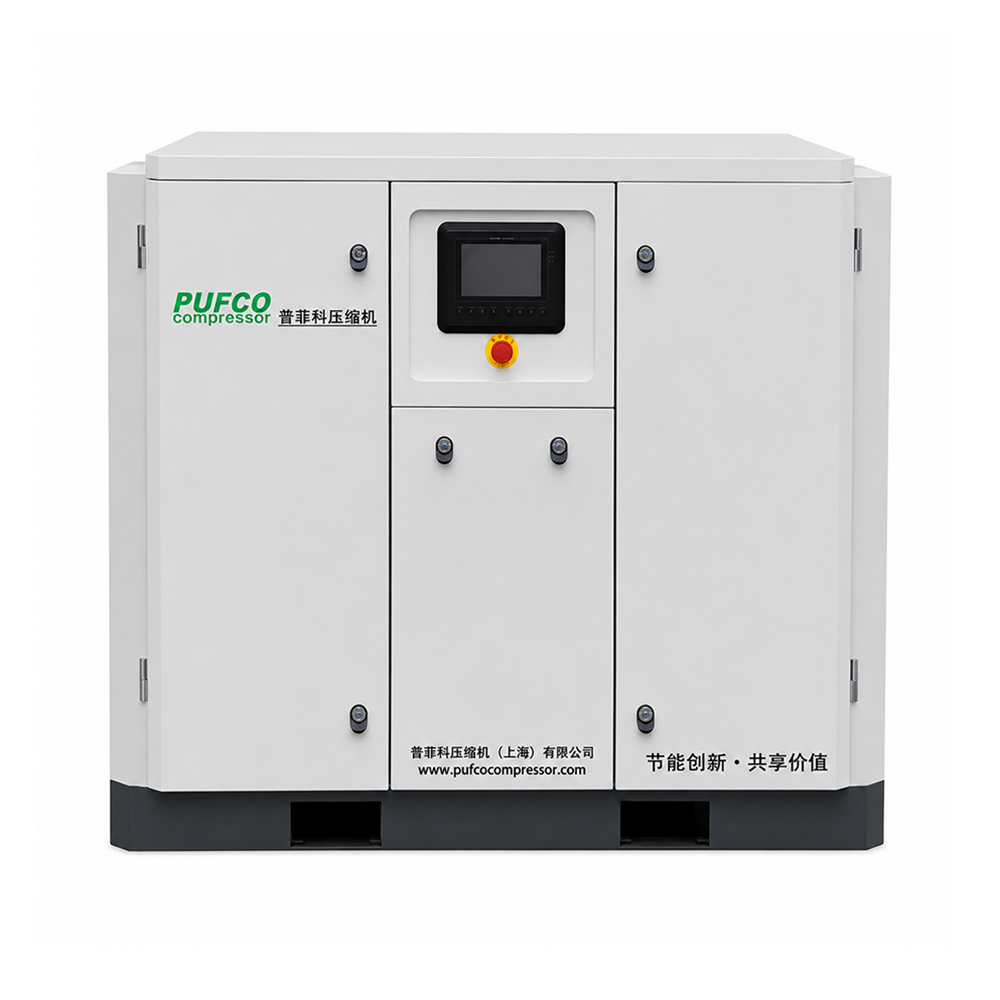
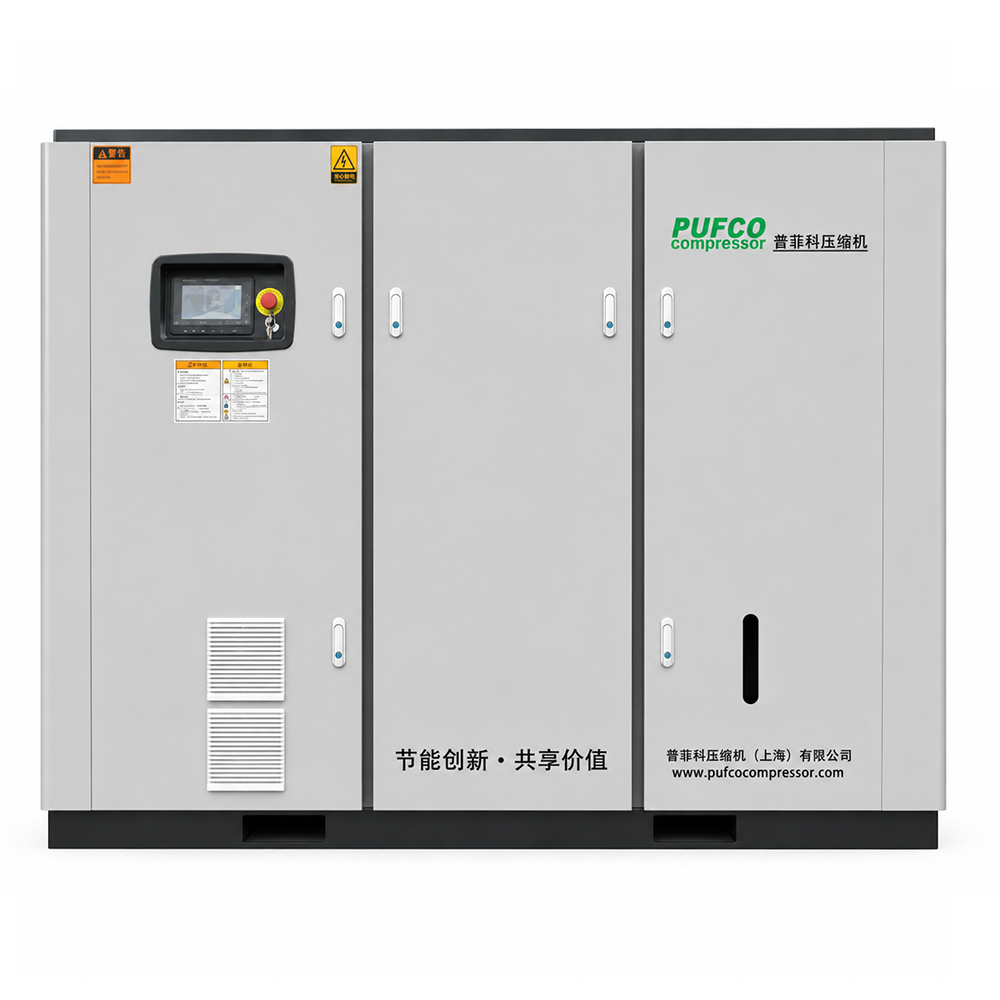
Inside an oil-injected rotary screw compressor, intermeshing rotors trap air and reduce the volume containing it. Injected lubricant helps cool the compression process, lubricate and seal internal clearances. An oil-separation system then removes most of the oil from the compressed-air stream and returns it to the lubrication circuit.
The compressor can support sustained industrial demand when selected and installed for that service. Residual oil, moisture and particles still need to be considered. For a starting equipment comparison, review PUFCO’s single-stage oil-injected screw air compressors against the pressure and useful airflow your plant needs.
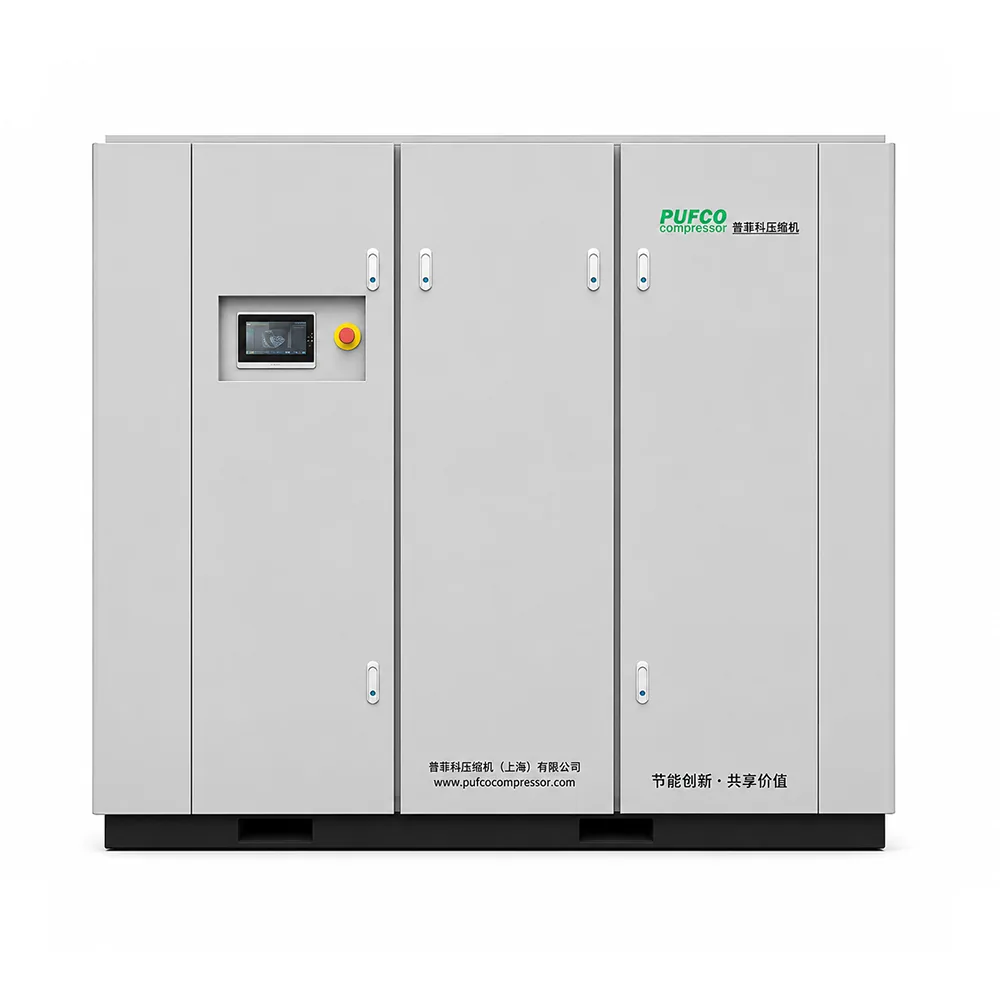
Pneumatic cylinders, grippers, positioning devices and assembly tools use compressed air throughout manufacturing. A production line may have a steady underlying demand with short peaks when several actuators operate together. Insufficient pressure during those peaks can affect machine cycles even when the average airflow looks adequate.
Prepare a list of connected equipment, the required pressure at each connection and the expected simultaneous use. Identify processes that must keep running during maintenance. This helps determine whether one compressor, multiple coordinated units or additional storage is appropriate. Receiver volume can buffer short peaks, but it does not replace the continuous capacity needed by the line.
Workshops use compressed air for impact tools, tyre-service equipment, lifting controls and other air-powered devices. Demand often changes as technicians move between jobs. Compare the combined consumption of tools likely to run together rather than adding every tool’s maximum nameplate consumption without considering its working cycle.
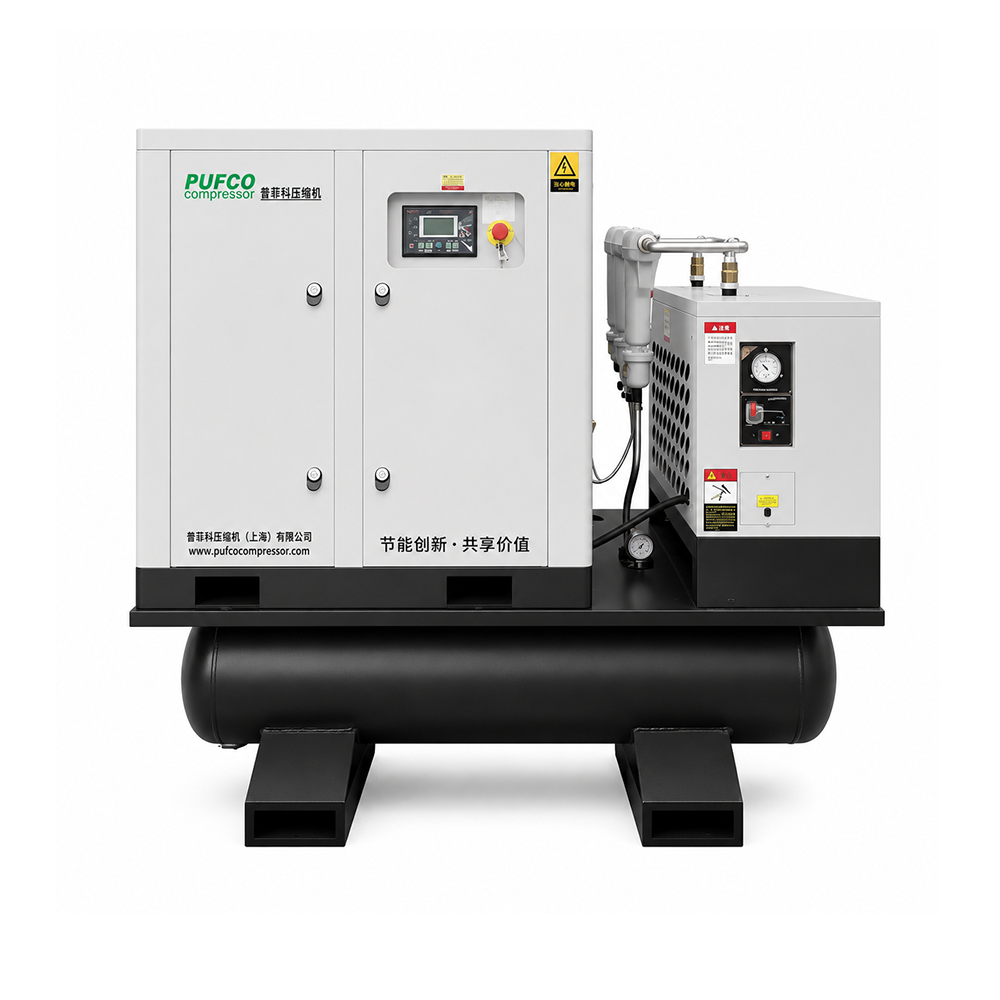
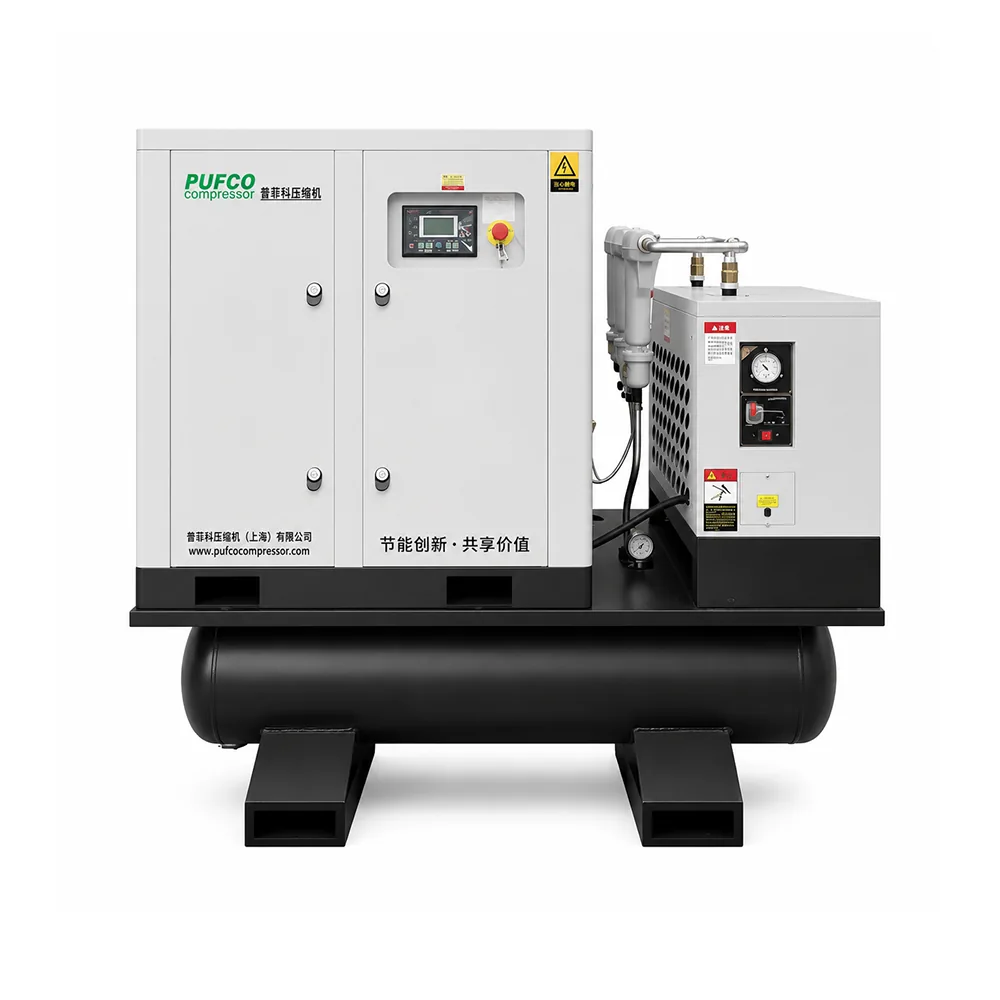
Where installation space is limited, an all-in-one screw compressor with dryer and tank can group the compressor, refrigerated dryer, receiver and filtration into an integrated arrangement. The selected package still needs ventilation, service access, drainage and suitable electrical connections. Confirm the equipment included in the quotation and any separate treatment required for painting or other sensitive work.
Machining facilities may need compressed air for tool changes, workholding, equipment controls and controlled cleaning. Record the machine builder’s pressure, flow and air-quality specifications. Pressure at the compressor outlet can differ from pressure available at a machine because dryers, filters, pipework and connections introduce losses.
Painting and surface finishing require particular attention to moisture, particles and oil. Define the quality requirement for the finishing equipment and verify the treatment arrangement at the point of use. When air serves a specialised process such as laser cutting, obtain that process’s pressure and quality requirements separately; ordinary workshop air should not automatically be treated as the correct specification.
Textile equipment, packaging lines, sorting devices and pneumatic handling systems can create sustained or rapidly changing air demand. The required pressure and consumption vary with machine type, production speed and how many lines run together. Use machine specifications and, where possible, measured demand to build an operating profile.
For packaging, distinguish air used only to operate a cylinder from air that contacts a product or its contact surfaces. Food, pharmaceutical and other sensitive applications need a defined quality requirement and suitable verification. An oil-injected compressor with general-purpose filtration should not be assumed suitable for every product-contact duty.
A stable base load and a variable workshop load call for different control assessments. A fixed-speed unit can suit an appropriately matched steady demand. A permanent-magnet variable-speed screw compressor can adjust output within its operating range as demand changes.
Compare proposed input power at the actual pressure and expected loads. Variable-speed control does not correct leaks, restrictions or excessive system pressure, and no single saving percentage applies to every site. Include minimum demand and planned production changes when assessing compressor size and control range.
A refrigerated dryer removes moisture by cooling compressed air and separating condensed water. It does not remove oil vapour. Coalescing filters address liquid aerosols, while any oil-vapour treatment needs to be specified separately for the required quality and operating conditions.
Specify particle, water and oil limits at the point of use, with the relevant test method where needed. Our oil-injected versus oil-free screw compressor guide explains how the compression choice fits into the complete air-quality assessment.
PUFCO can discuss a custom configuration around your process. Send minimum, normal and peak airflow with units and reference conditions; required point-of-use pressure; operating hours; air-quality requirements; available voltage, phase and frequency; ambient conditions; installation space; and any cooling utilities.
The custom air compressor selection guide explains which package options to review alongside the requirements of each industrial application.
Identify the receiver and treatment scope, maintenance access and destination-market documentation in the proposal. Send PUFCO your industrial air requirements to discuss a compressor package matched to the application and the site’s supply conditions.

We use cookies to keep this site working properly and to understand how it is used. You can accept all cookies or continue with essential ones only. Cookie policy
 CN