 CN
CN
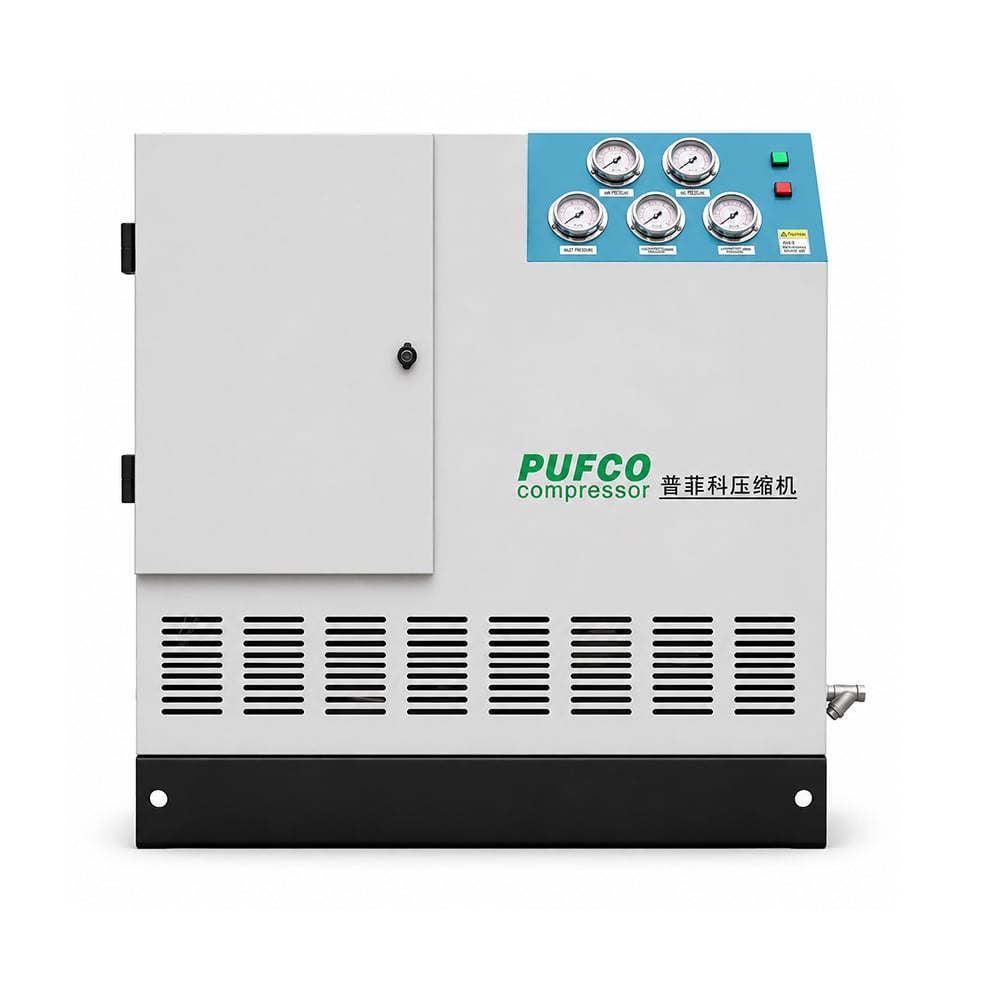
Performance Fundamentals: CFM, PSI, and Duty Cycle Realities
How Portable Air Compressor Output Compares to Stationary Units Under Load
CFM (cubic feet per minute), PSI (pounds per square inch), and duty cycle are the core performance indicators for any air compressor. Portable units feature smaller pumps and tanks, resulting in lower sustained CFM at operating PSI compared to stationary models. Under load, this limits their ability to support high-flow tools like grinders or sandblasters—especially when demand is continuous. For instance, a portable unit rated at 5 CFM at 90 PSI with a 50% duty cycle can only deliver that output for 30 minutes per hour before requiring cooldown. In contrast, a properly sized stationary compressor with a 100% duty cycle maintains its rated CFM continuously, supporting multiple tools without pressure drop or thermal stress. This distinction is critical in production settings where air demand never pauses: while a portable unit may suffice for intermittent tasks like driving nails or tightening bolts, exceeding its duty cycle causes pressure loss, tool stalling, and accelerated wear. Stationary systems are engineered for uninterrupted peak-load operation—the essential foundation of high-demand workflows.
Tank Size, Recovery Time, and Continuous Operation Limits
Tank size and recovery time determine how long a compressor can meet air demand between pump cycles. Portable compressors typically use compact tanks (1–6 gallons), leading to frequent on/off cycling. Though recovery time—the interval to rebuild pressure from cut-in to cut-out—may be short, limited storage forces the pump to run more often, increasing the risk of duty cycle overload during extended use. Stationary units pair larger receiver tanks (60–120 gallons) with heavy-duty pumps, extending effective run time and reducing start-stop frequency. Continuous operation hinges on duty cycle: a 50% rating means 30 minutes of operation requires 30 minutes of rest; a 100% duty cycle stationary system, by comparison, runs indefinitely when correctly matched to system demand. This reliability is indispensable for applications like auto body sanding or pneumatic conveyor actuation—where even brief interruptions disrupt workflow and productivity. Selecting a compressor requires aligning tank volume, recovery speed, and duty cycle with real-world usage patterns—not just peak tool requirements—to ensure longevity and consistent performance.
Application Fit: Matching Compressor Type to Workflow Demands
Portable Air Compressor Advantages for Field Service and Construction
Portable air compressors excel in mobile, decentralized work environments. Designed for rapid deployment, they feature compact frames, rugged wheels, and ergonomic handles that allow one person to move them across job sites—from rooftops to muddy trenches. Their small footprint fits easily into service vans or trucks without compromising cargo space. Many models offer gasoline or diesel power, eliminating dependence on grid electricity in remote or undeveloped locations. Output is optimized for intermittent, low-to-moderate demand tools: nail guns, impact wrenches, blow guns, and tire inflators typically require 4–10 CFM at 90–150 PSI—a range well within most portables’ capabilities. Integrated tanks (usually ≤6 gallons) recover quickly enough for single-tool operation, and setup takes seconds. This agility makes portable compressors indispensable for field crews managing multiple daily stops—turning what would be logistical friction into seamless, time-efficient execution.
Stationary Systems for High-Demand Environments Like Auto Shops and Production Lines
Stationary compressors are purpose-built for fixed, high-intensity operations where air demand is constant and multi-point. Auto shops, manufacturing lines, and fabrication facilities rely on robust units with large receiver tanks (80+ gallons) and rotary screw or industrial reciprocating pumps delivering 15–50+ CFM. These systems sustain stable PSI across simultaneous applications—pneumatic hoists, spray booths, sandblasters, and CNC clamps—all of which depend on uninterrupted flow and pressure consistency. With 100% duty cycle ratings, they operate nonstop without thermal derating. Permanently wired to facility power and often housed in sound-dampening enclosures, they support quiet, all-day use. Distribution via ring mains or multi-drop piping ensures uniform pressure at every workstation—eliminating the pressure drops common with daisy-chained portable units. While footprint and installation are greater, the gains in uptime, tool performance, and maintenance efficiency make stationary systems the operational cornerstone of any production-focused environment.
Total Cost of Ownership: Energy, Maintenance, and Uptime Economics
Electric Portable Air Compressor Efficiency vs. Industrial-Grade Stationary Models
Though electric portable compressors carry a lower upfront cost, their long-term energy consumption often outweighs that advantage. Most portables use single-phase induction motors that operate inefficiently under sustained loads, while industrial stationary units commonly integrate premium-efficiency three-phase motors and variable-speed drives (VSDs) that dynamically match output to demand—reducing energy waste by up to 35% compared to fixed-speed equivalents. Over a decade, energy costs alone can total five to ten times the initial purchase price. Industry data consistently shows acquisition accounts for only 20–40% of true lifecycle cost; the remainder stems from energy, maintenance, and unplanned downtime. When a portable unit operates near its duty cycle limit—common in shop or production use—the cost per delivered CFM rises sharply, eroding any initial savings. A well-sized stationary system delivers significantly more usable air per kilowatt-hour, making it the economically superior choice for sustained, high-volume applications.
Service Intervals, Component Lifespan, and Downtime Risk by Type
Maintenance demands diverge markedly between portable and stationary compressors. Portables have smaller oil sumps, compact air filters, and minimal cooling capacity—requiring oil changes every 500–1,000 hours and frequent filter replacements. Industrial stationary units, designed for 24/7 reliability, extend standard service intervals to 2,000+ hours, with larger, more durable components that resist thermal and mechanical fatigue. Pump lifespan reflects this disparity: a portable’s pump typically lasts 5,000–10,000 hours under intermittent use, whereas a well-maintained stationary pump routinely exceeds 20,000 hours. Downtime risk compounds these differences. Unplanned outages in production settings cost hundreds of dollars per hour—and studies show predictive maintenance can reduce such failures by 30–50%. Pushing a portable compressor beyond its design envelope increases failure likelihood, shortens service life, and magnifies both repair expenses and lost productivity. For operations where air is mission-critical, the TCO math strongly favors the durability, efficiency, and uptime assurance of stationary systems.
FAQs
What is the key difference between portable and stationary air compressors?
Portable compressors are designed for intermittent, low-to-medium demand tasks and have compact tanks and pumps, while stationary compressors are meant for continuous, high-demand applications with larger tanks and robust pumps.
Why is duty cycle important in choosing an air compressor?
Duty cycle determines how long a compressor can operate before needing rest. For continuous operations, a 100% duty cycle stationary compressor is essential, while portable units typically have lower duty cycles suitable for intermittent use.
How does tank size affect compressor performance?
Larger tanks allow stationary compressors to run longer and reduce start-stop cycling, whereas small tanks in portable units lead to frequent cycling and risk of overload in extended use.
What factors contribute to the total cost of ownership for compressors?
Total cost includes the initial purchase price, energy consumption, maintenance, and operational downtime. Stationary compressors are more energy-efficient and durable over time, reducing lifecycle costs for high-demand applications.
When should you choose a portable compressor over a stationary unit?
Portable compressors are ideal for field service and construction tasks requiring mobility, compactness, and low-to-moderate air demand, while stationary systems suit environments with continuous, high-volume air requirements.
Table of Contents
- Performance Fundamentals: CFM, PSI, and Duty Cycle Realities
- Application Fit: Matching Compressor Type to Workflow Demands
- Total Cost of Ownership: Energy, Maintenance, and Uptime Economics
-
FAQs
- What is the key difference between portable and stationary air compressors?
- Why is duty cycle important in choosing an air compressor?
- How does tank size affect compressor performance?
- What factors contribute to the total cost of ownership for compressors?
- When should you choose a portable compressor over a stationary unit?

