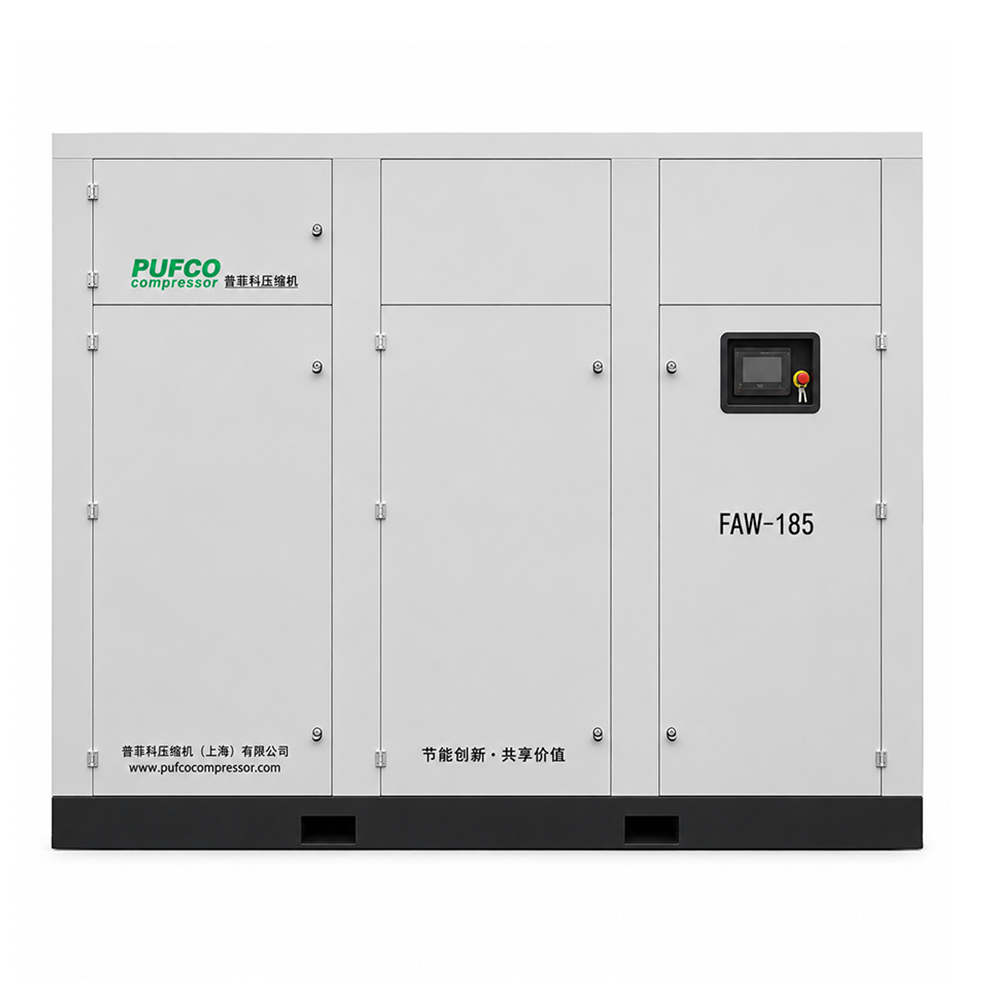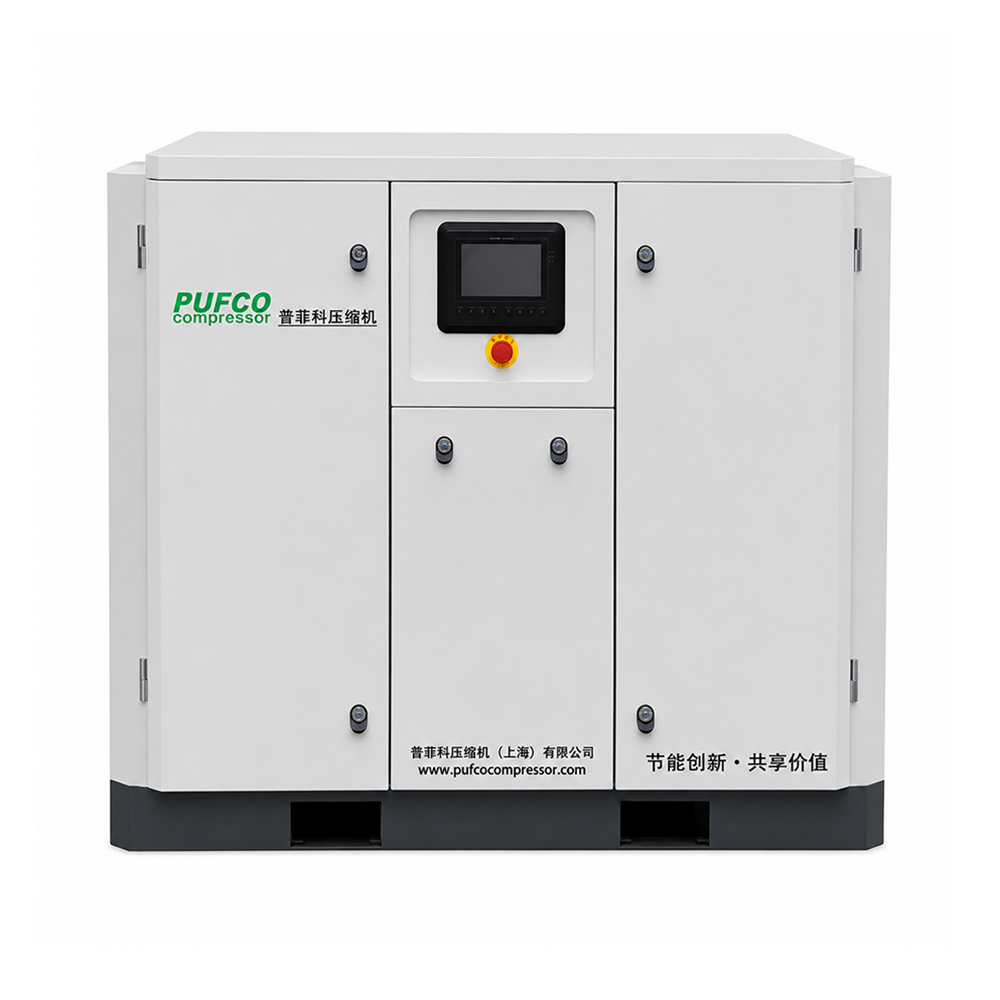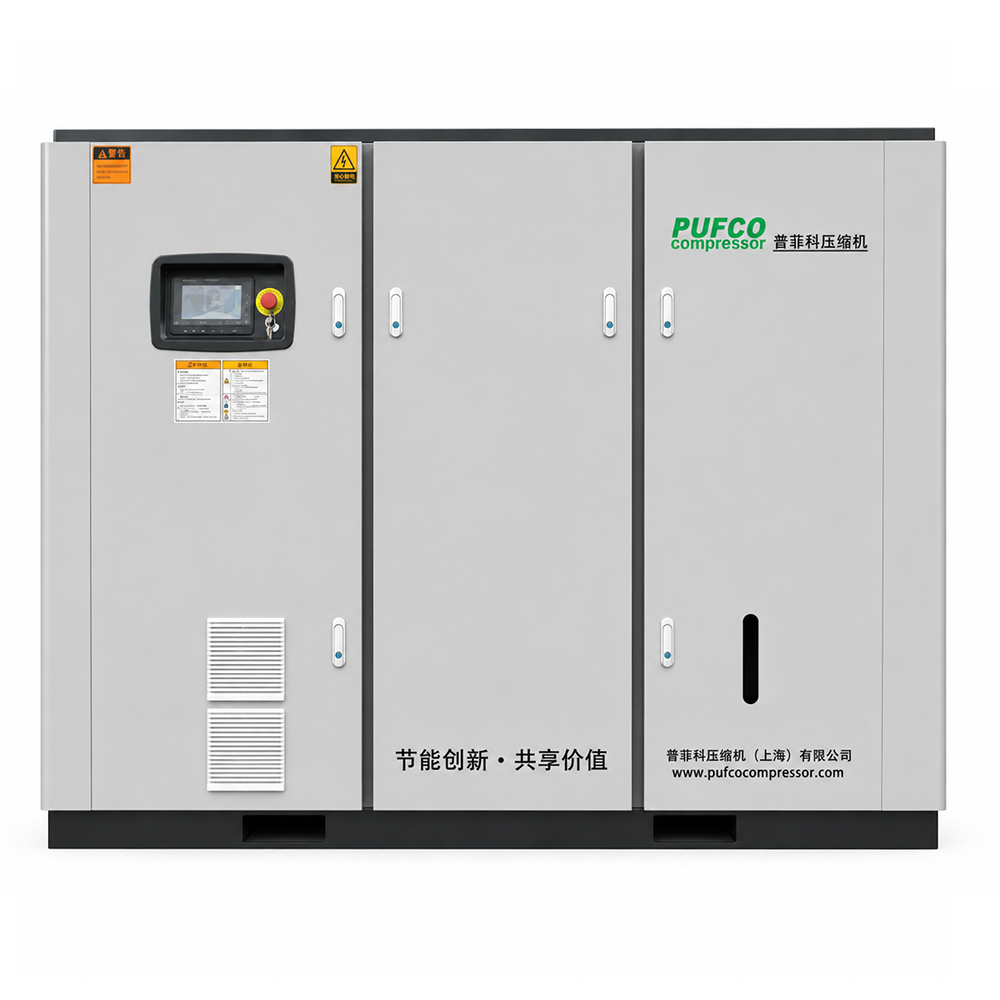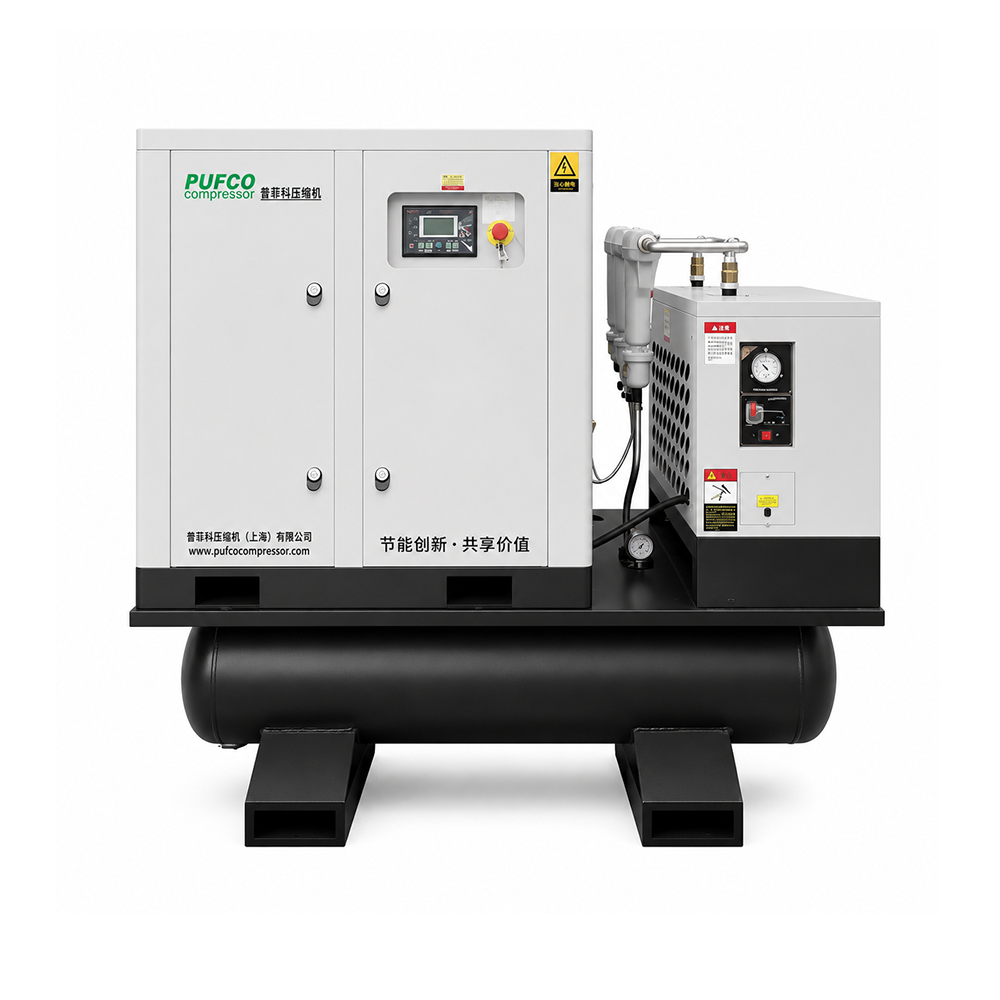
Cold mornings can make a screw air compressor harder to start, especially after a weekend or an extended shutdown. Lubricant becomes more viscous as it cools, trapped water can freeze, and moisture may collect around electrical equipment. A machine that operated normally the previous afternoon may need additional checks before returning to service.
Good winter maintenance begins before the first cold spell. It includes protecting the compressor room, managing condensate, checking the condition of the machine and following the correct startup sequence. This guide focuses on oil-injected screw air compressors and explains what operators should check before and after a cold start. Always use the operating manual for the exact compressor, dryer and cooling arrangement: their permitted temperatures and procedures may differ.
Cold lubricant can place additional demands on startup and lubrication. Frozen condensate can block drains or damage components, while condensation inside an electrical cabinet can make energizing equipment unsafe. A sudden temperature change or a temperature trip during startup also needs investigation.
The entire compressed air system matters. For an all-in-one screw air compressor, include the receiver, refrigerated dryer, filters and drains in the winter inspection. Their location inside one package does not give every component the same cold-weather limits.
Check the room’s overnight temperature, particularly near outside walls, doors, air inlets and exposed pipework. The temperature beside the machine can differ from the temperature shown by a room thermostat. Use the manufacturer’s specified ambient range when deciding whether the installation needs approved frost protection or environmental heating.
Limit unnecessary cold drafts during shutdown while preserving the ventilation required whenever the compressor operates. Review any seasonal doors, louvers or duct arrangements before restarting. Keep cooling airflow paths clear and return panels and guards to their correct operating positions. Insulation must not cover air inlets, cooling outlets or service access.
Before winter, have worn drain components, damaged insulation and existing leaks assessed. Check that temperature readings and alarms are functioning. For a PM VSD screw air compressor, include the inverter and its cabinet environment in the inspection plan; variable-speed control does not remove the need for cold-weather preparation.
Use the normal shutdown sequence in the machine manual and allow the compressor to complete any required unloading or stopping cycle. Follow the site’s approved isolation procedure before maintenance. A compressor that has stopped may still contain pressure or remain connected to an automatic restart signal.
Manage condensate at the designated collection and drainage points for the receiver, dryer, filters and associated piping. Use their specified procedures and suitable collection arrangements. Do not loosen fittings or open an unfamiliar valve to release trapped water. Compressed air condensate may contain oil and needs appropriate handling.
For an extended shutdown, ask a qualified technician to confirm the frost-protection plan for exposed drains and pipework. Any isolation valve positions must follow the approved system procedure, including how pressure is released and how the system will be returned to service. Record what has been isolated so that the next operator can check the installation before starting.
First confirm that the ambient temperature and the relevant lubricant or coolant temperatures meet the limits in the equipment manuals. There is no single minimum startup temperature that applies to every screw compressor. Lubricant grade, machine design, cold-weather options and installation conditions all affect what is permitted.
Check lubricant condition and level using the specified method. A machine that has stood idle for a long period may need a technician to assess its oil, filters and service history before restarting. Do not assume every extended shutdown requires the same parts replacement or lubricant change.
Look for ice, leaks and visible moisture around the machine, drains and electrical enclosure. If condensation or icing is suspected inside an inverter or control cabinet, keep the equipment isolated and arrange a qualified electrical inspection. Only energize it once the cause has been addressed and the equipment is confirmed suitable for operation.
If the compressor is too cold to start, use only a manufacturer-approved warming method. A technician should determine any required lubricant preparation, mechanical checks or special commissioning sequence for that model. Keep guards in place and confirm that all maintenance work is complete before startup.
When the checks are complete, follow the manufacturer’s normal startup procedure. Confirm that the ventilation, dryer, drains and other supporting equipment are ready in the required sequence. Stay with the machine during the initial operating period.
Observe the controller readings available on the unit, including lubricant temperature, pressure, motor current and operating frequency where applicable. Watch for alarms, unusual sounds, vibration, leaks or a rapid temperature rise. Compare the readings with the manual and the machine’s normal operating records.
If the compressor trips or behaves abnormally, stop and investigate. Repeatedly resetting an alarm and restarting can worsen an unresolved problem. Record the alarm code, temperatures, pressure and conditions at startup, then provide those details to the service team. Resume operation only after the cause has been identified and the specified corrective work is complete.
Water-cooled compressors and machines with heat recovery need a plan for each connected fluid circuit. These circuits may contain treated water, a specified coolant mixture or another process fluid. Their frost protection depends on the system design.
A qualified technician should determine whether a circuit needs approved freeze protection, controlled circulation or draining at designated points. Avoid indiscriminately emptying cooling or process lines: incorrect draining can leave trapped pockets, remove required fluid or create problems when the system restarts.
Before returning a heat-recovery installation to service, have its valve positions, bypass arrangement and flow conditions checked against its own instructions. Enable heat recovery only in the specified sequence once the compressor and connected system are ready.
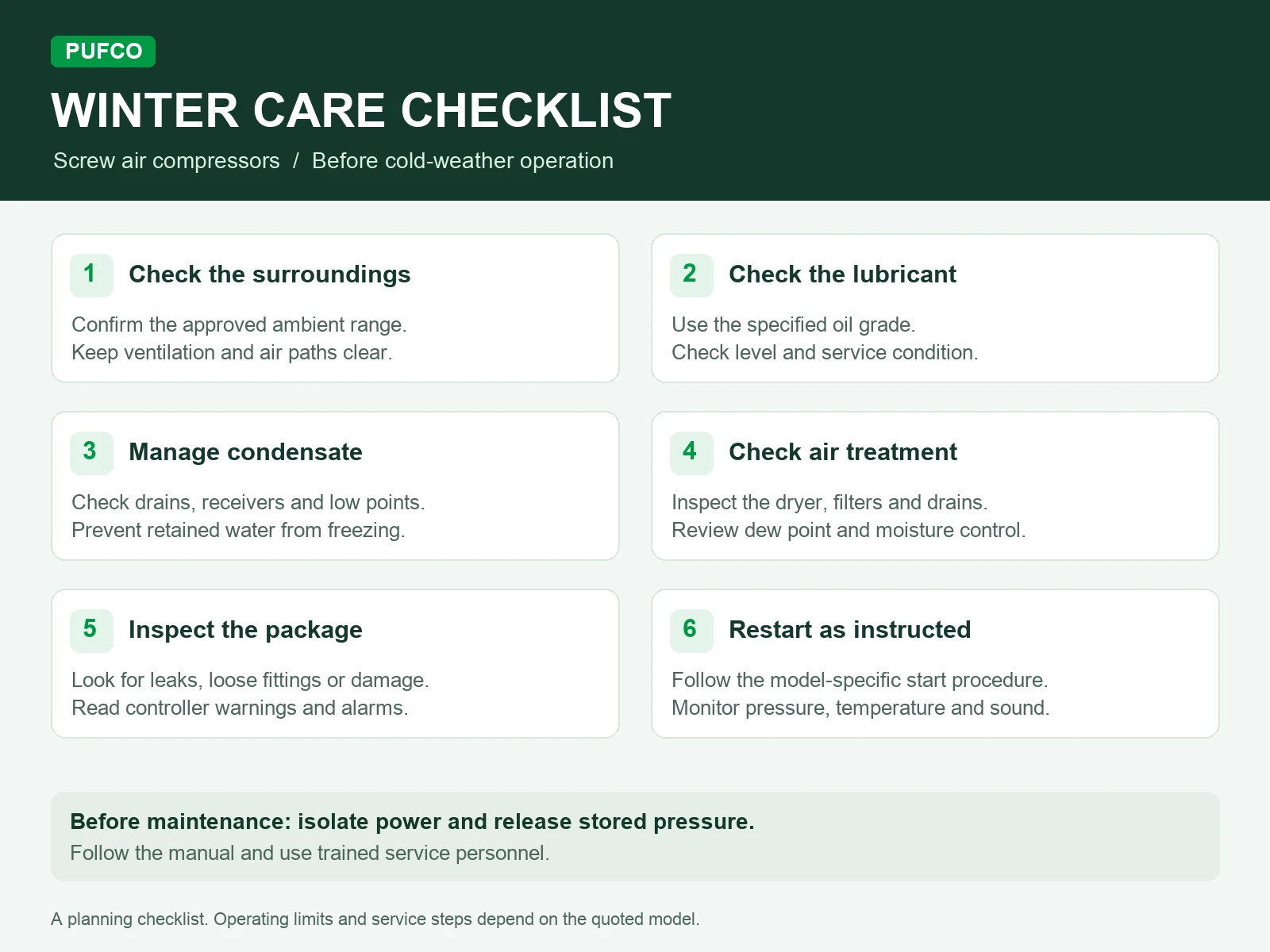
Use the minimum ambient and fluid temperatures specified for your exact machine and installed options. A temperature quoted for another compressor or in a general winter notice does not establish your unit’s limit. If the documentation is unclear, confirm the requirement with the supplier before starting.
Only use a lubricant grade approved for the compressor and its operating conditions. A lower-viscosity oil is not automatically suitable. Ask the service team to review the approved lubricant specification, expected temperatures and service history before making a change.
Keep the affected equipment out of service and follow the site’s isolation procedure. Have a qualified technician assess the blockage, possible component damage and approved thawing method. Check that drainage works correctly before returning the equipment to operation, and address the conditions that allowed it to freeze.
Do not keep resetting and restarting the compressor. Record the alarm and operating conditions, then arrange an inspection to establish the cause. Follow the manual’s fault-recovery procedure after the problem has been corrected.
For help planning seasonal inspections or investigating a difficult cold start, see our after-sales support. You can also contact PUFCO with the model, serial number, lubricant specification, lowest room temperature and any alarm details so the team can review your installation.

We use cookies to keep this site working properly and to understand how it is used. You can accept all cookies or continue with essential ones only. Cookie policy
 CN