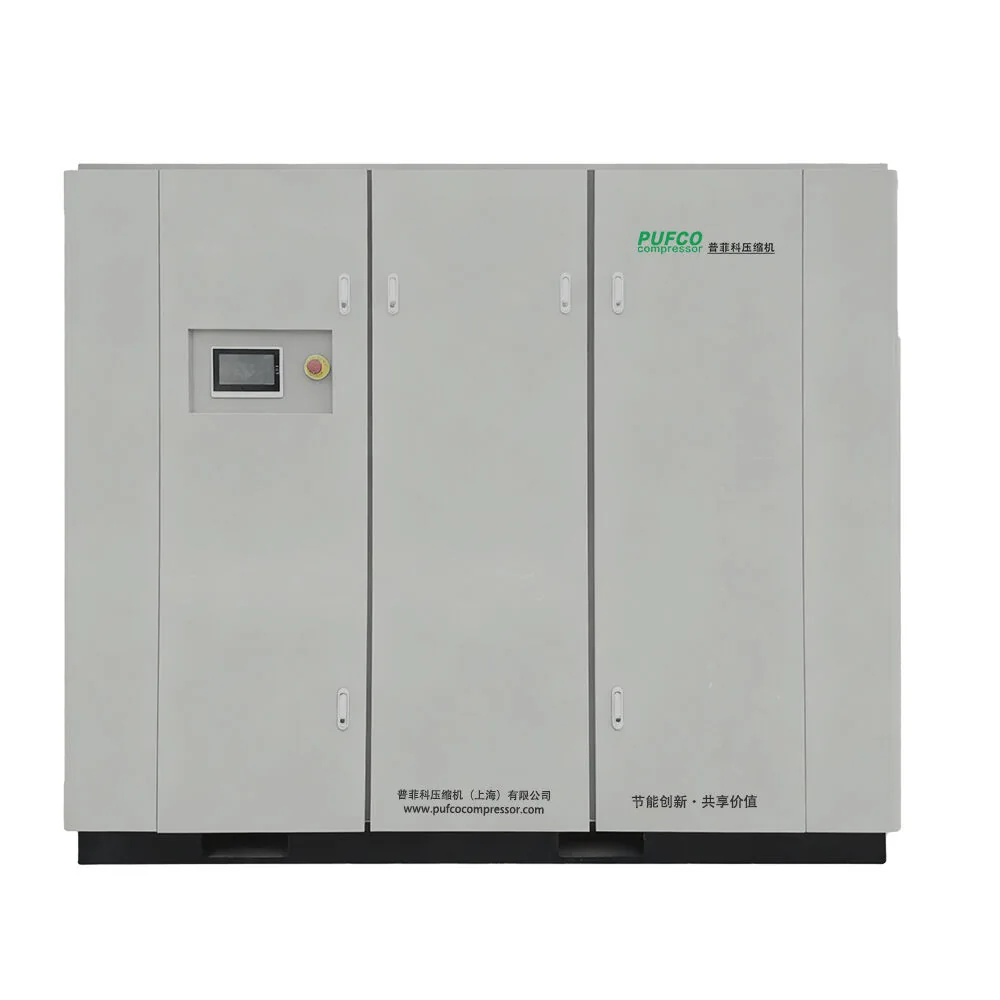
Comparing air compressor brands is most useful when it leads to a shortlist of suitable equipment and support arrangements. A familiar name does not tell you whether the offered model matches your required pressure, air demand, air quality or installation.
This guide is published by PUFCO, a compressor supplier included in the reference list below. It is a practical buying guide, not an independent global ranking. The list does not assign market shares or claim that one manufacturer is the best choice for every application.
Define the application before comparing suppliers. A workshop package, a continuously loaded production system and a product-contact air system may lead to different compressor technologies and treatment requirements.
Give each supplier the same required flow, pressure at the point of use, air-quality specification and operating schedule. Include power supply, cooling conditions, available space and the destination country. This makes differences between proposals easier to understand.
Buyers may encounter the following names while researching industrial compressed-air equipment. They are presented as an unranked reference list. Product families, local availability and service arrangements should be checked with the manufacturer’s organisation for your market.
 Atlas Copco
 Ingersoll Rand
 Sullair
 KAESER KOMPRESSOREN
 KOBELCO
 Hitachi
 Gardner Denver
 CompAir
 BOGE
 PUFCO
Use official product information to identify the model families relevant to your application. Examples of manufacturer resources include Atlas Copco’s compressed-air products, Sullair’s industrial and portable compressor information and KAESER’s compressed-air system resources. A product listing is a starting point for a technical comparison, not a substitute for the quotation.
Request flow and power data at the required pressure and important load points. Confirm the reference conditions used for capacity figures. A motor rating alone cannot show how much usable air the package will deliver or how it will respond during reduced production.
Review the control arrangement, acceptable operating range and low-demand behaviour. If you are considering different technologies, our screw vs centrifugal compressor comparison explains which demand-profile questions to ask.
Confirm the supplied dryer, filters, receiver, drains and controls where these are required. Define the delivered-air quality rather than assuming every package with the same compressor technology provides identical air.
Ask who supports the installation, how routine service is arranged and which replacement components are available for the selected model. Use its documented maintenance schedule, not a generic claim about a brand’s lifetime or overhaul interval. If production needs backup capacity, include that requirement in the system comparison.
Request the relevant data sheets, drawings, operating instructions and conformity documents. Confirm that the product name and model on a document match the proposed supply. Company-level information and equipment-specific evidence serve different purposes.
PUFCO’s certificate information can support this review, with each document assessed within its stated scope. The applicable requirements and documentation for your model and destination should be confirmed in the quotation.
A useful custom enquiry explains what the standard configuration must achieve. State the required duty, electrical supply, cooling utilities, air treatment, footprint and control interfaces. Ask which changes are included and how they affect the selected equipment and maintenance access.
Our guide to custom air compressor options provides a practical way to define that supply scope before comparing manufacturers.
For PUFCO’s manufacturing background, see our company information. To discuss equipment for a specific site, send your compressor customization requirements with the same duty sheet used for your other proposals.
The resulting shortlist should be based on suitable performance, clear scope, documented requirements and practical support. Brand recognition can guide your research; a model-specific technical comparison should guide the purchase.

We use cookies to keep this site working properly and to understand how it is used. You can accept all cookies or continue with essential ones only. Cookie policy
 CN