Choosing an air compressor for laser cutting starts with the cutting machine’s requirements. Required inlet pressure, peak air consumption, air quality and the approved assist gas matter more than motor power alone. A package that meets one pressure figure may still fall short when the nozzle opens or several users operate together.
This guide explains how to compare a compressor, receiver, dryer and filters as one supply system. Use your laser equipment supplier’s requirements for the material, thickness and edge finish you need.
Compressed air is an option for air-assisted laser cutting where the machine and process permit it. It is not a universal replacement for nitrogen or oxygen. Gas selection affects the cutting process and the finished edge; follow the laser supplier’s recommendation rather than selecting the gas from compressor availability.
Send the laser machine model, materials, thicknesses, nozzle specification and expected operating schedule. If different jobs use different gases or settings, identify those duties separately.
The compressor’s rated discharge pressure is measured at the compressor. The pressure available at the laser machine inlet can be lower because air passes through treatment equipment, valves, hoses and pipework. Pressure at the cutting head is another process condition controlled by the laser system.
Ask for the required machine-inlet pressure while cutting, not just a static reading with no air flowing. The compressor selection must allow for the pressure losses along the actual supply route. Check component pressure ratings as well as pressure drop; a filter with sufficient nominal flow is unsuitable if its permitted working pressure is too low.
For reference, 16 bar equals 1.6 MPa. Confirm whether project pressure values are gauge or absolute. Do not mix the two when comparing specifications.
Nozzle size, operating pressure and cutting settings affect consumption. Obtain the machine supplier’s airflow requirement at the intended settings, including the peak demand and how long that demand lasts. Add simultaneous demand from other connected users where relevant.
Airflow figures must use compatible reference conditions. A value in m³/min or CFM can describe different measurement bases; confirm whether it refers to free-air delivery, a normal reference volume or actual compressed volume. Do not calculate a machine’s required airflow from its laser power or compressor horsepower alone.
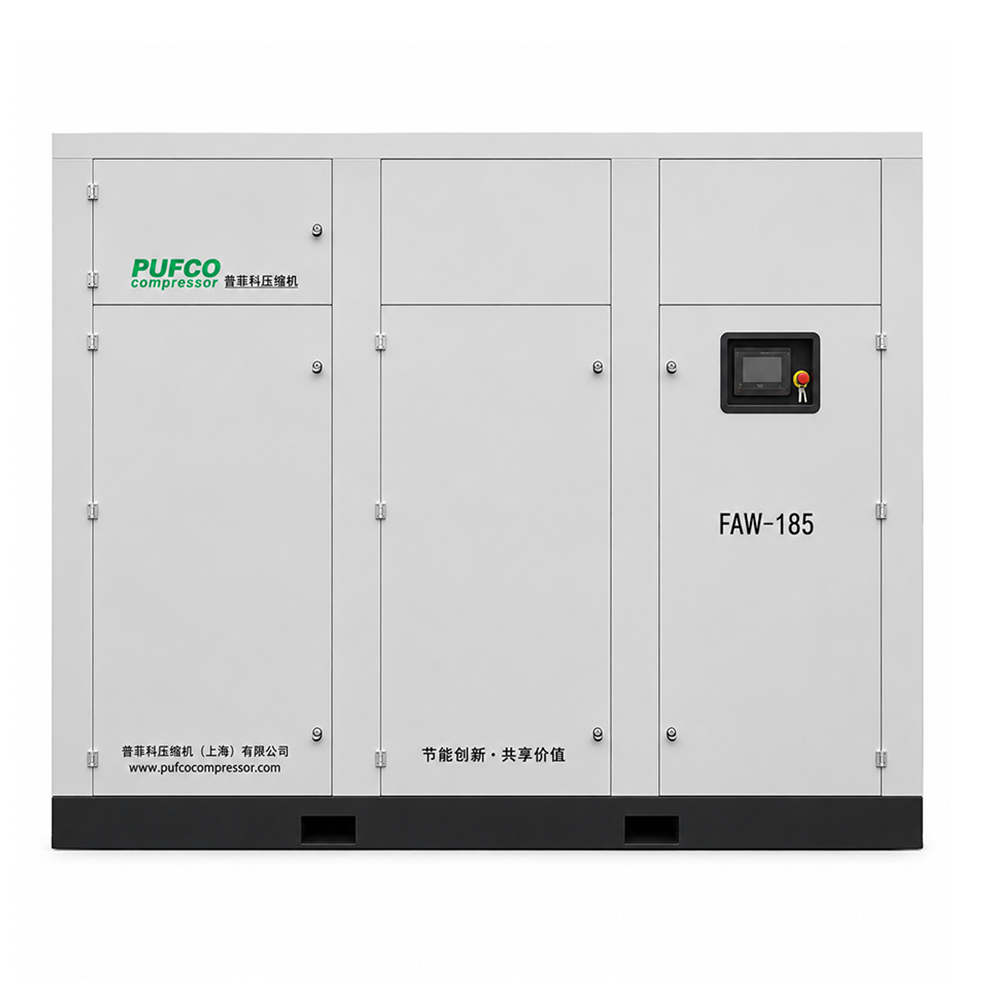
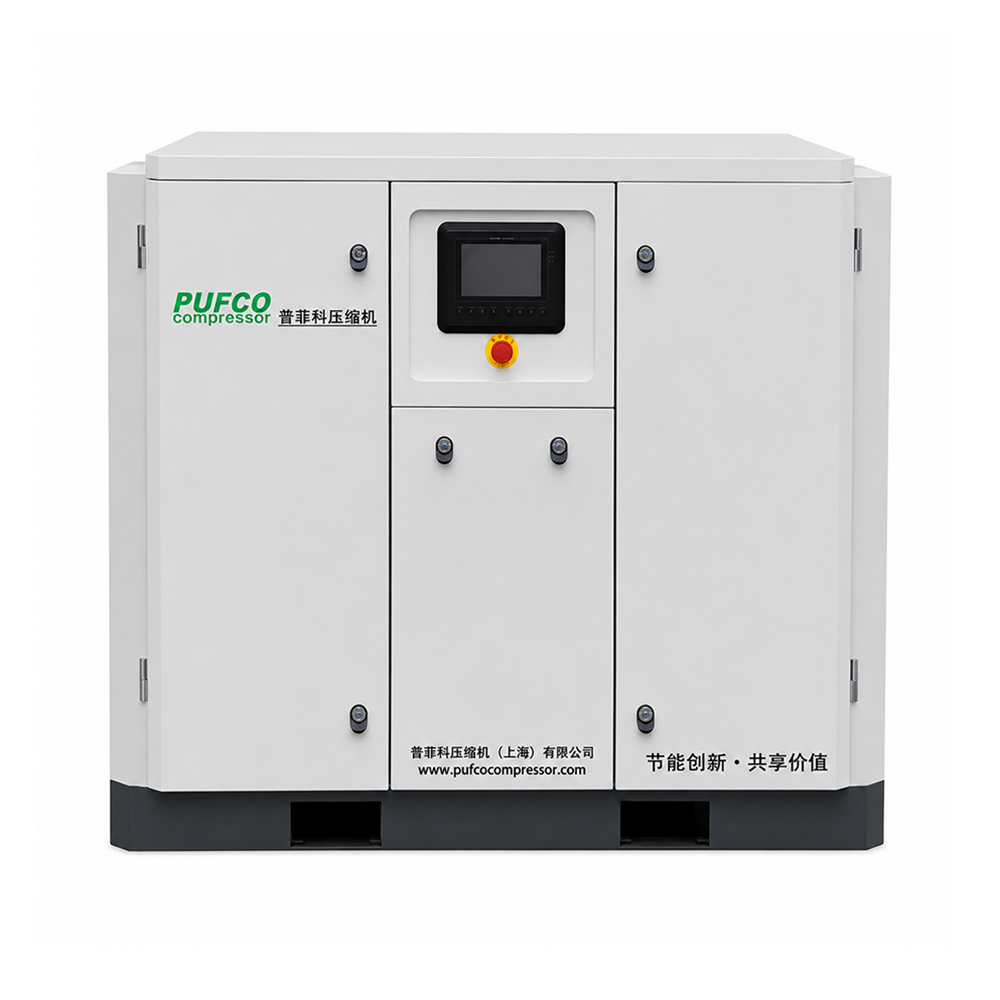
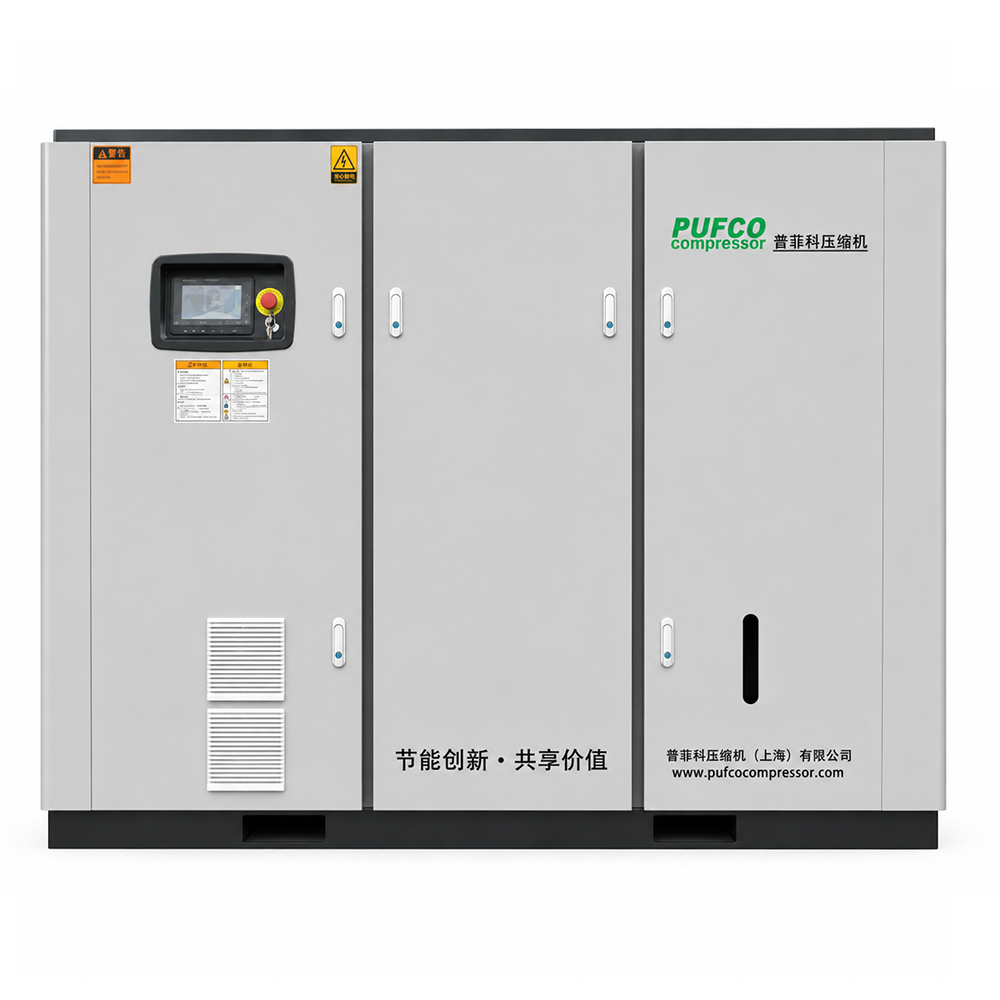
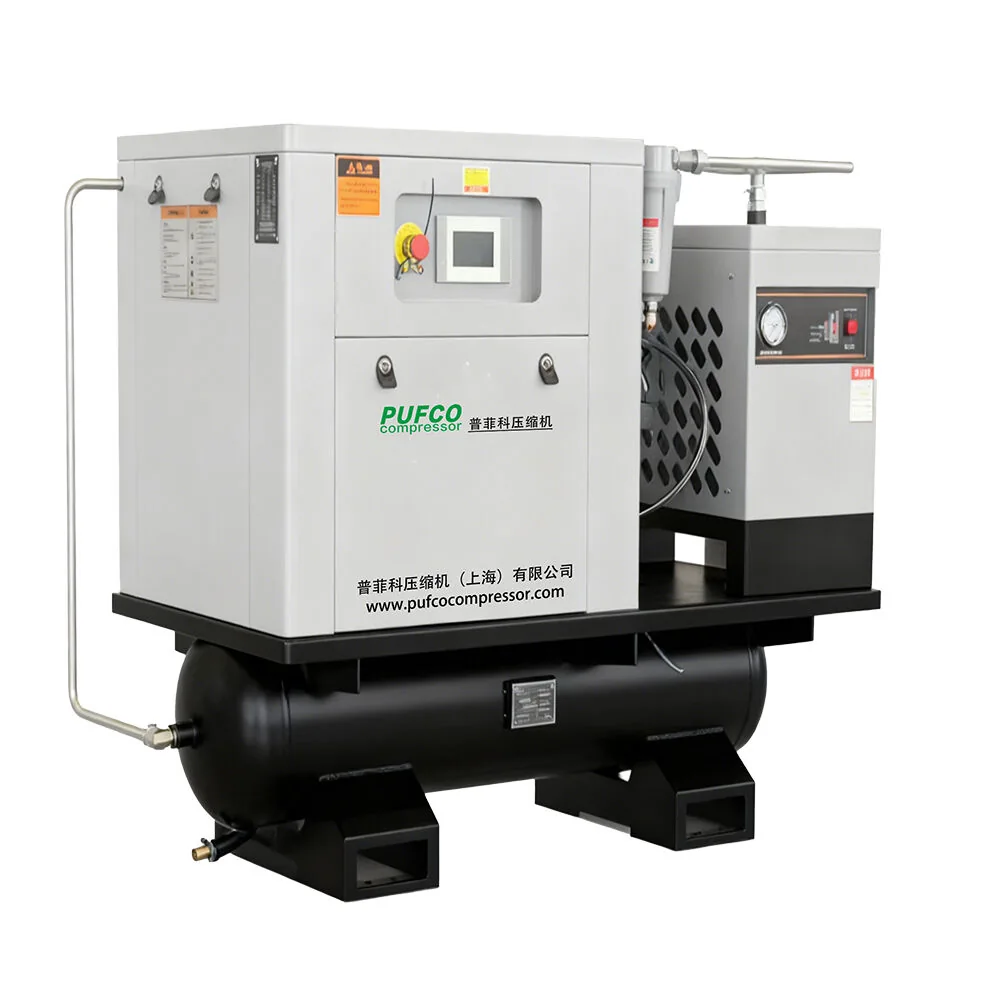
PUFCO’s 16 bar air compressor for laser cutting has the following published model data. These are selection references, not a substitute for matching the machine’s duty.
| Model | Motor | Rated pressure | Published airflow | Standard receiver |
|---|---|---|---|---|
| FVA-15TJ | 15 kW | 16 bar | 1.0 m³/min | 340 L |
| FVA-22TJ | 22 kW | 16 bar | 2.0 m³/min | 340 L |
| FVA-30TJ | 30 kW | 16 bar | 2.4 m³/min | 500 L |
| FVA-37TJ | 37 kW | 16 bar | 3.0 m³/min | 500 L |
Confirm airflow reference conditions and usable delivery at the agreed duty in the technical proposal. The standard receivers are rated for 1.6 MPa working pressure; other capacities can be specified. Storage can buffer a short demand peak, but a larger tank cannot replace insufficient continuous compressor delivery.
PUFCO’s standard laser package includes a refrigerated dryer and four filtration stages: C + T + A + AA. The standard pressure dew point is +2°C to +10°C under specified operating conditions. Dryer capacity must be checked at the actual pressure, airflow, inlet temperature and ambient temperature.
If downstream piping becomes colder than the pressure dew point, moisture can condense again. A lower dew point may require a different drying arrangement; desiccant configurations are available on request. State the laser supplier’s required pressure dew point rather than asking only for “dry air.”
The published particulate filter ratings extend down to 0.01 μm. That rating does not define water content or total oil content. This is an oil-injected screw-compressor package: coalescing filters address oil aerosols, while an optional H-grade stage addresses oil vapour. Agree the required outlet oil specification and its measurement basis for the complete selected system.
The refrigerated dryer includes one automatic drain. Automatic drains for line filters are optional, and receiver drainage is defined in the quotation. List each drainage point so the included scope is clear.
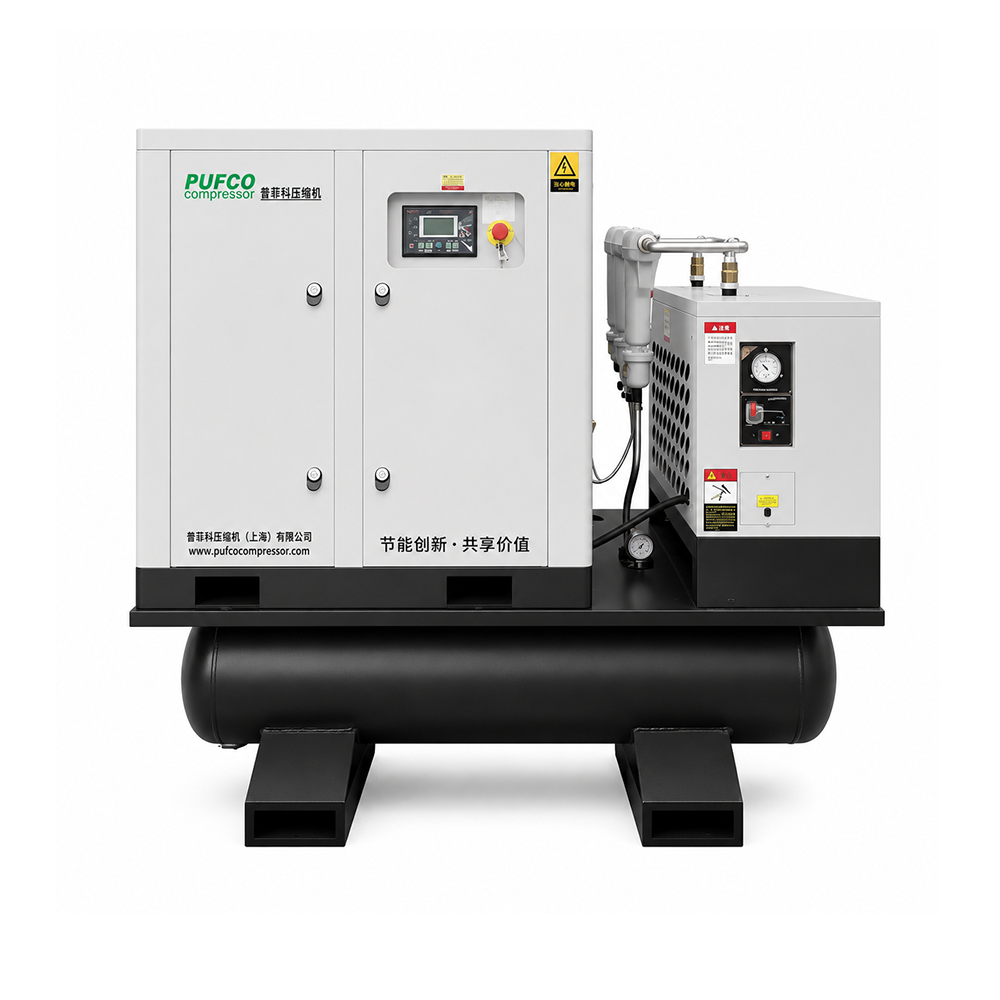
A general workshop package can be considered when its delivered pressure, airflow and treatment meet the laser machine’s requirements. PUFCO’s listed all-in-one screw compressor with dryer and tank models cover working pressures up to 13 bar; the FVA-TJ laser series is listed at 16 bar. This does not mean every laser application requires 16 bar.
For an existing workshop network, measure the pressure available during production and assess the treatment and pipework. A separate laser supply may be appropriate when the existing system cannot meet the required duty. Avoid raising the whole factory’s pressure without reviewing the other users and component ratings.
An integrated package still needs suitable electrical connections, ventilation, maintenance access and condensate drainage. Provide site voltage, phase, frequency, ambient conditions, available space and the pipe route to the cutting machine.
Receiver capacity, pressure, drying, filter grades, controls and power supply can be configured for the project. Our custom air compressor options guide explains how to turn these requirements into a defined package. Confirm electrical suitability for the selected model and include all treatment equipment in that review.
A useful quotation request includes:
Agree warranty, delivery, commissioning and maintenance support for the order; see our after-sales support information. Review available certificate information within each document’s stated model and scope, and confirm the documentation needed for your destination. A CE document alone does not establish the package’s air quality or every local installation requirement.
Send PUFCO your laser-cutting air requirements to discuss a compressor and treatment configuration matched to the machine and the site.

We use cookies to keep this site working properly and to understand how it is used. You can accept all cookies or continue with essential ones only. Cookie policy
 CN