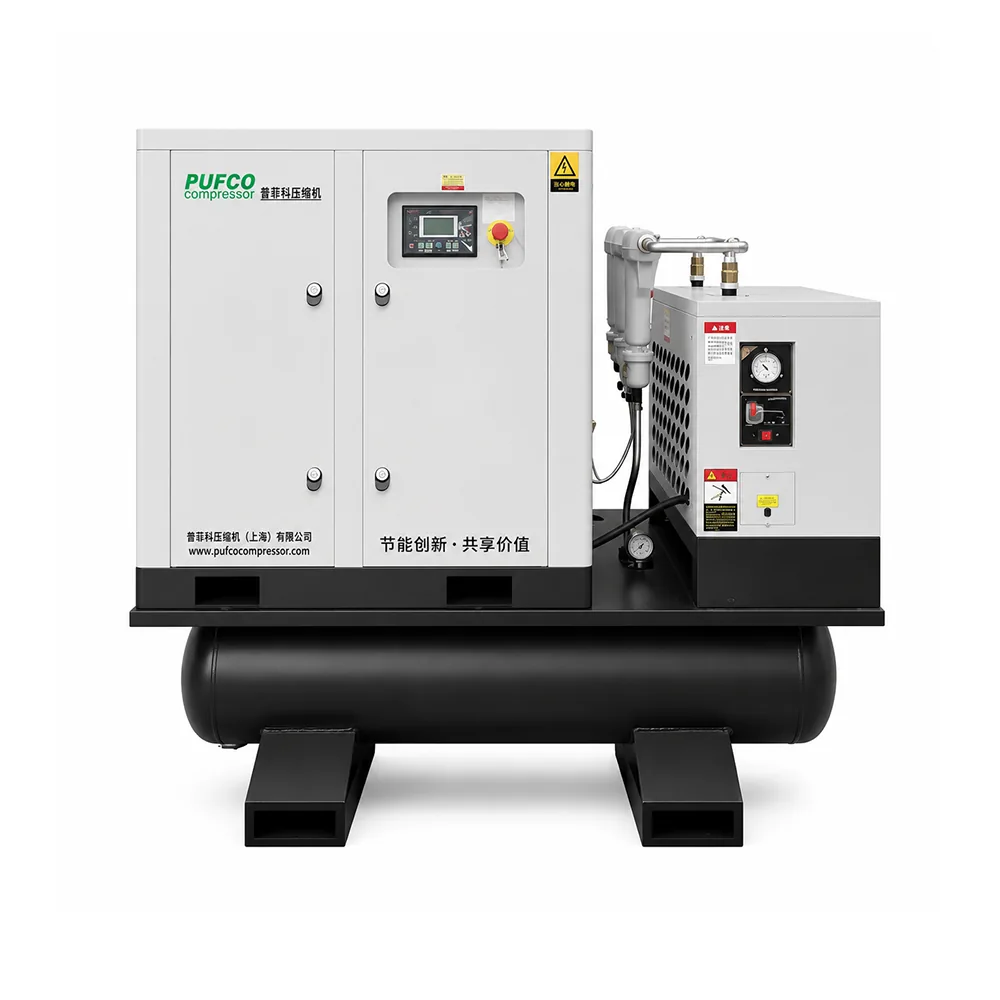
A rotary screw air compressor with dryer combines compressed-air production with moisture removal. In an integrated package, these components can help a workshop supply treated compressed air while reducing the need to arrange separate equipment. The right system depends on the airflow and pressure your equipment needs, the required air quality, and the conditions where the compressor will operate.
Start with those requirements—not motor horsepower alone. Then decide whether an integrated package or a separate compressor and dryer suits your installation.
A rotary screw air compressor uses rotating screw elements to compress air. A connected dryer removes moisture from that compressed air to help limit condensation in downstream piping and equipment.
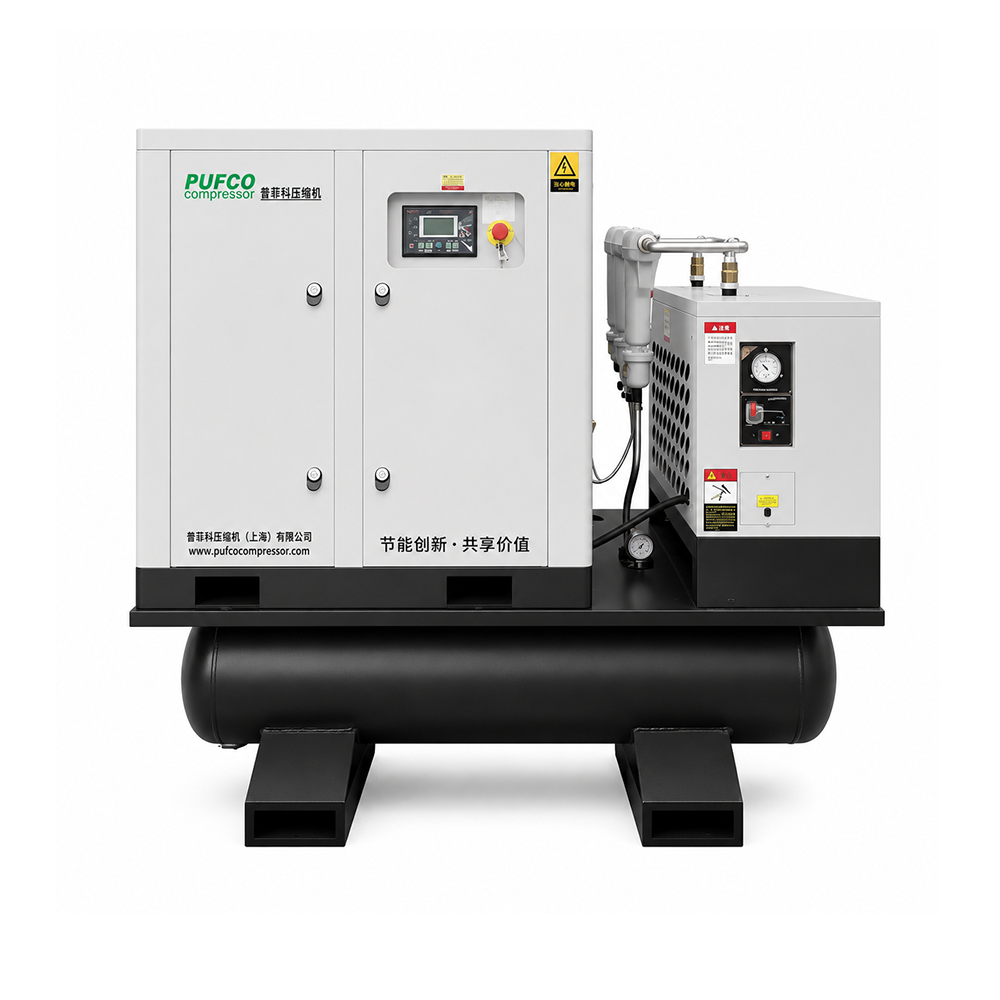
Some systems integrate the compressor and dryer in one enclosure. Others combine a compressor, dryer, air receiver tank and filters in an all-in-one package. A listing that says “with dryer” does not automatically include a receiver tank, filters or every connection needed at your site.
A refrigerated air dryer cools compressed air so that water vapor condenses and can be separated and drained. Air filters address specified contaminants; they do not replace the dryer. The receiver stores compressed air and can help buffer short demand changes, but it does not make up for an undersized compressor during sustained use.
Choose airflow at the pressure required by your equipment. Horsepower describes motor power; it does not tell you by itself whether a compressor can support your production load.
List the tools or machines that may operate together. For each one, record its required airflow, minimum inlet pressure and operating pattern. Include short bursts of high demand as well as equipment that runs for long periods.
For US projects, equipment requirements are often stated in CFM and PSI. Compressor specifications may use m³/min and MPa or bar. Compare values on compatible measurement and reference conditions, especially when checking free air delivery against equipment consumption.
Pressure losses across dryers, filters and piping also matter. The compressor must support the required pressure at the point of use. Raising system pressure unnecessarily can increase energy consumption, so discuss pressure losses and demand variation before selecting the operating setting.
Useful questions for your supplier include:
A refrigerated dryer may suit workshop and general industrial applications where its specified drying performance meets the process requirement. It is not the right choice for every application.
Define the moisture limit at the point of use. One relevant measure is pressure dew point: the temperature at which water vapor begins to condense at the stated compressed-air pressure. If downstream piping becomes colder than that dew point, condensation can still occur.
Dryer selection should account for actual airflow, operating pressure, inlet air temperature and ambient temperature. A dryer rating published under one set of conditions may require correction under different conditions. Ask for the available capacity at your operating conditions rather than matching a dryer only to the compressor’s motor size.
Processes requiring a lower pressure dew point may need desiccant drying or a different treatment arrangement. Oil and particle limits must also be specified. An oil-injected compressor fitted with a refrigerated dryer is still an oil-injected compressor; the dryer does not make the air oil-free or establish a purity class for the complete system.
An all-in-one layout can simplify component arrangement and reduce the equipment footprint. A separate layout can provide more flexibility when using existing equipment, planning expansion or arranging service access.
| Selection factor | All-in-one package | Separate components |
|---|---|---|
| Available space | Combines equipment into a compact package; installation clearances still apply. | Allows components to be positioned individually within the available room. |
| Installation | May reduce interconnecting pipework, depending on what is supplied preassembled. | Requires the compressor, dryer, receiver and filters to be connected as specified. |
| Future changes | Expansion and component replacement depend on the package design. | Individual components can be selected around existing equipment and future requirements. |
| Maintenance | Check access to filters, drains, panels and service parts within the package. | Access can be planned around each component, subject to room and pipework constraints. |
Neither layout is automatically the better choice. Compare the complete installed arrangement, including ventilation, drainage, electrical connections and maintenance space—not just the dimensions of the machine.
Compare the drive type with your actual air-demand pattern. Variable speed drive (VSD) can adjust compressor output within the machine’s operating range and may be useful where demand varies. A relatively steady load may call for a different comparison of purchase cost, controls and operating efficiency.
Do not assume that every workshop will achieve the same savings from VSD. Ask the supplier to compare suitable models at the pressures and load conditions your equipment will create.
A useful quotation identifies the components, their capacities and the electrical supply required. It should distinguish included equipment from configuration options.
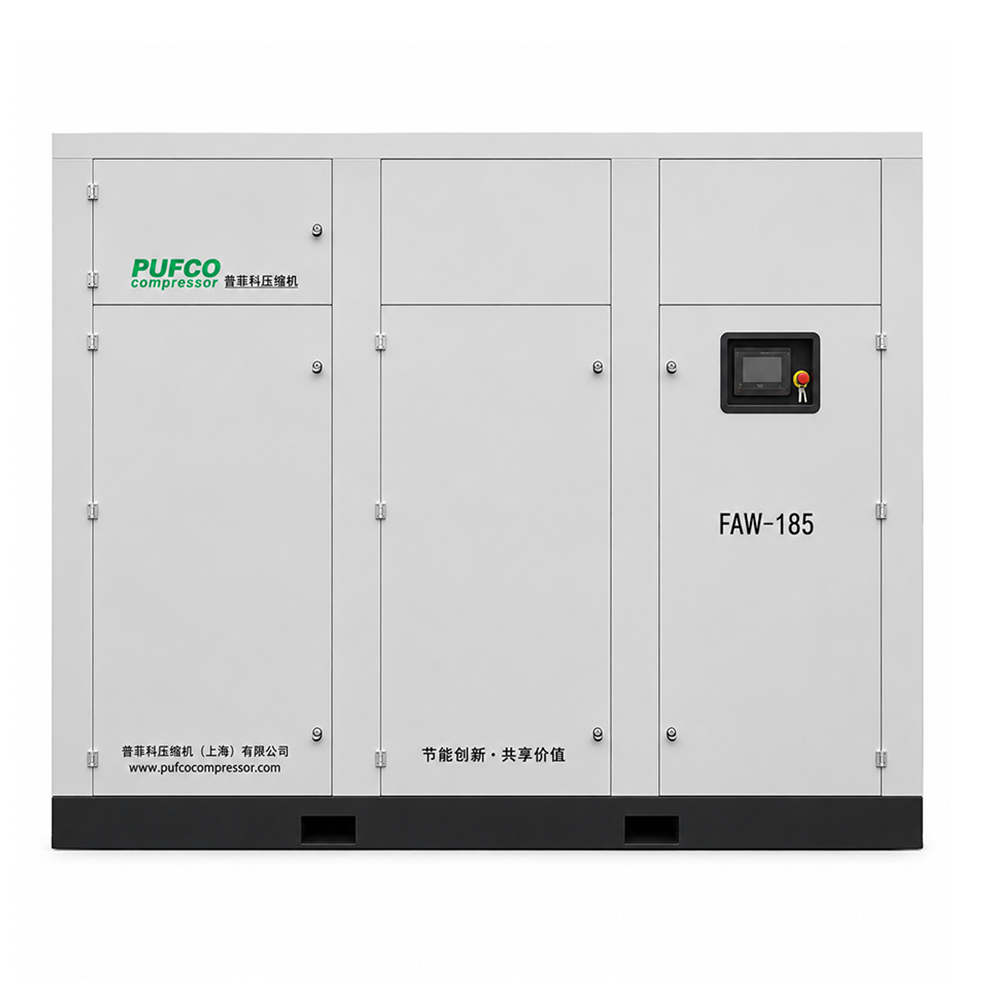
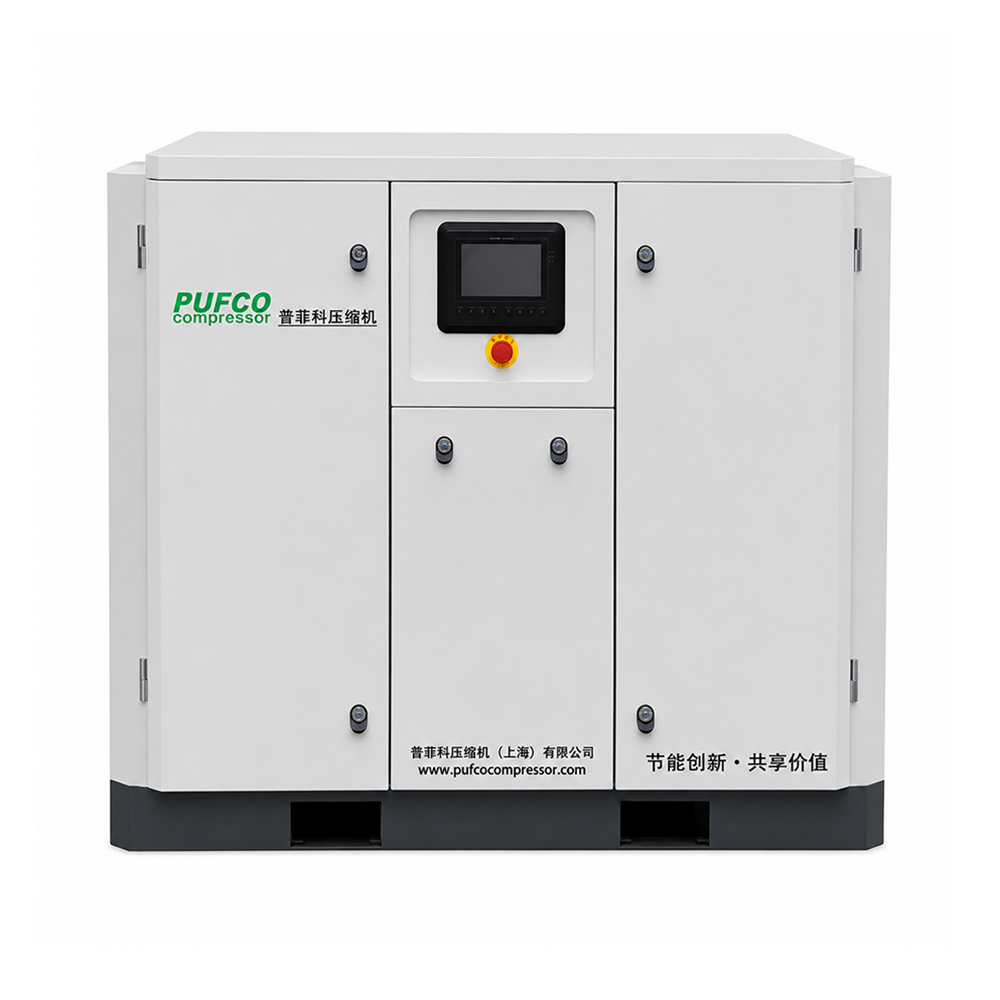
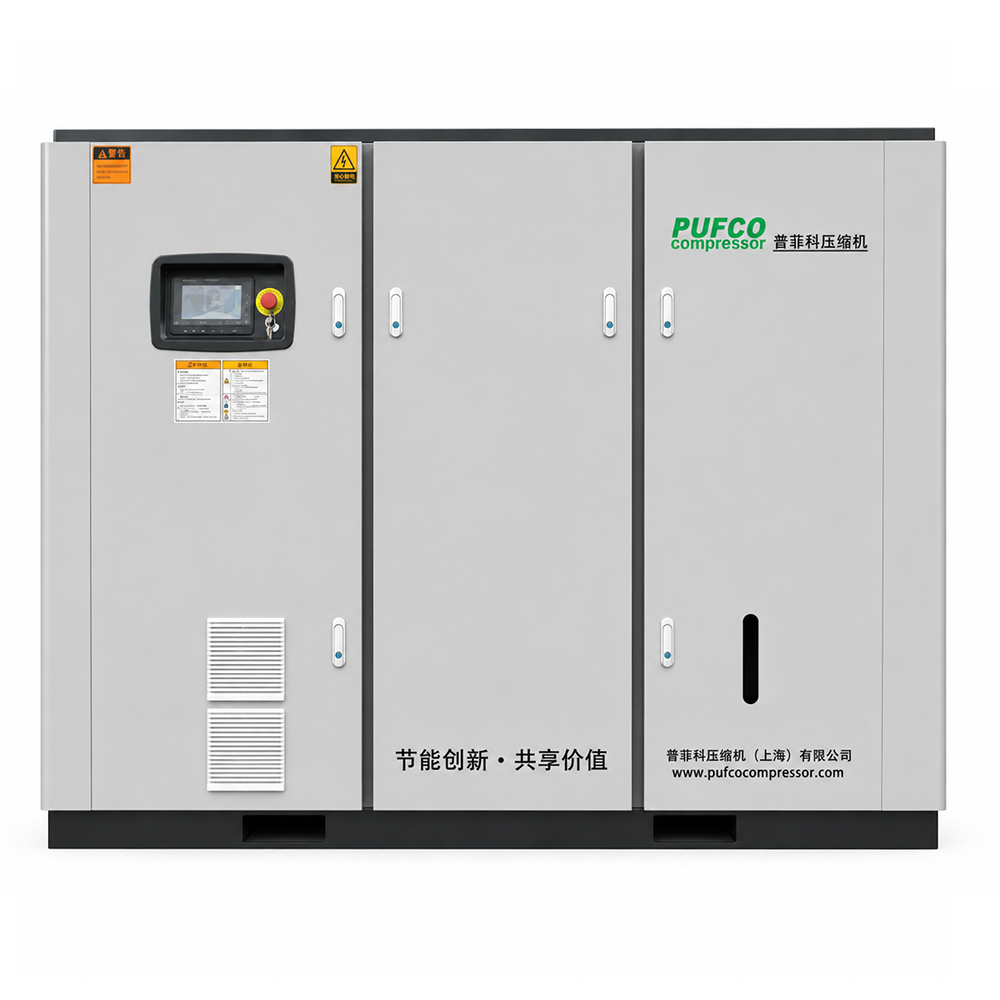
For the PUFCO all-in-one screw air compressor, the standard package includes an oil-injected rotary screw compressor, refrigerated air dryer, air receiver tank and high-efficiency air filters. Available configurations include VSD, working pressure options up to 1.3 MPa, and customized voltage options. Confirm the exact model and component specifications for your project.
Before ordering, ask the supplier to state:
For a US installation, specify the exact site voltage, phase and frequency, and identify any receiver or electrical compliance requirements that apply to the project. A broad voltage range in a product listing is not a substitute for confirming the supplied configuration.
No. Select it using delivered airflow at the required pressure, together with simultaneous equipment demand and operating pattern. Horsepower alone does not establish whether the system can support your workshop.
No. Package contents vary between suppliers and models. Check the included-equipment list and component specifications in the quotation.
A larger receiver can help buffer short demand peaks, but it cannot replace the airflow needed for sustained operation. If average consumption exceeds compressor delivery, the system will eventually lose pressure.
No. A refrigerated dryer primarily removes moisture. Oil and particle control require an appropriately specified compressor and treatment system; any claimed air quality must apply to that complete arrangement.
To request a suitable configuration, send your equipment list, simultaneous air demand, working pressure, air-quality requirements, electrical supply and available installation space.
Explore the PUFCO rotary screw air compressor with dryer and tank or use the chat icon in the bottom-right corner to discuss your workshop requirements with our team.

We use cookies to keep this site working properly and to understand how it is used. You can accept all cookies or continue with essential ones only. Cookie policy
 CN